
‘Student’ asks mum for S$1,980: Fake youth exchange scam targets Singapore parents
SINGAPORE: Earlier this week, the Singapore Police Force issued an advisory about a new social media impersonation scam especially targeted at parents. There were at least eight cases reported in September alone, with total losses amounting to around S$18,000.
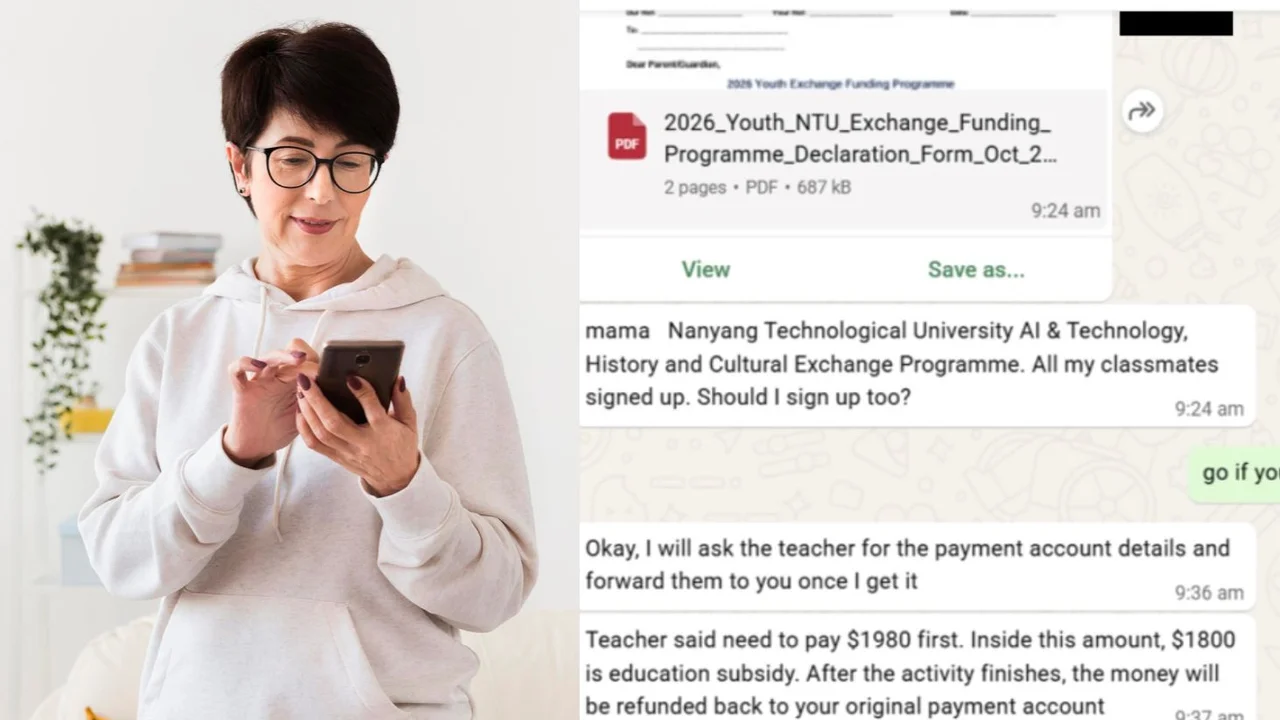
The scam involves students’ compromised WhatsApp accounts, and the Police included screenshots of messages that students purportedly sent to their parents but had actually been sent by scammers.
In the messages, the “students” would inform their parents that they had been chosen for a youth exchange programme or AI-related course, but needed payment in order to secure their place.
The messages would contain consent forms with the names and logos of educational institutions and government agencies to lend further credibility to the scam.
In one of the screenshots, a “student” messaged their mother about a “Nanyang Technological University AI & Technology History and Cultural Exchange Programme,” saying that all their classmates had signed up, and asking if they should sign up as well.
The message included a PDF form that was allegedly for an NTU exchange programme.
The mother then replied that the “student” should attend if they wanted to.
In a message that followed, the “student” said the teacher told them they needed to pay S$1,980, which they described as an “education subsidy,” that would be returned to the parent’s account once the activity was finished.
According to the Police, the victims of the scam made payments through PayNow QR codes, and in some cases, victims were deceived into making additional payments on the pretext that the initial payment had been processed incorrectly and would be refunded.
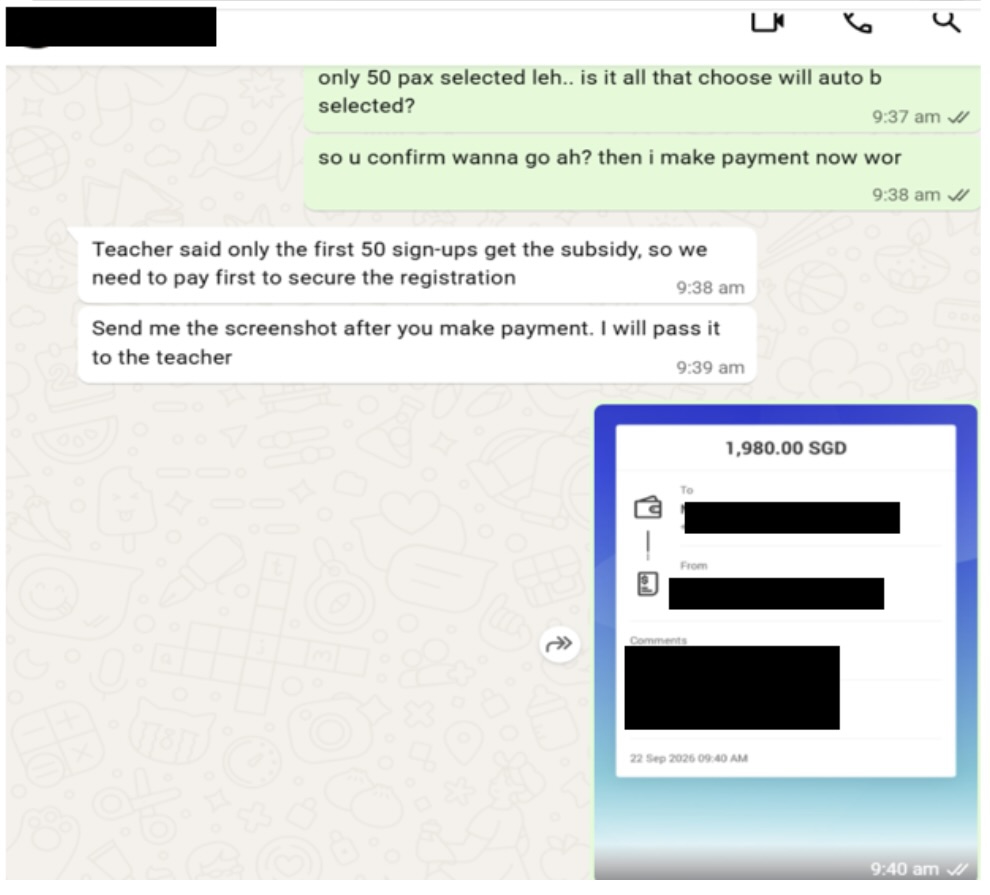
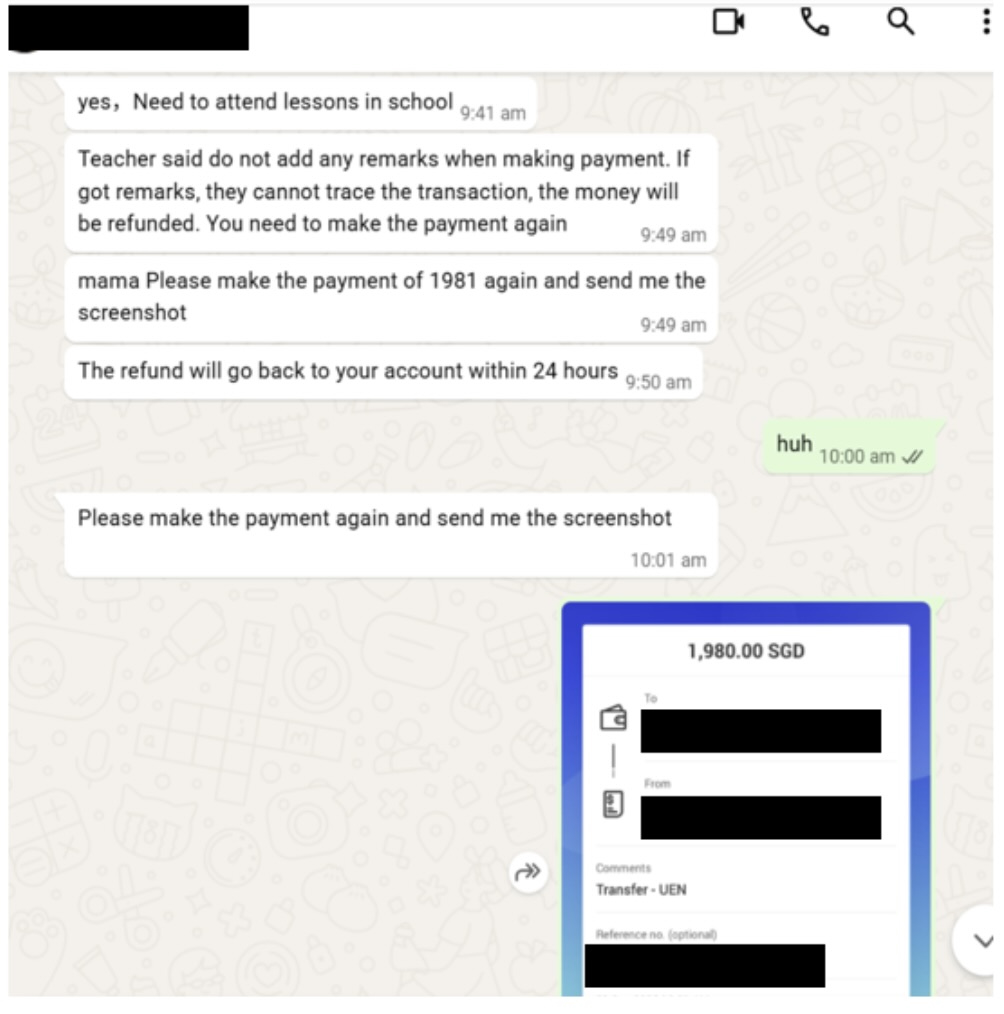
“The victims only realised that they had been scammed after verifying the requests with their children or receiving alerts from their banks,” the Police added.
As it has done in the past, SPF advised the public to protect themselves from scams by adding the ScamShield app to block scam calls and filter suspicious messages.
Individuals should also check for scam signs with official sources such as the ScamShield Helpline (1799), as well as verify unusual requests for money by speaking directly to their family member who made the request.
In cases such as the impersonation scam above, parents should also confirm the legitimacy of programmes or payment requests with the relevant institutions.
Newsletter
Get updates straight to your inbox
Additionally, SPF encourages people to tell the authorities, family, and friends about scams, and if they suspect they’ve been victimised by scammers, they should contact their bank immediately to report and block any fraudulent transactions, as well as file a police report.
“Anyone with information on such scams may call the Police Hotline at 1800-255-0000 or submit information online at www.police.gov.sg/i-witness. If you require urgent Police assistance, please dial '999'. For more information on scams, members of the public can visit www.scamshield.gov.sg or call the 24/7 ScamShield Helpline at 1799. Fighting scams is a community effort. Together, we can ACT Against Scams to keep our community safe,” the police added. /TISG