
Singapore migrant & domestic workers are included in 243 UN human rights recommendations for stronger protection supported by SG

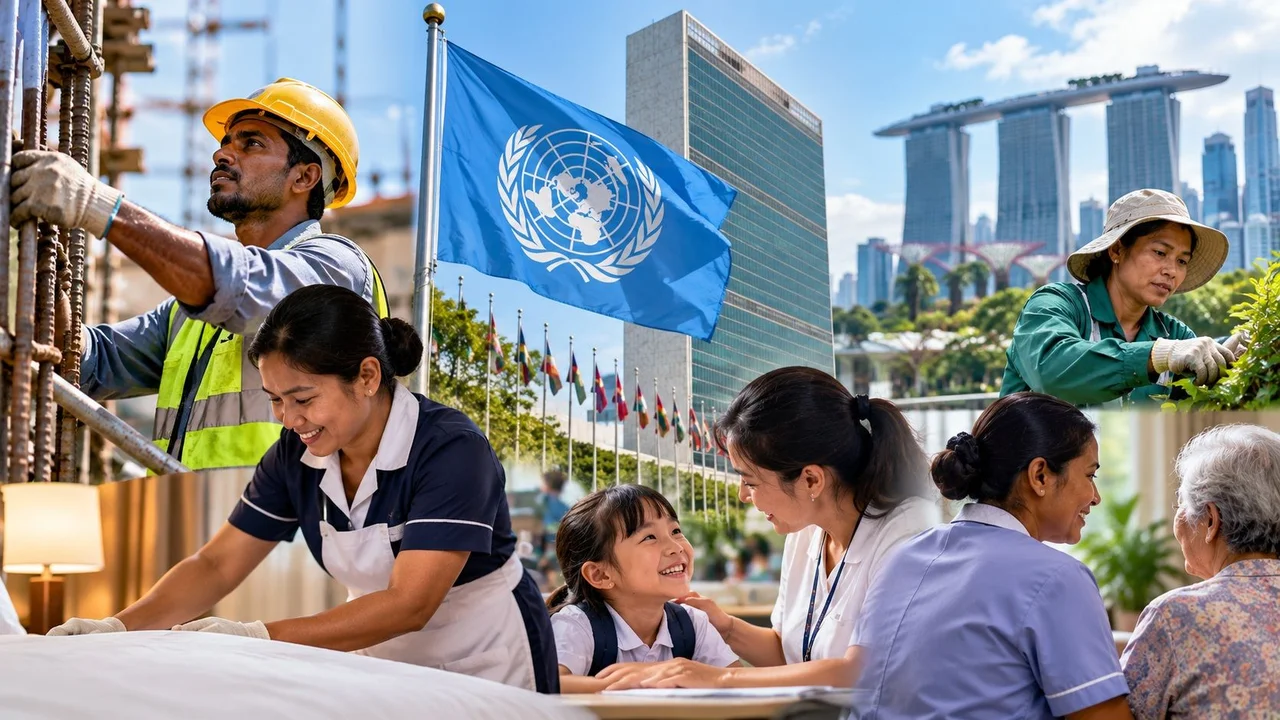
Singapore migrant and domestic workers under UN human rights review
Summary
Singapore supported 243 of 342 recommendations received during its fourth Universal Periodic Review of human rights.
Supported recommendations include stronger protections for migrant and domestic workers, better child mental health support, and broader safeguards against cyber harms.
Singapore rejected proposals involving domestic worker laws, the death penalty, same-sex marriage and changes to speech and assembly laws.
SINGAPORE: Singapore has backed 243 recommendations from other UN member states following its latest review of the country’s human rights record.
The recommendations cover migrant and domestic worker protection, child mental health, women’s rights and safeguards for vulnerable groups. Singapore supported about 71% of the 342 recommendations it received, up from 65% during its 2021 review.
Singapore also supported calls to consider international conventions covering migrant and domestic workers. It backed stronger safeguards for migrant workers, including better working conditions, healthcare, social protection and access to justice, Channel NewsAsia (CNA) reported (Sep 29).
Singapore backs stronger protection for migrant workers
One supported recommendation from the United Kingdom called for rest periods and digital systems for recruitment and wage payments involving foreign domestic workers.
Other recommendations called for stronger legal protection and better access to healthcare and mental health support for migrant domestic workers.
Singapore, however, didn't support proposals to extend the Employment Act and Work Injury Compensation Act to domestic workers.
The country also rejected calls for a government-run recruitment system and proposals involving public holidays, regulated working hours and paid leave for foreign domestic workers.
Singapore said the work conditions of migrant domestic workers require additional protection, which is addressed through legislation under the Employment of Foreign Manpower Act.
Child mental health and women’s rights also covered
The recommendations extend beyond migrant workers. Singapore supported stronger school-based mental health support for young people, greater public awareness and more community services.
The Lion City also backed measures to protect children and older people from online harms while keeping non-digital access to essential services.
Several recommendations focused on women’s participation in public life, workplace equality and leadership. Others called for stronger workplace support for maternity leave, caregiving, and flexible work arrangements.
Singapore pointed to measures including the Workplace Fairness Act and expanded parental leave. Government-paid paternity leave increased from two to four weeks last year, while shared parental leave rose to 10 weeks from April.
Death penalty and speech laws stay unchanged
The recommendations Singapore didn't support included proposals on additional human rights treaties, the death penalty, freedom of expression and assembly.
Newsletter
Get updates straight to your inbox
Singapore noted calls for a moratorium or abolition of capital punishment. It said the death penalty applies to the most serious crimes and includes judicial safeguards.
The Little Red Dot also rejected recommendations on same-gender marriage, conversion practices and adding gender orientation and gender identity to protected characteristics under the Workplace Fairness Act.
On speech and assembly, Singapore supported protecting these rights while declining proposed changes to laws including the Protection from Online Falsehoods and Manipulation Act (POFMA) and the Public Order Act.
Singapore's Permanent Representative to the United Nations in Geneva, Jaya Ratnam, said the country would focus on recommendations it could implement.
For Singapore, the next test is how those commitments translate into policies and protections people can actually experience and live by.