
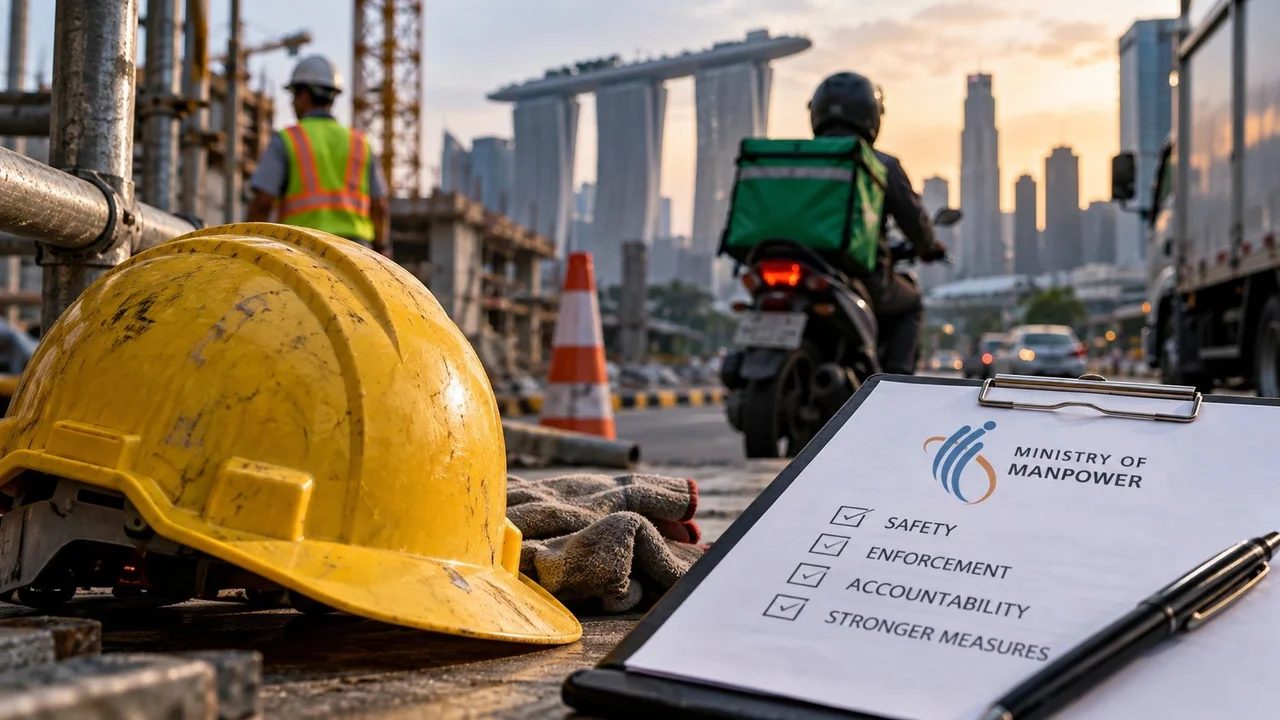
Singapore workplace safety and platform worker risks
MOM: Workplace deaths in SG rise in first half of 2026; platform workers account for 4 of 21 fatalities, as Ministry reviews tougher deterrence measures

Summary
Singapore recorded 21 workplace deaths in the first half of 2026, raising the annualised fatal injury rate to 1.1 per 100,000 workers.
Vehicular incidents caused nine workplace deaths, including four involving platform workers, making them the leading source of fatal injuries.
SINGAPORE: Singapore’s workplace safety picture was mixed in the first half of 2026, with deaths rising while major injuries fell.
There were 21 workplace fatalities between January and June, lifting the annualised fatal injury rate to 1.1 per 100,000 workers.
Vehicular incidents were the biggest concern, causing nine deaths. Four involved platform workers, who face added risks from road conditions and working independently. The figures were released by the Ministry of Manpower (MOM) on Sep 8, 2026.
Minister of State for Manpower Dinesh Vasu Dash said the rise in deaths was serious, despite major injuries reaching their lowest recorded rate.
MOM said action taken after seven workplace deaths over four weeks in May and June helped stabilise the situation.
Platform workers face a much higher injury rate
Platform workers recorded an annualised fatal and major injury rate of 92.1 per 100,000 workers in 1H 2026.
The rate was down from 95.9 in the same period last year, but still far above rates in sectors such as construction and manufacturing.
Vehicular incidents made up 38 of the 44 fatal and major injuries involving platform workers.
A Platform Worker Safety Workgroup formed in March is studying safer riding and driving, training, safety technology and better data. Its work is due by the end of 2026.
MOM also expanded its multi-agency safety taskforce to include the Ministry of Home Affairs and Traffic Police.
Construction improves while metalworking worsens
Construction recorded 69 fatal and major injuries, down from 75 a year earlier. Its annualised rate fell to 24.1 per 100,000 workers, the sector’s lowest since 2020.
Smaller projects, including renovations and alteration works, still accounted for 70% of the sector’s fatal and major injuries.
Manufacturing recorded 62 fatal and major injuries, with an annualised rate of 28.4. Metalworking saw cases rise from 18 to 28.
Newsletter
Get updates straight to your inbox
MOM will keep inspections higher in metalworking, focusing on machinery, slips, trips and falls.
More reported diseases reflect wider detection
Occupational disease cases rose to 620 from 485 in 1H 2025.
MOM said the increase was partly due to expanded reporting coverage from 1 December 2025 and greater awareness of workplace health.
Noise-related hearing loss made up 57% of cases, followed by musculoskeletal disorders at 23% and skin diseases at 11%.
MOM is now reviewing stronger enforcement, the workplace safety demerit points system and the bizSAFE programme.
The numbers show that safer workplaces need both fewer injuries and fewer fatal mistakes. Stronger rules matter, but daily safety habits still matter most.