
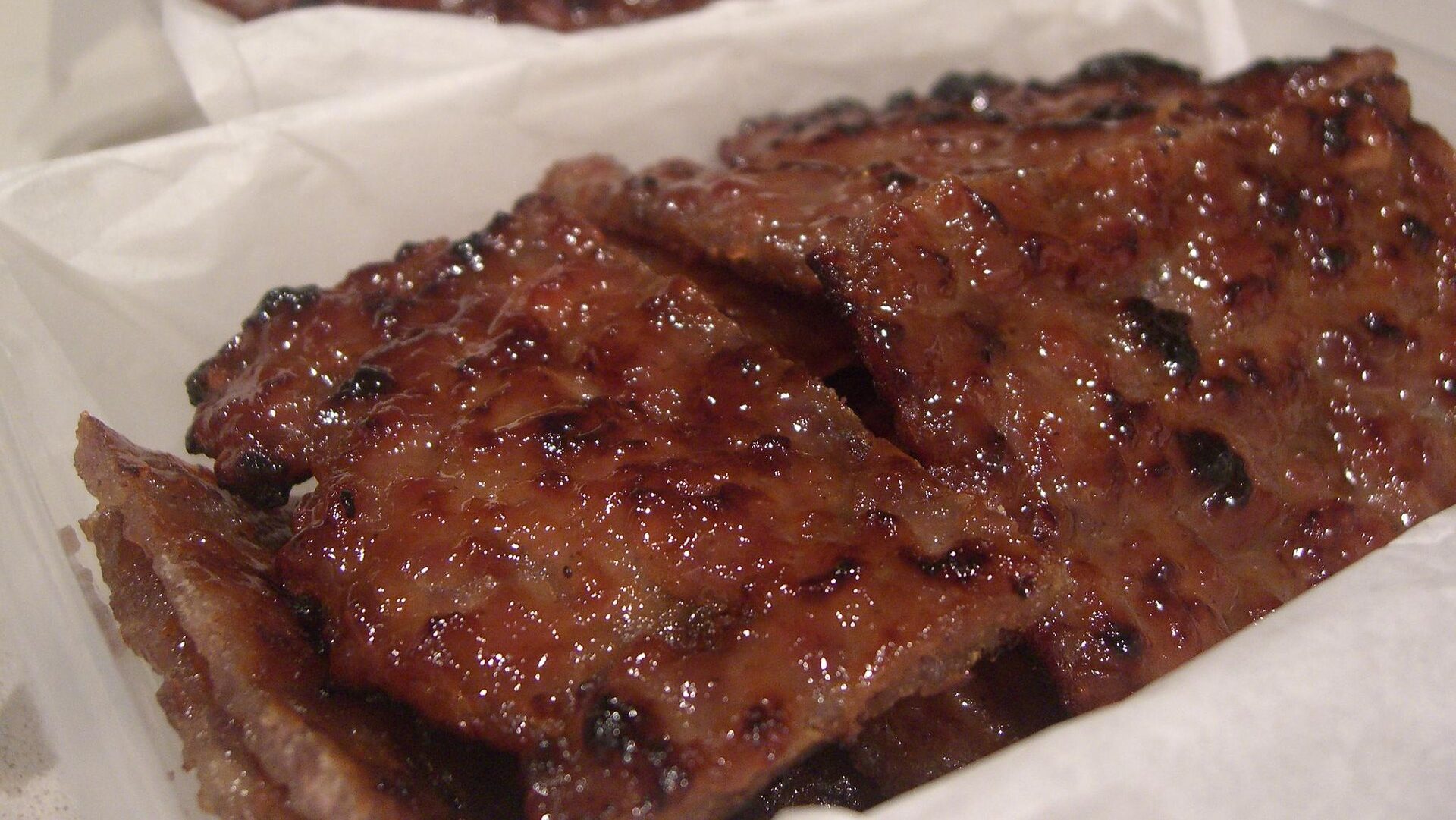

SINGAPORE: Chinese New Year celebrations are not until later this month, but the price of bak kwa has already gone up. The salty-sweet dried pork meat slices are a traditional treat for the holiday.
According to a report over the weekend from Shin Min Daily News, a number of bak kwa varieties may have gone up in price by as much as $2 or $3 per kilo.
While sliced pork bak kwa at Bee Cheng Hiang used to cost $72 per kilo, it is now priced at $74. Some varieties are even more expensive, with gourmet bak kwa costing $110 and Prime bak kwa costing $84.
However, while Applewood sliced pork bak kwa costs $88, the treat is the same price as it was last year when it raised a few eyebrows among Singaporeans on Reddit.
In January last year, the basic version cost $70 per kilo, and the most expensive variety, chilli gourmet bak kwa, cost $108 per kilo.
Shin Min Daily News quoted the deputy sales manager as saying that higher prices this year are because of the increased costs for raw materials, as well as additional hiring due to the festive season.
The cost for temporary workers has also gone up as the food and beverage industry increases hiring for the season.
While prices will also be going up at Kim Joo Guan, another popular seller of bak kwa, they will go down again when the festive season is over. Beginning on Thursday (Jan 9), the rope of traditional bak kwa will go from $66 to $72 per kilo.
However, it will return to its pre-Chinese New Year price on the fifth day of the lunar new year, Feb 2.
Kim Joo Guan’s store manager told Shin Min Daily News that the higher prices, however temporary, are due to the higher cost of pork, sugar, and charcoal, as well as more expensive utility costs. Like other establishments, the store also needs more staff to help out during this season.
Why bak kwa during CNY?
To those curious why most households feel that their Chinese New Year celebrations are incomplete without bak kwa, here’s the backstory:
Ancient China, particularly in the Fujian province, once experienced a time of poverty. Because of this, meat was reserved for the most special occasions, especially the Chinese New Year.
When the Hokkien people from Fujian travelled to the Malay Archipelago in search of better fortunes, they bak kwa, as well as the tradition of eating it during New Year celebrations, with them.
Featured photo from Alpha (Flickr: 猪肉干 Julia’s Bak Kwa) /TISG
Read also: ‘Wow this sure is expensive’ — S$88 per kilo of bak kwa shocks customer
 Follow Google News
 Join us on WhatsApp
 Follow us on Telegram