‘Sike, I'm not him’ — NUS student Jensen Huang’s AI startup gains business traction after being mistaken for ex-Nvidia CEO

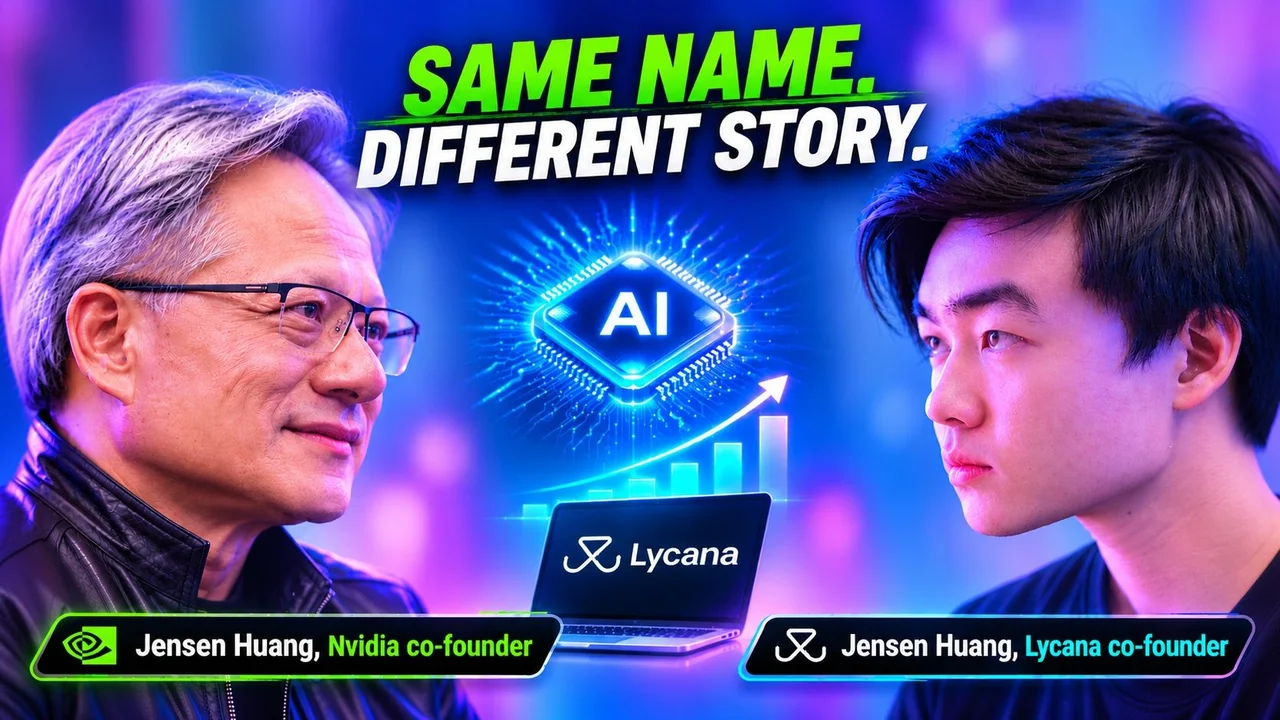
Two Jensen Huangs face off over mistaken identity
SINGAPORE: A Singapore university student named Jensen Huang has found an unusual way to turn his mistaken identity into business opportunities.
Sharing the same name as the famous technology billionaire and former Nvidia CEO, Jensen Huang, brought this uni student’s AI startup unexpected attention. The 24-year-old, a final-year computer science student at the National University of Singapore (NUS), co-founded Singapore-based AI startup Lycana.
The younger Huang initially feared that the controversy surrounding his famous namesake would damage his reputation. Instead, the attention helped bring potential customers to his business. He spoke to Business Insider about the unexpected publicity, 8days reported (Nov 19).
A famous name brings unwanted attention
The confusion began after Nvidia co-founder Jensen Huang, 63, became embroiled in reports about alleged affairs.
The older Huang reportedly admitted being unfaithful to his wife, Lori Huang, following reports of an alleged affair involving a businesswoman linked to Singapore-based technology company Megaspeed.
Further allegations involving Nvidia employees also emerged. Nvidia announced on Nov 12 that its longtime CEO had stepped down.
The younger Huang soon found himself caught up in conversations about a scandal he had nothing to do with. Friends teased him with jokes about the controversy, while some online users genuinely believed he was the billionaire.
Jensen’s LinkedIn posts were shared on Reddit and Chinese social media platform Xiaohongshu. Some users even questioned him about the alleged cheating.
Turning online confusion into startup publicity
Rather than let the confusion get the better of him, Huang decided to join in. He published a mock company announcement on LinkedIn, parodying the older Huang’s reported apology.
The post began by addressing colleagues who didn't work at Nvidia before jokingly denying infidelity and apologising for nothing. He then delivered the punchline: “Sike, I’m not him.”
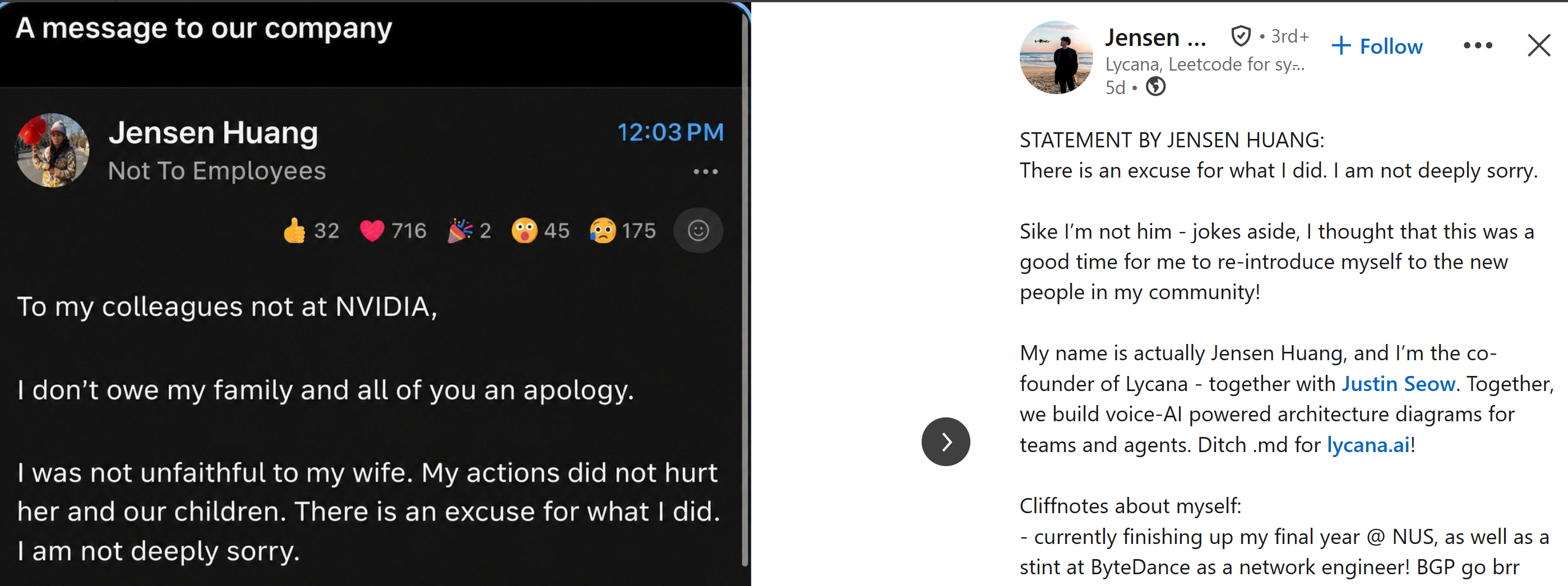
The joke attracted attention beyond his immediate network. Huang said his posts brought an additional 5,000 visitors to Lycana’s website. Some visitors went beyond browsing and purchased subscriptions to the startup.
It was an unexpected business benefit from a situation that initially left him worried about his name being associated with scandal.
NUS student hopes to attract startup investors
Huang is also looking beyond website traffic as he works to build Lycana. He has applied to Y Combinator, a prominent American startup accelerator, along with other programmes backed by venture capital firms.
Huang believes attracting attention matters when approaching investors, alongside having a strong product.
The young founder has also built up experience through internships at ByteDance and Razer. A former Raffles Institution student, he spent a year in New York working with quantitative data.
Huang’s interest in Nvidia’s co-founder goes back to primary school. He recalled following the billionaire’s career as his own interest in computers and programming grew.
When a memorable name becomes a business advantage
Sharing the same name had helped Huang stand out at networking events and job interviews long before the controversy. People sometimes joked about asking him for Nvidia shares or spare graphics cards.
However, the latest allegations about the former Nvidia CEO have changed how the younger Huang views his famous namesake. While he still respects the billionaire’s technological achievements, he admitted his personal opinion had fallen.
Huang also joked that his Nvidia shares had suffered, after previously being his most profitable investment. There is an interesting lesson in how Huang handled the situation. A name can open doors, but what someone does with the attention matters more.
Newsletter
Get updates straight to your inbox
Rather than let an awkward case of mistaken identity define him, the NUS student introduced himself, promoted his startup and gained paying customers. For a young founder trying to get noticed, that was a pretty useful punchline.
In other news, a Singaporean father turned his Grab car into a moving résumé in an unusual bid to find a job and provide for his 17-month-old daughter.
Uzen Tan, a former FAANG marketer, went viral after launching a TikTok campaign to attract potential employers. FAANG refers to Facebook, Amazon, Apple, Netflix and Google.
Tan’s approach involved placing QR codes linking to his LinkedIn profile and CV behind the passenger seat, allowing passengers to learn about his work experience while travelling.
The campaign also attracted criticism, with Tan revealing that some people had called him a “shameless loser”. However, he brushed off the remarks and continued with his job search.
His story offers another example of how people are using unconventional ways to find work, even when traditional job applications don't deliver the results they need.