
AVS: Singapore residents keeping unlicensed cats may face fines of up to S$5K

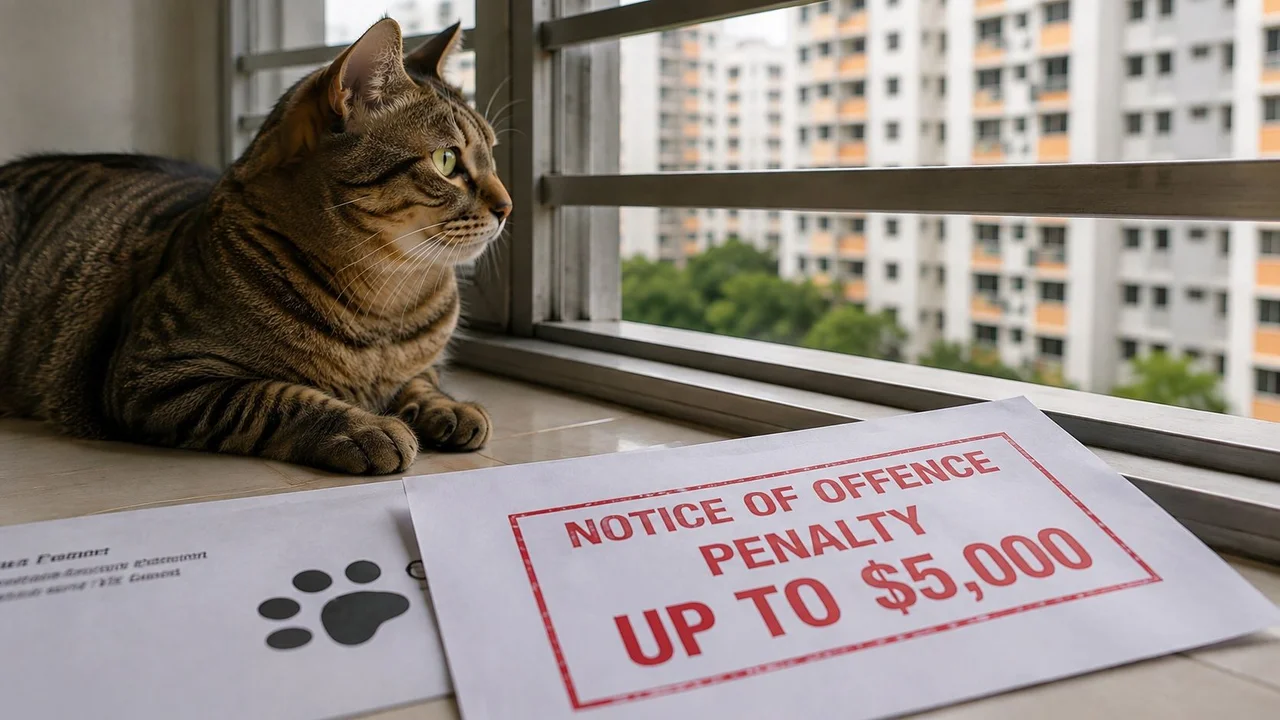
AVS: Singapore residents keeping unlicensed cats may face fines of up to S$5K
Summary
Over 111,000 pet cats had been licensed in Singapore by Aug 31, after a two-year transition period for new pet-keeping rules.
From Sep 1, keeping an unlicensed pet cat becomes an offence under the Animals and Birds Act, with fines reaching S$5,000.
New licence applications will follow pet keeping limits of two cats in HDB flats and three cats and dogs in private homes.
SINGAPORE: Singapore’s two-year grace period for cat licensing has ended, and the rules now have teeth. From Sep 1, keeping an unlicensed pet cat is an offence under the Animals and Birds Act.
Pet keepers who breach cat-keeping rules or licence conditions can face fines of up to S$5,000 upon conviction.
Over 111,000 pet cats have been licensed since the Cat Management Framework began in Sept 2024. The figure rose sharply from about 66,000 cats reported as licensed by the Animal & Veterinary Service (AVS) on Jul 18.
Minister of State for National Development and Foreign Affairs Alvin Tan also urged pet keepers to get their cats microchipped and licensed. He said the system helps trace cats, ties them to their keepers, and makes it easier to reunite lost pets with their families.
The transition period has given cat-keepers two years to prepare
The licensing scheme was introduced on Sep 1, 2024, with a two-year transition period to help cat-keepers adjust.
During that time, AVS ran more than 120 free microchipping drives across more than 30 locations. About 11,500 cats were microchipped through those efforts.
The support effort has also included free sterilisation and microchipping for eligible lower-income households.
The latest figures reported by Minister Tan show more than 6,300 cats from about 2,900 lower-income households received support during the transition period.
Microchipping gives each cat a unique identification number linked to its keeper and address.
Cat keepers must also keep their pets safe
Licensing comes with responsibilities beyond getting a microchip. Keepers must take reasonable steps to keep their cats safe, including installing mesh, grilles, screens or other barriers to stop cats from roaming or falling from heights.
Cats also can't simply wander around outside. Keepers must maintain physical control of the animals, such as by using a carrier or harness.
The rules also set limits for new licence applications. HDB households can have up to two cats, while private homes can keep up to three cats and dogs.
There is an important exception for existing cats. Keepers who already had more cats before Sept 1, 2024 can continue keeping them if those cats were licensed during the transition period and their welfare is properly cared for.
Fosterers get more room to help cats in need
The changes also bring some good news for people who foster cats.
AVS began a two-year pilot scheme on Aug 3 allowing approved fosterers to care for up to six cats in three-room or larger HDB sold flats, and up to 10 cats in private homes.
Newsletter
Get updates straight to your inbox
All cats in the household count towards the limit, including the fosterer’s kept pets. Licensing fees for foster cats are also waived during the pilot, which runs until July 31, 2028.
The scheme recognises the role fosterers play in caring for sick, injured and abandoned cats while they wait for permanent homes.
Singapore has also continued its Trap-Neuter-Rehome/Release-Manage (TNRM) programme for community cats. More than 4,700 community cats had gone through the programme by Aug 31.
Responsible lifelong pet care is the real point under the new rules
The new rules may feel like another government requirement for cat keepers, but the basic idea is to know where your cat is. Make sure they can be identified. Keep them safe. And take responsibility for them throughout their entire lives.
AVS also warns that abandoning a pet is an offence. First-time offenders who fail in their duty of care can face a fine of up to S$10,000, up to 12 months’ jail, or both.
A cat may think the home belongs to them. Legally, though, the responsibility still belongs to the human.