
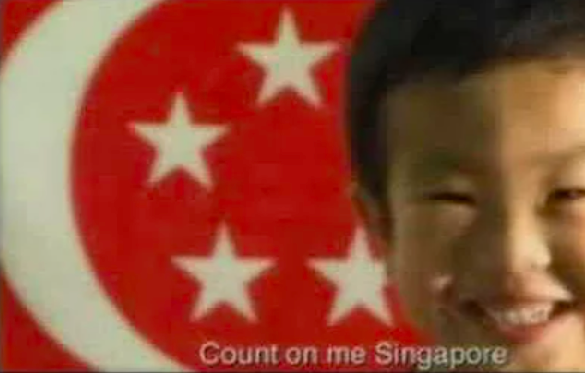

Singapore—“Count on Me, Singapore” is the 1986 National Day Song that’s been in the middle of a firestorm after alternate versions of it from India were being uploaded online entitled “We Can Achieve.”
In the latest update, the Ministry of Culture, Community and Youth (MCCY) announced in a Facebook post on Thursday morning (Mar 18) that it is inviting the alleged composer of “We Can Achieve,” Indian national Joey Mendoza, to substantiate his claims that he wrote the song in 1983, before “Count on Me, Singapore” came out three years later.
The MCCY wrote in its post, “We are aware that a song titled ‘We Can Achieve’ that bears striking similarity in tune and lyrics to our national song ‘Count on Me, Singapore’ has been circulating on the internet.”
The ministry added “a Mr Joey Mendoza has asserted that he wrote ‘We Can Achieve’ in 1983, before ‘Count on Me, Singapore’ was created in 1986.
“”Given that the two songs, and their lyrics, are practically identical, and that we hold the copyright to ‘Count on Me, Singapore’, we are puzzled by this claim.
We have thus contacted Mr Mendoza to invite him to substantiate his claims. We are still waiting for his response.”
It added that the copyright to the music and lyrics of “Count on Me, Singapore” are held by the Government of Singapore.
Furthermore, Pauline India, which had included “We Can Achieve” in a 1999 CD, acknowledged in a Mar 16 Facebook post that there are copyright issues with the song.
“It seems that it has been copied 99 % from the Song “Count on Me Singapore”. Song and Lyrics by Hugh Harrison and sung by the Singaporean Clement Chow in a TV programme,” wrote Pauline India.
This was also mentioned by MCCY in its latest post, adding that Pauline India were unaware that “‘Count on Me, Singapore’ had been Singapore’s national song since 1986. They have since apologised and removed the song from their platforms.”
However, MCCY also wrote that they are “also happy it seems to have been well appreciated in India, with the video showing teachers and students in a school performing the song, and expressing their love for their own country.”
The ministry added that it believes no ill-will was intended by Pauline India and the school where it was performed.
The MCCY has also accepted their apology.
But as for Mr Mendoza, the alleged composer of “We Can Achieve”, it is a different story.
He had told Coconuts on Mar 16 that he had written the song for 250 orphans in 1983 so they could perform it at Mumbai’s Bal Bhavan orphanage. He added that he received INR2,000 (S$37) from Pauline India in 1999.
However, he also claims that his recording of the song was lost in 2005 in the Mumbai floods.
/TISG
Read also: Indian teacher takes down from YouTube altered version of ‘Count on Me, Singapore’
Indian teacher takes down from YouTube altered version of ‘Count on Me, Singapore’
 Follow Google News
 Join us on WhatsApp
 Follow us on Telegram