
Singapore targeted by coordinated disinformation over Indonesia stock market crash and fake secret meeting

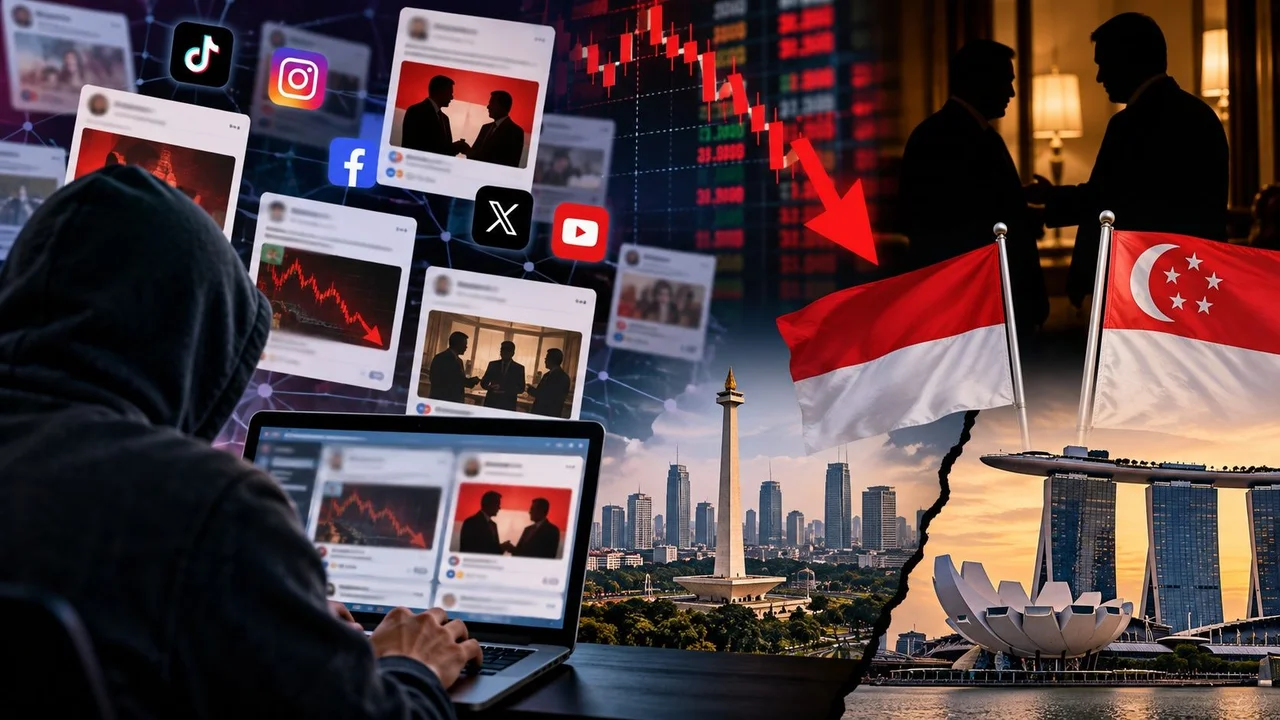
Singapore targeted by coordinated disinformation over Indonesia’s stock market crash
SINGAPORE/INDONESIA: False claims linking Singapore to Indonesia’s stock market crash campaign came amid a difficult week for Indonesia, following a sharp stock market fall and reduced gas supplies to Singapore.
On Oct 15, global index provider MSCI announced it was reviewing Indonesia’s market status over concerns about market governance. The announcement triggered a major sell-off in Indonesian shares.
Four days later, former Indonesian trade minister Muhammad Lutfi alleged that Singapore investment firms GIC and Temasek had pressured MSCI. Neither company was involved, and both rejected the allegation.
The claims gained further attention after Indonesia began reducing gas exports to Singapore on Oct 24. Its government said the decision was needed to protect domestic supply.
Singapore’s Energy Market Authority said the reduction represented less than 2 per cent of the country’s daily gas demand.
Yet some social media accounts linked the gas reduction to the market allegations, suggesting Singapore could face consequences if it interfered in Indonesia’s affairs. One TikTok post making that connection attracted nearly 360,000 views.
Fake meeting claims targeted two Indonesian figures
A separate campaign focused on former Indonesian deputy foreign minister Dino Patti Djalal and academic Saiful Mujani.
Posts claimed the pair had secretly met Singapore’s ambassador to Indonesia, Kwok Fook Seng, at his Jakarta residence. Both men denied the meeting, while the Singapore embassy rejected the story as false.
The timing was particularly striking. The posts appeared shortly after Mr Dino dismissed claims of a Singapore conspiracy. Mr Saiful had also attracted attention following a survey showing declining support for Indonesian President Prabowo Subianto.
Channel News Asia’s CNA Verify found that several accounts reused the same spelling mistake in Mr Dino’s name. Others copied identical images, captions and labels across different platforms.
One network contained 68 lookalike accounts posing as news pages. Some published nearly identical stories within seconds of each other. However, CNA Verify couldn't establish whether one person or organisation controlled the accounts.
Nationalist sentiment can turn Singapore into a target
Muhammad Faizal bin Abdul Rahman, a research fellow with the S. Rajaratnam School of International Studies’ regional security architecture programme, said Indonesia’s online space included political influencers known as buzzers.
Mr Faizal explained that some could be linked to local political interests, while others might operate independently. Their activities could combine to shape public opinion and direct attention towards foreign countries.
Mr Faizal also warned that blaming smaller neighbouring states could help redirect domestic frustration away from local problems. This carries implications for Singapore, particularly as the country is due to assume ASEAN chairmanship in 2027.
Newsletter
Get updates straight to your inbox
Singapore-Indonesia relations face pressure from online disinformation
Singapore and Indonesia have close economic and regional ties. Claims involving investment firms, gas supplies and diplomatic meetings can therefore reach beyond social media arguments.
The figures also show how a relatively small number of posts can generate substantial attention. Just 10 posts accounted for half of the nearly 12 million views.
The rational response is to stick to verified information rather than amplify claims just because they attract attention.
Social media makes publishing easy, but checking whether something actually happened still takes effort. A few seconds spent checking a source can save hours of unnecessary misunderstandings and useless arguments.