
Indonesian NGO plans lawsuits against Malaysian and Singaporean companies over transboundary haze

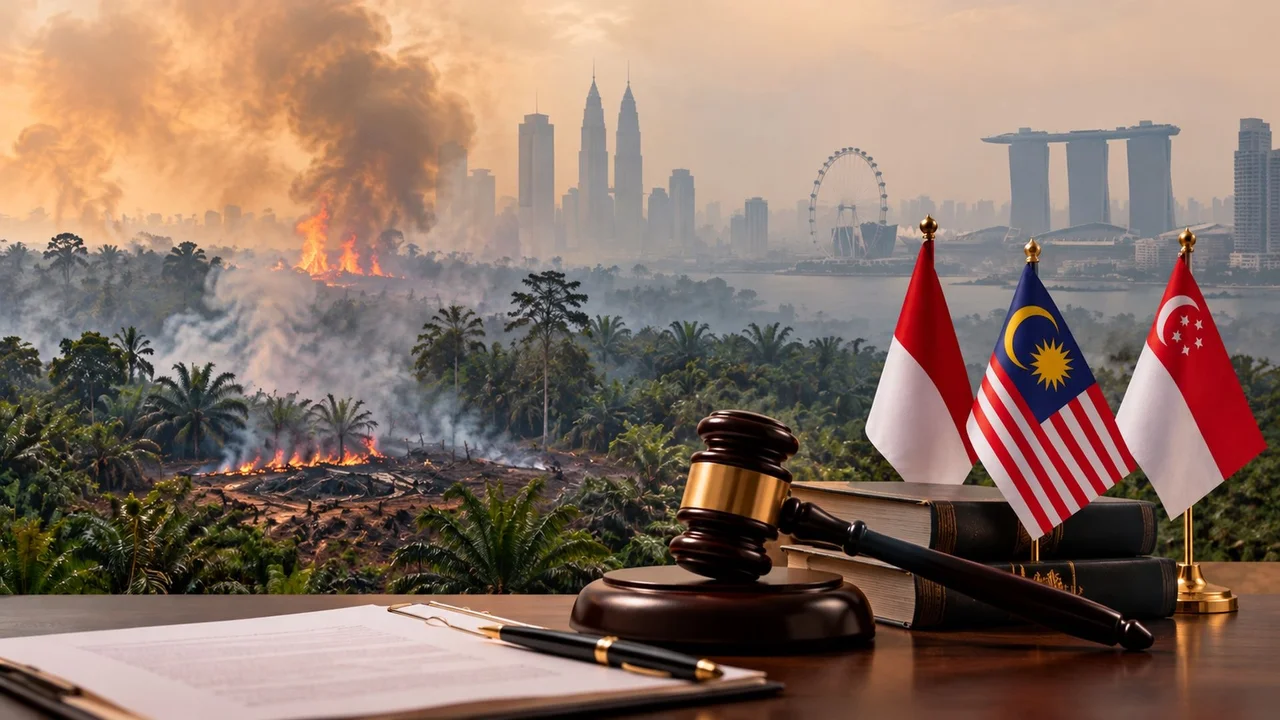
Indonesian NGO plans lawsuits against Malaysia and Singapore companies over transboundary haze
MALAYSIA: An Indonesian environmental group is preparing legal action against Singaporean and Malaysian plantation companies over their alleged links to forest fires behind the recent regional haze.
The Indonesian Forum for the Environment, known as Walhi, plans to target Singaporean firms first. It is weighing lawsuits in a Jakarta district court and may pursue parent companies directly in Singapore.
At a roundtable hosted by Malaysian advocacy group Monitoring Sustainability of Globalisation (MSN), Walhi campaign coordinator Uli Arta Siagian said the group was consulting experts and gathering evidence. It also plans to hire an international lawyer to help build its case against Singapore-based holding companies.
The approach could extend legal scrutiny beyond local subsidiaries to the companies that own them, Free Malaysia Today (FMT) reported (Oct 26).
Walhi is still collecting data on Malaysian companies’ alleged involvement in the fires. Siagian said the lack of a strong regional legal framework makes it harder to hold parent companies accountable for pollution crossing national borders.
A 2022 Walhi report found that the 2002 ASEAN Agreement on Transboundary Haze Pollution lacked an enforcement mechanism. The agreement relies on member states to consult and negotiate when smoke affects neighbouring countries.
Monitoring Sustainability of Globalisation director Charles Santiago pointed to Singapore’s experience in 2015. Singapore sought information from Indonesian local authorities about forest fires under its Transboundary Haze Pollution Act but received no response.
Without that information, Singapore lacked a basis to bring charges, Santiago said.
Malaysia urged to investigate alleged links
Walhi also wants Malaysia to examine possible links between its companies and the fires, rather than assume they were uninvolved because their names didn’t appear on an Indonesian government list of firms identified as responsible.
Earlier in October, government spokesman Fahmi Fadzil said checks with Malaysian firms indicated that most fires observed in Indonesia occurred outside oil palm concessions owned by Malaysian companies.
Newsletter
Get updates straight to your inbox
The concern extends beyond corporate disputes. Forest fires have sent toxic smoke across Indonesia, Malaysia, Singapore, Brunei and Timor-Leste, prompting school closures, more respiratory illnesses and restrictions on outdoor activities.
The planned lawsuits are still being developed, and no court outcome has been reported in the source.
For people living through recurring haze, identifying who caused the fires matters only if it leads to meaningful accountability.
Better investigations, reliable evidence and stronger regional cooperation would give affected communities a better chance of seeing those responsible face consequences.
Read related: Indonesia’s forest fires linked to 21 Malaysian-affiliated companies, NGO alleges