
Indonesia records 174,000 respiratory cases as haze from Borneo and Sumatra fires worsens — over 40,000 cases in toddlers

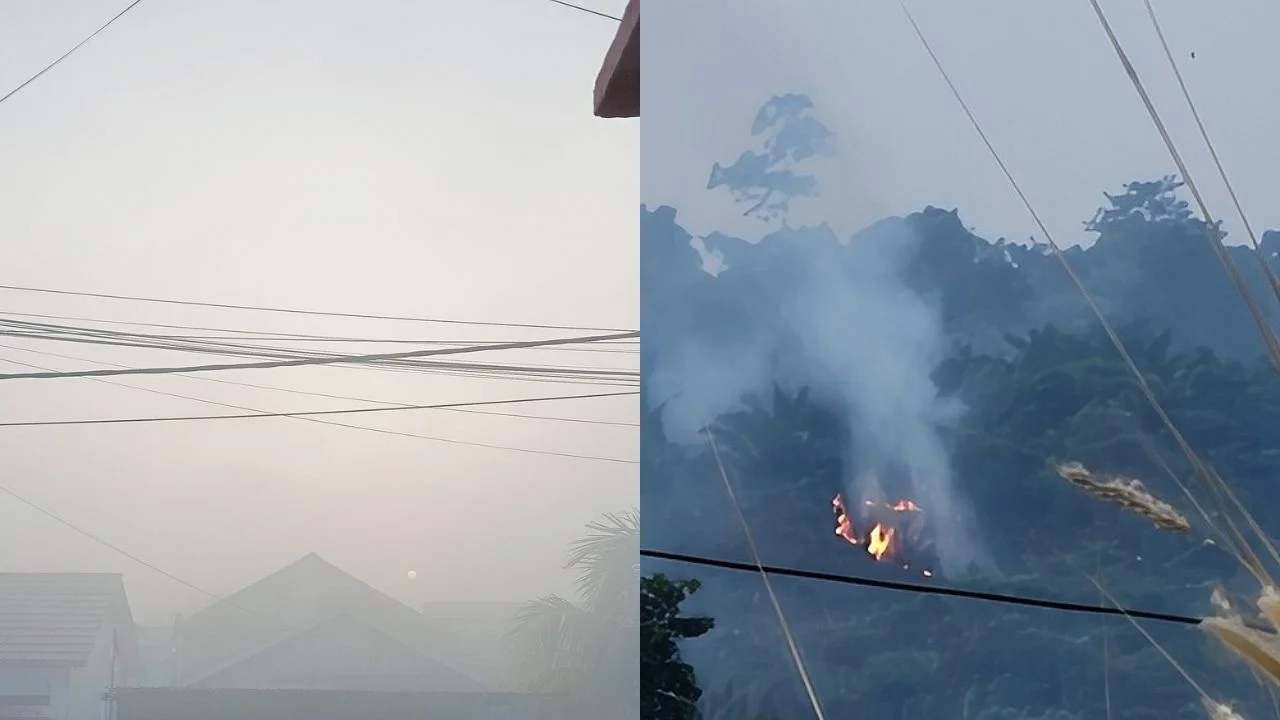
Photo: (left) Morning sky in Palangka Raya, Central Kalimantan; (right) Forest fire started in Berau, East Kalimantan
INDONESIA: More than 174,000 acute respiratory infection cases have been recorded across Indonesia’s haze-affected provinces between August and September 21, 2026, a health ministry official said Tuesday, as reported by New Straits Times (NST). The country continues to battle wildfires across Borneo, Sumatra, and Papua that have blanketed parts of the archipelago and its neighbours in toxic smog.
Health ministry official Then Suyanti told a news conference that the figure, recorded across seven haze-affected provinces, represents a significant jump from the more than 113,000 cases reported as of Sep 9. More than 40,000 of the cases affected toddlers.
“There were 174,694 cases of acute respiratory infections between Aug and Sep 21 in areas affected by forest and land fires,” she said.
The toxic smog contains PM2.5, a fine particulate matter smaller than a human hair that carries serious health risks, including respiratory infections. The health ministry has mobilised aid to affected regions, including oxygen concentrators, face masks, and oxygen canisters.
“We advise the public to reduce outdoor activities when air quality worsens, use masks and maintain hydration,” the health ministry official was quoted as saying by NST.
Why the fires are worse this year
Indonesia regularly battles wildfires during the dry season, which typically runs from July to October, but this year’s blazes are more intense, coinciding with what experts expect to be the strongest El Niño climate phenomenon since comparable records began four decades ago. Climate change, decades of forest degradation, and slash-and-burn land-clearing practices that have altered the naturally fire-resistant landscape have also been identified as contributing factors.
Newsletter
Get updates straight to your inbox
The fires have sent air quality indices plummeting not just within Indonesia but across neighbouring Malaysia and Singapore, where several monitoring stations have recorded unhealthy to hazardous readings in recent weeks.
Read related: Asia's air crisis: Major cities hit emergency 'hazardous' AQI levels across Southeast Asia following Indonesian wildfires