
Singapore man posts warning after almost getting scammed by fake Booking.com link
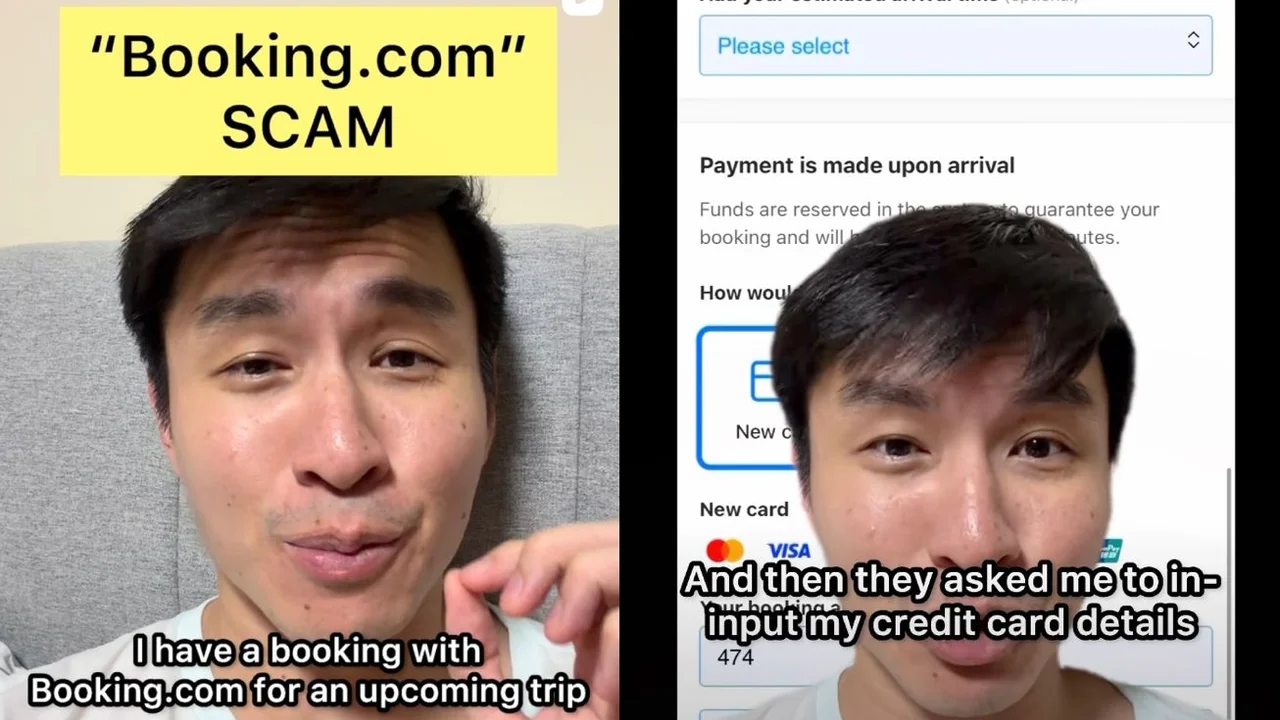
SINGAPORE: A man in Singapore posted a warning recently on social media after he was almost scammed when he received a link that was purportedly from the popular online travel agency Booking.com.
Jim Tay, a property consultant who is OrangeTee's Country Director for Japan, took to Instagram on Sept 13 to share his experience.
He said in a video that he had made a booking through Booking.com for an upcoming trip, the first time he used the platform to do so, and thought everything was all arranged.
To his surprise, he received a WhatsApp message telling him that he needed to do a final step for his reservation. If he failed to do so, his reservation would be cancelled.
The message contained a link directing him to “booking.jhprint.com," and when he clicked on it, it opened to a page that had the correct details for Mr Tay’s upcoming booking, including the date, venue, and price.
What was apparently lacking, based on the page, were Mr Tay’s credit card details.
Growing suspicious and feeling that “something fishy” was going on, he double-checked his reservation on the Booking.com app, which showed that it was confirmed and there was no need for further information.
He then copied the link from the WhatsApp message and pasted it into his Safari browser, which gave him a warning that he was about to go to a deceptive website.
Mr Tay pointed out that when he clicked the link through WhatsApp, no such warning appeared.
“Please be careful. The scammers are getting better and better these days,” he warned.
A number of commenters on Mr Tay’s video told him that they had similar experiences, and in his next video, he asked for recommendations for alternative booking sites.
Earlier this year, the Amsterdam-headquartered Booking.com said it had suffered a data breach that had left customers’ details vulnerable.
Newsletter
Get updates straight to your inbox
The company said in April that it had “noticed some suspicious activity involving unauthorised third parties being able to access some of our guests’ booking information.”
According to reporting from The Guardian, Booking.com said it had taken action to contain the issue. While the company declined to say how many customers were affected by the breach, the hackers could not access customers’ financial information, though they could obtain booking details and names, emails, addresses, and phone numbers. /TISG