
Nvidia blocks chip shipments to Singapore, Malaysia and 2 other Southeast Asian countries amid US curbs on exports to China

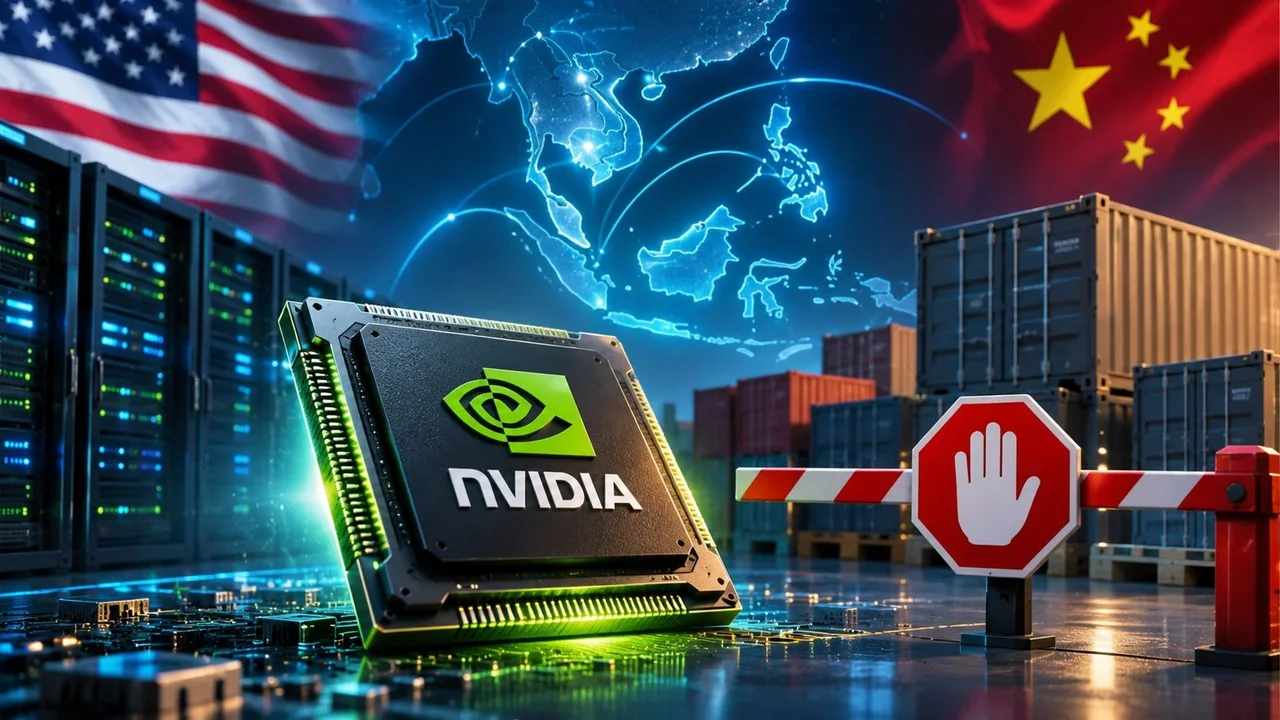
Nvidia chip shipments halted amid US export restrictions on Southeast Asia
ASIA: Nvidia has told its manufacturing partners to halt server shipments to Singapore, Malaysia, Thailand and Indonesia. The decision follows as the United States tightens controls on access to advanced AI chips by Chinese companies.
Manufacturers Dell and Supermicro had informed buyers in the four countries that their orders could no longer be shipped. It is unclear for the moment whether the suspension is temporary.
Three people familiar with the matter said Nvidia and its partners were still working out how to comply with Washington’s latest export rules, Channel NewsAsia (CNA) reported (Nov 26 ), citing The Financial Times report.
Singapore and regional data centres face disruption
The four Southeast Asian countries have become popular destinations for Chinese AI developers seeking access to Nvidia’s advanced processors.
Singapore has a particularly significant financial connection to the chipmaker. Nvidia recorded US$104 billion in revenue through its Singapore subsidiary in 2025, a 72% increase within 12 months.
However, the company also records some revenue from Taiwan and China through its Singapore unit.
The restrictions could affect a regional data centre boom, particularly in Malaysia and Indonesia. Chinese technology companies have helped drive demand for AI infrastructure, attracting billions of dollars in investment.
US export controls target access through cloud providers
Chinese companies have found ways around direct export restrictions by renting computing power from cloud providers operating servers fitted with Nvidia chips.
The US Commerce Department introduced new rules last week to address this practice. Cloud providers now have 90 days to obtain licences and prove their end users don't include restricted entities.
A cloud industry executive said that providers had received little guidance on applying for the licences. The uncertainty has caused considerable disruption across the region.
Singapore cloud company faces a major setback
One affected company is Singapore-based Aolani, which had planned to lease advanced computing capacity to ByteDance, the Chinese company behind TikTok.
Two people familiar with the matter said that bankers who had agreed to finance the project had stopped issuing about US$500 million in credit. ByteDance may also abandon the deal.
Newsletter
Get updates straight to your inbox
Nvidia declined to comment, while Dell, Supermicro, ByteDance and Aolani didn't respond to requests for comment.
The situation shows how decisions made in Washington can affect businesses and investments across Southeast Asia. Companies planning major AI infrastructure projects now face uncertainty over access to the chips needed to run them.
For Singapore, maintaining its appeal as a technology and data centre hub will depend partly on how businesses adapt to changing export rules. Investors and cloud providers need specific guidance before committing more money to projects that could face sudden restrictions.