
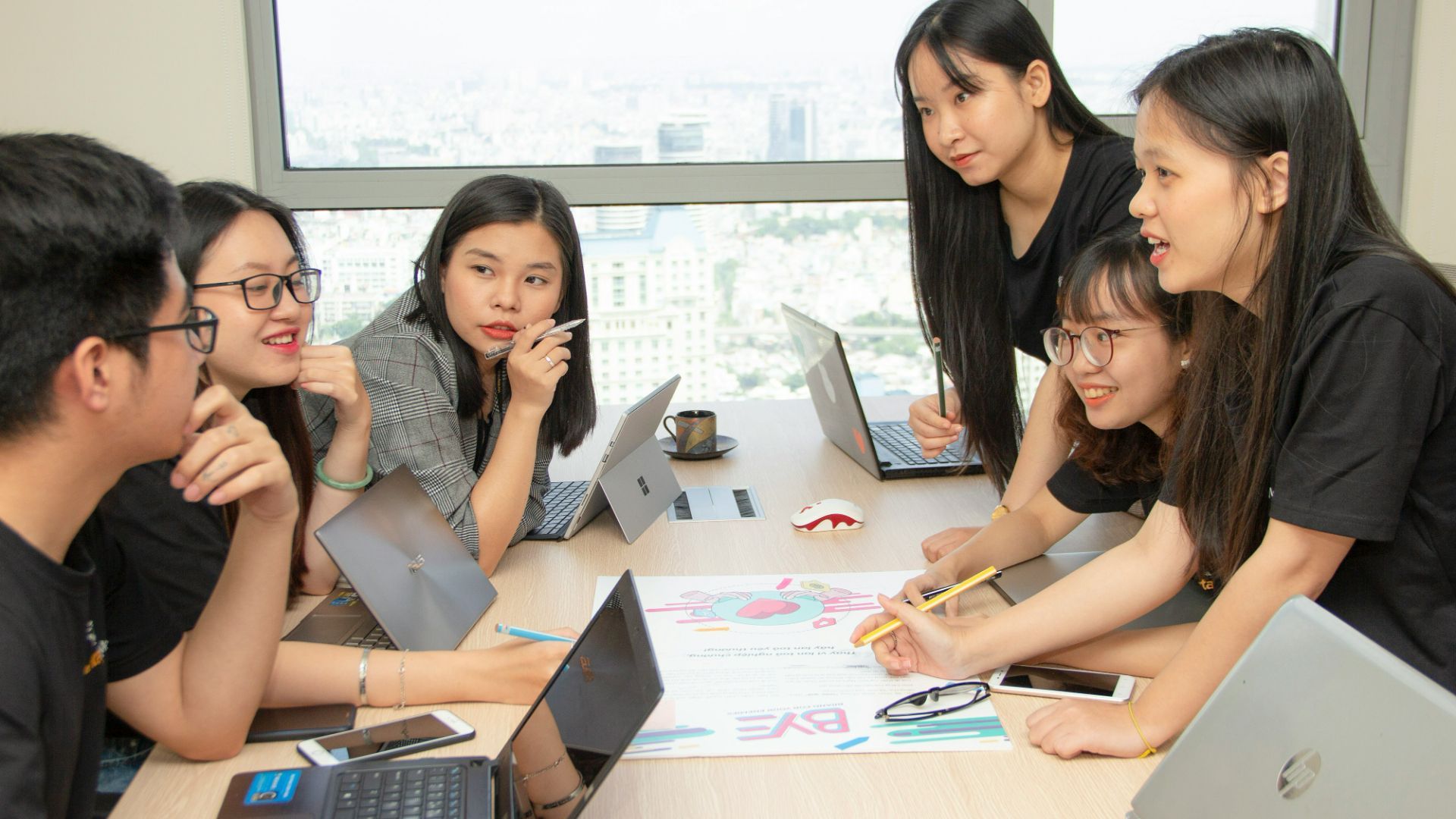
work colleagues
Foreign worker feels excluded after colleagues repeatedly switch to Mandarin at work: ‘Is this something people just accept here?’

SINGAPORE: A foreigner working in Singapore says he feels increasingly excluded at work as colleagues frequently switch from English to Mandarin during meetings, leaving him and other non-Mandarin-speaking employees struggling to follow the discussions.
The man raised the issue on the r/askSingapore forum on Tuesday (Aug 18), saying, “Most of my company are from the same country (Mainland) and speak the same language (Mandarin). A small number of us are foreigners who don't. I don't expect to be part of every social thing, but the pattern has become hard to ignore.”
He said he understands that colleagues may naturally feel more comfortable speaking their mother tongue, but the repeated switch to Mandarin has left him feeling shut out of both workplace discussions and social activities.
According to the man, meetings typically begin in English so that everyone can participate. However, once the discussion gets underway and colleagues become more comfortable, they switch to Mandarin and continue the meeting without translating or summarising what has been said.
“We hear our own names come up and have no idea what is being said,” he wrote.
“We are also rarely included in team lunches, dinners, or other activities. It is not one bad day. It is a steady split where some people are always in and others are always left out.”
“To be clear, this is not me refusing to learn. I already speak several languages, and I have started learning the local majority language so I can follow what is going on. So ‘just learn it’ is not the problem.”
He also said the issue had already been raised with management, but the response so far has been limited to a general reminder for employees to use English at work.
“The only response was a general ‘use English at work’ announcement with no real enforcement. People go back to their own language within days. Going to senior management is hard because many of them are in the same language group too.”
“I understand people feel more comfortable in their mother tongue. But in an international workplace, shutting people out of conversations, meetings, and social life over language again and again is not just a preference anymore. It creates a place where some people are always included and others are always outsiders.”
“Is this something people just accept here, or is it worth escalating? Honest takes welcome.”
‘We don’t do it intentionally’
In the comments, one Singaporean Redditor suggested that he politely ask his colleagues to repeat themselves in English whenever he notices his name being mentioned.
“When you hear your name, then speak up and say, ‘I heard my name, do you mind repeating this in English?’ They might feel more comfortable speaking in Mandarin and uncomfortable in English, so they default to Mandarin.
“If your boss is from the same country, and you have highlighted the issue and there are no changes, then maybe start looking for a new job.”
Another Redditor advised him to raise the issue at the end of each meeting, but to do so in a light-hearted way.
Newsletter
Get updates straight to your inbox
“Maybe at the very end of every meeting, you can go, I was not included in the 50% of the discussion held in Chinese. So I assume that I do not have anything to follow up on. Great meeting everyone! I'm sure at that point, people will translate and condense what you need to know for you when you say that. And if they don't. Less work for you!
A third user reassured the post author that his colleagues probably were not trying to leave the foreign workers out when they switched to another language.
“We don’t do it intentionally. We just default to certain languages when speaking to certain people. Here's a tip... say, ‘Eh, Channel 5 lehhhh’ (our local English TV channel) when they start speaking in mother tongues.”
“It's lighthearted enough and won’t sound confrontational. The truth is when your colleagues realise they are unintentionally outcasting you they do feel embarrassed as well. They don't mean it.”/TISG
Read also: ‘Am I going on a date or a job interview?’: SG man stunned by woman’s financial questions