
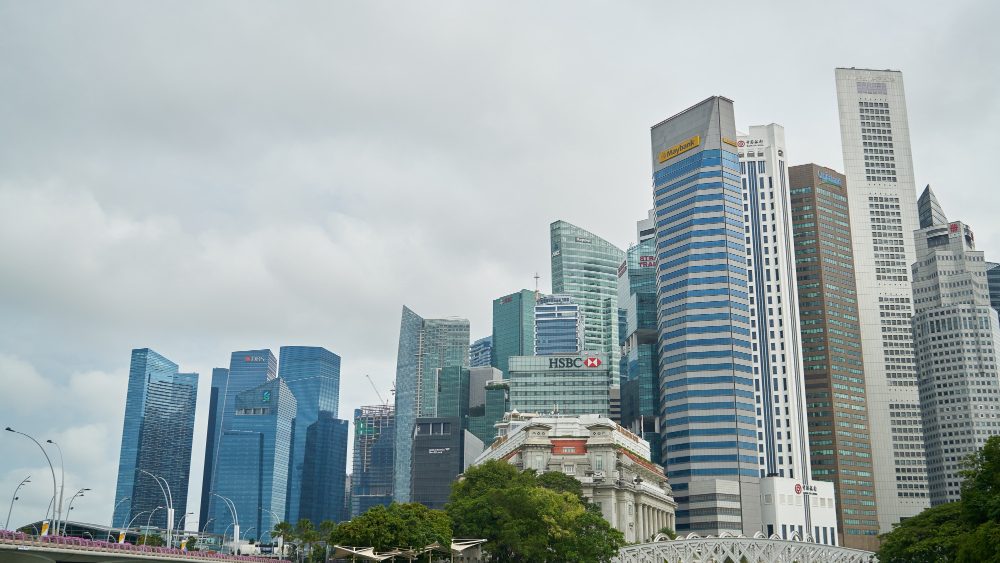

SINGAPORE: Singapore and Malaysia, both with more advanced digital infrastructure and talent, are expected to see more gains from artificial intelligence (AI) than their Southeast Asian peers, as both economies continue to deepen ties with tech firms investing in AI research and development.
Consulting firm Kearney’s 2020 study projected that AI could lift the region’s gross domestic product (GDP) by 10% to 18% by 2030.
However, analysts noted that the economic and tech divide in the region is likely to deepen as AI adoption in less technologically savvy countries in the region, such as Cambodia, Laos and Myanmar, which remain far behind in digital infrastructure and human capital, would be challenging, the South China Morning Post (SCMP) reported.
In July, Alibaba Cloud opened its AI innovation hub in Singapore, followed by Microsoft, which launched its first Southeast Asia AI research lab in the city-state. Google DeepMind also opened its first Southeast Asia AI research lab last week.
Meanwhile, Microsoft pledged US$2.2 billion (S$2.9 billion) last year to develop Malaysia’s AI infrastructure and announced in March that it would launch its first cloud region in the country, with three data centres planned for the greater Kuala Lumpur area.
In addition, a report by Google, Temasek and Bain & Company found that Singapore’s 495 AI start-ups led the region’s private AI funding, contributing about US$1.31 billion of the US$2.3 billion the region attracted in the 12 months ending June. In the same period, the Philippines and Thailand had only 10 and 20 start-ups, respectively.
Lili Yan Ing, secretary general of the International Economic Association, said the already uneven AI adoption levels in the region would likely widen the economic and tech divide in the near term.
AI’s impact on manual workers is expected to hit the Philippines’ business process outsourcing sector the most, as up to 40% of these tasks could be automated with generative AI. The industry employs nearly two million people and makes up about 7% of the country’s GDP. /TISG
Read also: Singapore-headquartered ESR to develop first South Korea data centre
 Follow Google News
 Join us on WhatsApp
 Follow us on Telegram