
WP MP Jamus Lim: We want to encourage the next generation of Singaporean hawkers & restauranteurs
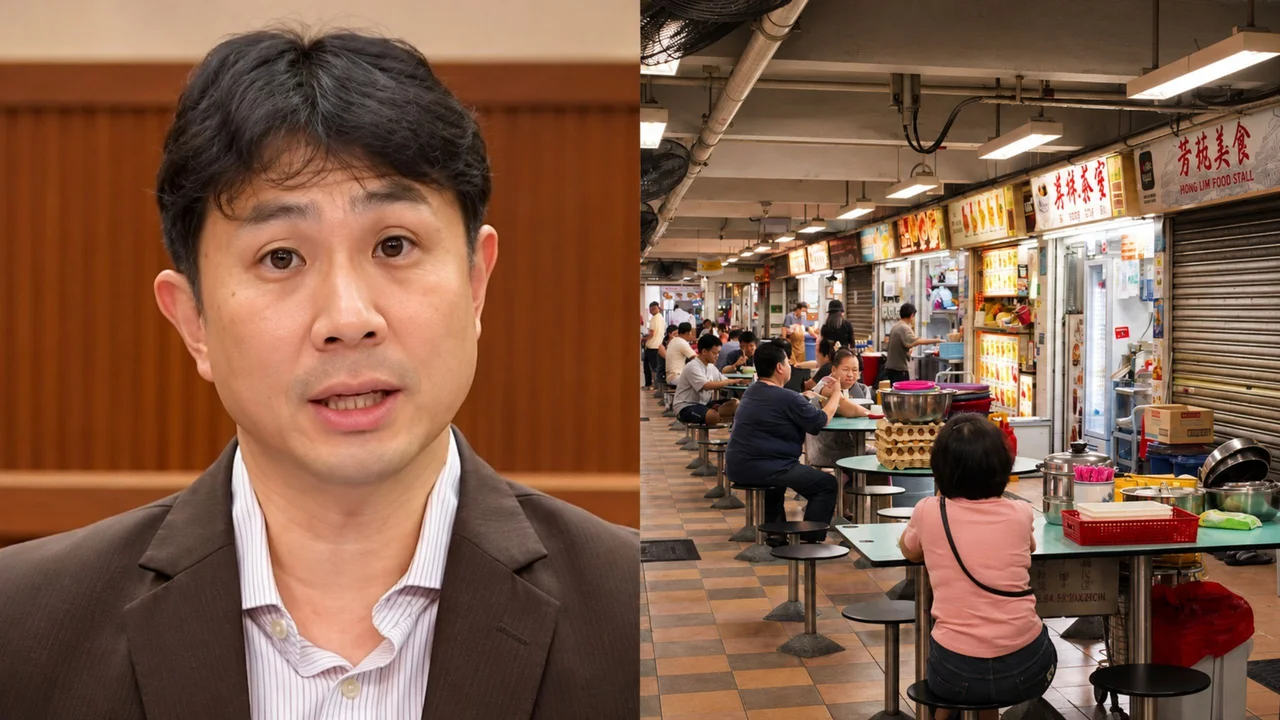
SINGAPORE: Last month, Workers’ Party Member of Parliament (WP MP) Jamus Lim (Sengkang) delivered a speech about what can be done to encourage and support Singapore’s hawkers and other food and beverage operators.
While his proposal for a limit on rental rates was rejected by Senior Minister of State Low Yen Ling, who spoke on the ways in which the government already gives support, Assoc Prof Lim nevertheless revisited the topic in a social media post, arguing that the industry is special to Singapore in terms of cultural heritage and would benefit greatly from more targeted government support. He also said that hawkers, coffeeshops, and restaurants have a different set of problems, including manpower challenges.
The MP invoked an economic phenomenon known as Baumol’s cost disease, where salaries and prices continue to rise even as productivity cannot keep pace.
“That’s because productivity-enhancing measures—like central kitchens and franchising—are inherently limited. Nobody wants hastily-prepared, tasteless food, and we really don’t want to be rushed through our family dinner, just so that the restaurant can turn over the table,” he wrote.
He also mentioned how affordable food is one of the last ways that Singapore can cope with rising living costs, which is all the more reason to protect local food and beverage establishments.
Assoc Prof Lim identified manpower and rental rates as F&B operators’ biggest problems.
“On one hand, we really want to encourage the next generation of Singaporean hawkers and restauranteurs to take up the mantle of serving our delicious local food. On the other, however, there is a chronic shortage of folks interested in taking on kitchen roles,” he noted, calling for reconsidering the Dependency Ratio Ceiling (DRC), which limits the proportion of foreign workers a company can employ, for the industry.
Specifically, he argued for allowing more Malaysian workers to be employed at hawker stalls. Since Singapore and Malaysia already share many culinary aspects, this would help address the manpower shortage while preserving Singapore’s food culture. F&B operators would be asked for their commitments to productivity improvements, workforce deployment, and fair employment practices, to keep them honest, he added.
As for rental increases, Assoc Prof Lim reiterated his proposal to limit how quickly rents can increase from year to year, which would protect F&B operators from sudden increases as well as give them “precious breathing room to adapt their menus and hunt for cost savings.”
Another way to support the industry is to encourage malls to have a minimum proportion of local and Nusantara F&B outlets, instead of simply having tenants with the highest bids. Malls that do not follow this could be given a tax or financial incentive instead of being made to follow a strict quota.
Newsletter
Get updates straight to your inbox
“Regardless of how, the principle is to put a value on our intangible heritage, which we all celebrate,” he wrote, adding, “I don’t want our chicken rice and char kuay teow and laksa and crispy prata to disappear, because we failed to offer justified support. I pray that never happens, but in the meantime, we can do more than that. We can push for common-sense policies that protect and preserve our unique local food culture.” /TISG