

SINGAPORE: With scams being more prolific than ever these days, and many Singaporeans being targeted and even falling victim to them, it’s no wonder that people have had to come up with better and more clever ideas to prevent themselves from getting scammed.
One local Reddit user posted an interesting way that he was able to detect a scammer, and invited others to share the ways they’ve adopted as well.
In a Saturday (Feb 25) post, u/DependentSpecific206 wrote “Using GRC question to avoid online scams. Suddenly had a eureka moment this early Saturday morning. Please share your personal tips and tricks and let’s all fight online scams together! Have a good weekend my fellow Sinkies and stay safe.”
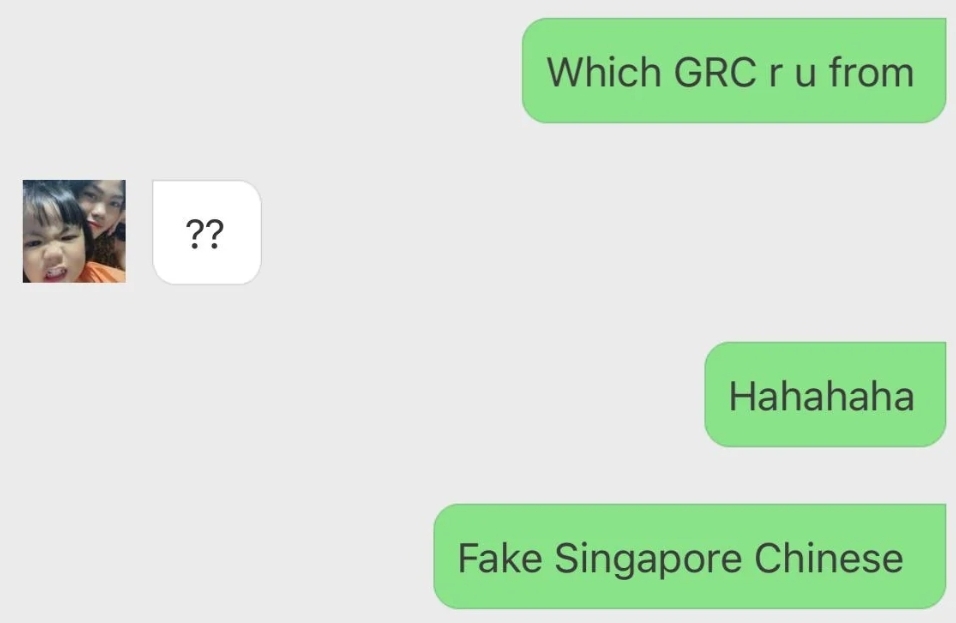
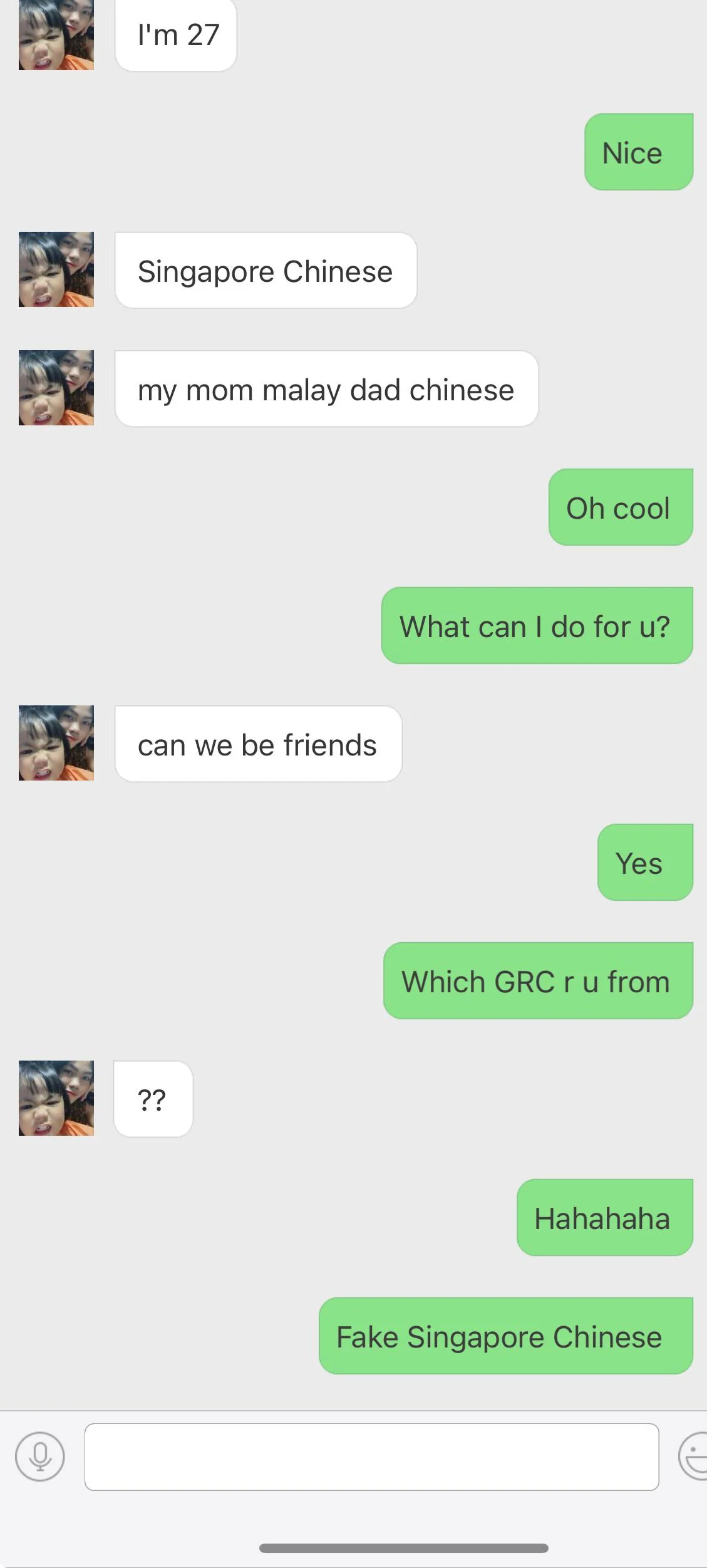
He shared a screen grab of a chat with someone who apparently introduced himself as a Singapore Chinese and asked, “Can we be friends?”
After replying with a “yes,” the post author then asked, “Which GRC r u from?”
The person he was chatting with was flummoxed by this, and could only write “??”
u/DependentSpecific206 then replied, “Hahahaha. Fake Singapore Chinese.”
Well, that’s one way to shut a scam down.
In an answer to one commenter, he said that the convo sounded vaguely like a scam. To this, another commenter disagreed, writing, “Vaguely? that had a billboard the size of MBS three towers combined saying ‘how may I scam you today?’”
Another Reddit user pointed out that GRCs can be “so confusing,” presumably because they are changed from time to time, and suggested instead that the following questions may be asked to weed scammers out: “Who’s your MP?” “How much u getting from this Budget?” or “Do u think LKY was a good president?”
Alternatively, questions related to National Service can also be asked, including “Where (is) your reservist?” “Ur BMT what company?” Your medium key reservist how long?” and “(Did) U finish your 15 cycle for reservist alr?”
Another suggested that “What is (the) status of your CHAS subsidy?” is a question that could also be asked.
Late last year, a report revealed that Singaporeans are the hardest hit by global scams and that each victim loses more than US$4,000 (S$5,3700).
Around the globe, US$1.02 trillion (S$1.4 trillion) is lost annually through scams, with one out of every four persons getting victimized. This is equivalent to 1.05 per cent of the global GDP. The most common type of scam is shopping scams (27 per cent), followed by identity theft and investment fraud. Scammers’ most popular way to reach victims is through phone calls (61 per cent), followed by SMS/Text Messages (58 per cent). /TISG
 Follow Google News
 Join us on WhatsApp
 Follow us on Telegram