
RTS Link hits major milestone as full traction power system is energised

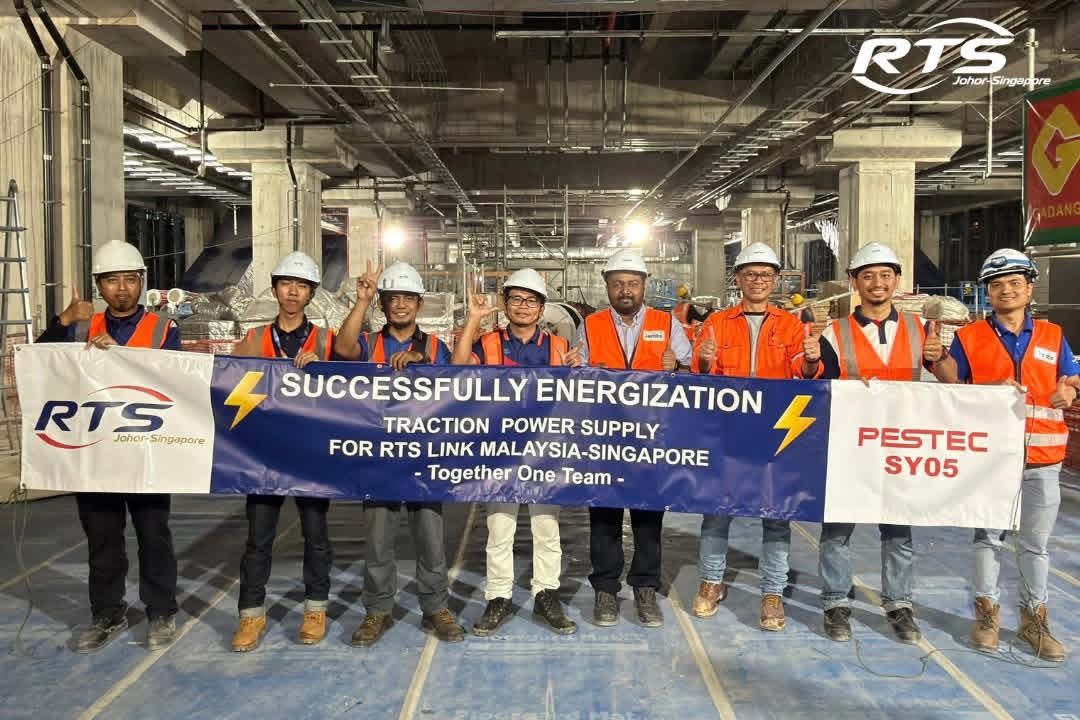
Photo: Facebook / RTSO
SINGAPORE/JOHOR BAHRU: The Johor Bahru–Singapore Rapid Transit System (RTS) Link has reached one of its biggest milestones yet, with the entire 750V DC traction power system fully energised, according to an update posted by the RTS Operations (RTSO) team on Dec 9.
In their announcement, RTSO described the power-up as “one of the most significant steps toward preparing the line for the next phase of testing and, ultimately, operations.”
[caption id="attachment_711303" align="aligncenter" width="696"] Photo: Facebook / RTSO[/caption]
This milestone didn’t happen overnight; it was the result of close coordination, careful planning and the combined efforts of project partners on both sides of the Causeway — including SMRT, Prasarana Malaysia Berhad, Jacobs, PESTECH, MRTS and Singapore’s Land Transport Authority. The team thanked everyone involved for their “hard work, professionalism, and seamless teamwork,” noting that such collaboration is helping to pave the way for a reliable and safe future service.
The energisation sets the stage for dynamic testing, the phase where powered trains will begin moving along the tracks. RTSO called on all partners to keep the momentum, saying the achievement brings the project “one step closer to operationalisation” and realises the vision of a smooth, fast, cross-border journey.
“Together, one team — breezing through borders,” the announcement concluded.
[caption id="attachment_711302" align="aligncenter" width="955"] Photo: Facebook / RTSO[/caption]
Read related: RTS Link project enters pre-operational phase with arrival of first train set at Wadi Hana Depot
Why this matters
For many Singaporeans, the RTS Link is more than just another transport project; it represents a long-awaited solution to the daily congestion at the Causeway. Energising the traction power system is a big deal because it signals that the project is entering its final stretch: the point where trains can start running under real conditions.
Once operational, the RTS Link is expected to hopefully shorten cross-border travel times, reduce reliance on road traffic and make commuting between Singapore and Johor Bahru far smoother and more predictable. For regular workers who cross the border daily, students commuting to campuses, or even families visiting relatives across the Causeway, this is a quality-of-life upgrade that has been years in the making.
Newsletter
Get updates straight to your inbox
On a broader scale, this milestone also reinforces Singapore’s commitment to improving regional connectivity, strengthening economic links and ensuring safer, more efficient travel for thousands of people who depend on the Causeway each day. It’s a strong signal that the long-awaited cross-border rail link is well on track and is closer to becoming part of commuters’ everyday lives.
[caption id="attachment_711304" align="aligncenter" width="696"] Photo: Facebook / RTSO[/caption]