
First JB-SG RTS Link train begins off-site systems integration testing at SRTC

4 m read
SMRT
Photo: SMRT
JOHOR BAHRU/SINGAPORE: The first train set for the Johor Bahru–Singapore Rapid Transit System (RTS) Link has rolled in for testing at the Singapore Rail Test Centre (SRTC), marking a “very interesting phase” for the long-awaited cross-border service, said Malaysia's Transport Minister Anthony Loke.
Train 01 undergoes testing in Singapore
Singapore’s acting Transport Minister Jeffrey Siow and Malaysia’s Transport Minister Loke jointly unveiled the RTS Link Train 01 during a ceremony at the SRTC. The train, which arrived in April, is currently undergoing off-site systems integration testing, The Star reported. Over the next few months, RTS Operations Pte Ltd (RTSO), a joint venture between RTS Operations Sdn Bhd and SMRT RTS Pte Ltd, will run checks to make sure the train works smoothly with key rail systems such as signalling, platform screen doors, and onboard communications. According to RTSO chairman Datuk Khairil Anwar Ahmad, the purpose of these off-site tests is to catch and fix any potential issues before moving to on-track testing. He said this phase is expected to be completed by the fourth quarter of the year, with Train 01 set to begin dynamic testing alongside the rest of the fleet after that. Mr Khairil Anwar said trains 02 to 05 are still being assembled in Batu Gajah, Perak. The remaining three trains, 06, 07, and 08, will follow suit for production. Once completed, all eight trains will be transferred to the Wadi Hana Depot in Johor Bahru for final tests and preparations before commissioning for passenger service. Malaysia Rapid Transit System Bhd (MRTS) subsidiary MRT Corp, which oversees the Malaysian section, said dynamic testing of the RTS Link train system is set for May 2026, as per the terms of the bilateral agreement. This will involve operating the train along the full alignment from Wadi Hana Depot through to the stations.Train design and features
The four-car train, manufactured by CRRC Zhuzhou Locomotive Co Ltd, is the first of eight planned for the RTS Link. It features a white body with red and blue accents, reflecting the colours of the Malaysian, Johor, and Singapore flags. Each train set is 76.4 metres long and can carry up to 1,087 passengers, making it possible to move 10,000 people per hour in each direction. Inside, the train is fitted with a dynamic route map display, hopper windows for fresh air during emergencies, a wheelchair area, and a hearing induction loop to support hearing aid users during service announcements.Construction progress on both sides of the border
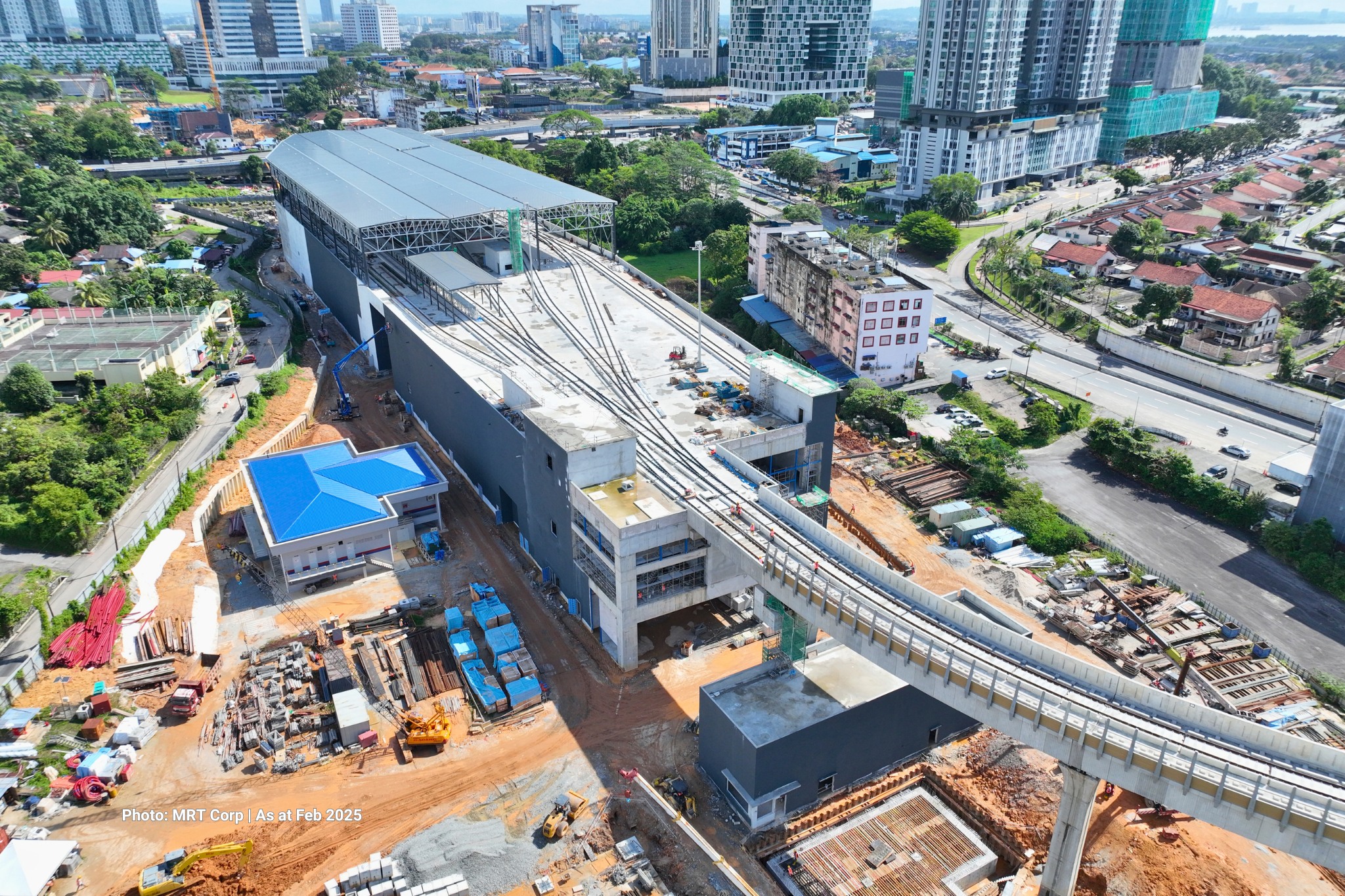
Meanwhile, construction continues to make steady progress on both ends of the Causeway. According to RTSO, rail system works are now about 56% complete. Since late 2024, infrastructure companies from both Malaysia and Singapore have been gradually handing over civil structures to support ongoing works. This includes laying the RTS Link tracks from Wadi Hana Depot through Bukit Chagar station and across to Woodlands North station in Singapore. Other works include the installation of signalling, communications, integrated supervisory control, and traction power supply systems. MRT Corp said key structural works for the Marine Viaduct, Wadi Hana Depot, and Bukit Chagar Station were completed as of end-May. Interior works at the depot are now 80% finished and targeted for completion by October. The roof facade is being installed at Bukit Chagar Station. The Customs, Immigration and Quarantine (CIQ) complex is also 90% structurally complete, with interior work at 45% and facade installation expected to start in September.Looking ahead: RTS Link fares, operation schedule, and economic impact
Minister Loke said the project had faced delays after a change in the Malaysian government in 2018 but was pushed through after many rounds of negotiations. He called the RTS Link a “game-changer” for daily commuters and said the rail line would play a big role in supporting the Johor–Singapore Special Economic Zone. “With another 18 months to go, we are now entering a very interesting phase of this project,” Minister Loke said. “It is about reducing congestion, saving time, and connecting people more seamlessly than ever before,” he added. Acting Transport Minister Siow echoed this, noting that the RTS Link is meant to create “more choices and convenience” for travellers. In end-June, RTS Link operators said they were in the final stages of deciding fares for the cross-border service. Trains are expected to run daily from 6 a.m. to midnight once operations begin, although Minister Loke noted that the operator is also considering adjusting these hours, as some commuters start crossing the border before 5 a.m. /TISG Read also: SG-JB KTM train to cease operations 6 months after new ‘6 minutes’ RTS link starts running in 2027Newsletter
Get updates straight to your inbox