
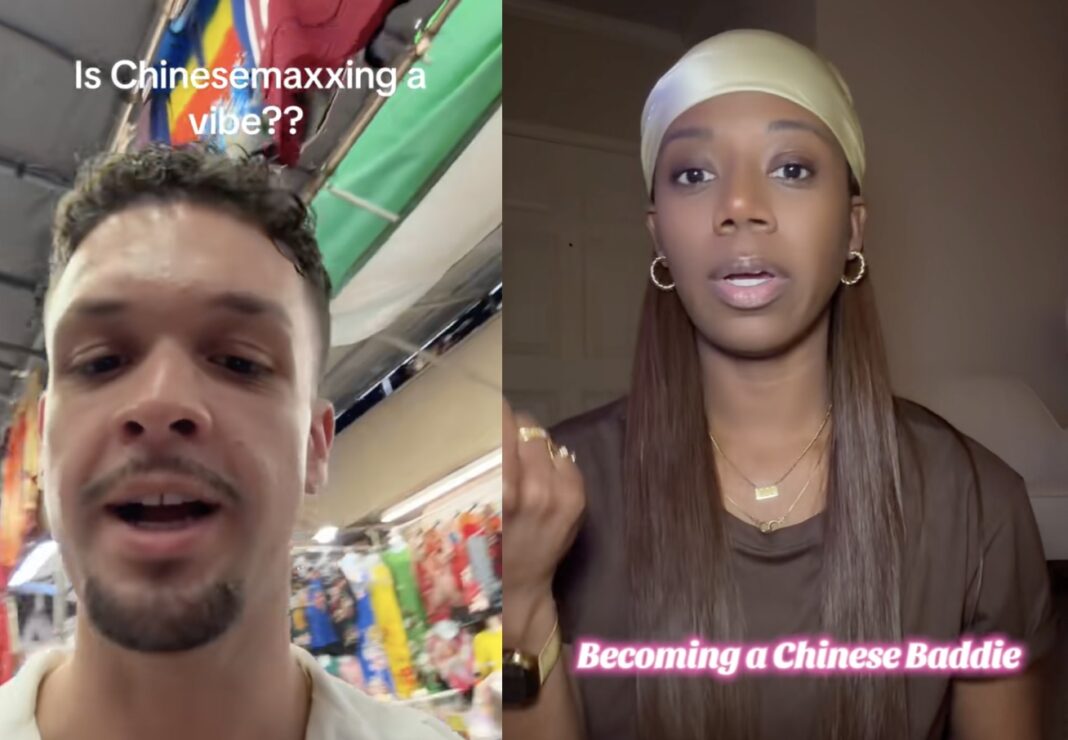

NEW YORK: China has become increasingly more fascinating for young people in the western countries, particularly the United States, and the trend called “Chinamaxxing” is a testament to the country’s soft power.
It has reached a point where many social media influencers have been declaring, “I’m Chinese,” or at least that they’re “at a very Chinese point” in their lives. Some are declaring themselves to be “Chinese baddies,” while others are using the hashtag #newlychinese.
@kaynicole.m I’m now Chinese per my FYP. Please share anything else I need to know. Thank you! #becomingchinese #chinesebaddie #newlychinese #atlanta #chinese
A number of aspects that they’ve come to embrace include drinking hot water and fruit teas, eating rice porridge, shopping at Asian grocery stores, and wearing slippers indoors.
Significantly, the Adidas Chinese Track Top is the must-wear item of the Lunar New Year season.

What is Chinamaxxing?
“Maxxing,” which means pursuing something to its full extent, is a word that’s been around for a while. “Looksmaxxing,” for example, refers to a person who maximises their physical attractiveness not just through exercise or skincare but also through more extreme methods such as surgeries.
Chinamaxxing, therefore, is when young people from Western countries “become Chinese” by adopting traditional Chinese wellness habits, lifestyle routines, and aesthetics.
Over the past couple of years, it has been helped along by such various and surprising, trendy items as Labubu dolls, Mixue tea, Luckin Coffee, and the Black Myth: Wukong video game.
“For the longest time, there was all this discussion about (how) China didn’t really have as much soft power vis-à-vis South Korea or Japan. We see that changing quite a bit over the last few months – with Chinese video games, Chinese films, and even tiny things like Labubus that are really reshaping the cultural imagination of China in the US, and more broadly in the West,” Tianyu Fang, a PhD student at Harvard University’s Department of the History of Science, told CNN.
The trend marks a shift from 2020, when the COVID-19 pandemic, which originated from Wuhan, sparked “Asian hate,” wherein Asians, especially the Chinese, were targeted with various types of aggression.
However, the rise of Chinamaxxing has some factions worried. An article in the New York Post from early February characterised the trend as young Americans who “romanticise living in a Communist society.”
“But Chinamaxxing isn’t just a lifestyle trend. Many of the influencers praising Chinese culture are actively denigrating America. They’re aesthetically, morally, and politically defecting to another superpower,” the article read.
This is, of course, an extreme reaction in a publication not known for subtlety. But it would not hurt to look beneath the surface of the US youth’s fascination with China, given the current turmoil in their country and growing dissatisfaction with its social and political situation. /TISG
Read also: China’s micro-dramas grow into billion-yuan industry as graduates scramble for work
 Follow Google News
 Join us on WhatsApp
 Follow us on Telegram