

Singapore— With more restrictions relaxed, life for many Singaporeans is almost like it used to be before the pandemic, but not for the migrant workers, a recent piece in fortune.com points out.
While more than 90 per cent of the country’s 60,554 cases were among migrant workers living in dormitories, by October last year, the cases dropped to practically zero.
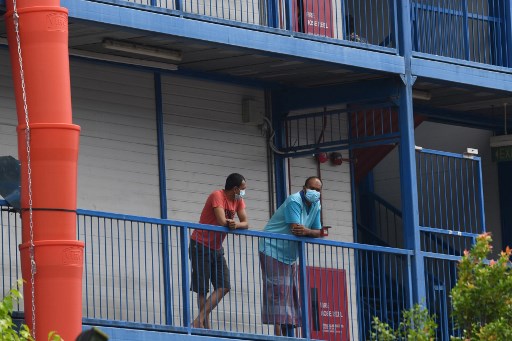
However, migrant workers are still pretty much confined to their dormitories and are only allowed to leave for their jobs or to go to government recreational facilities.
Conditions in many dormitories are still cramped, and a new cluster could still quickly spread among the workers.
The article points out that the workers’ “biggest enemy” is boredom, with many of them watching movies, or playing board games or cards during their off-hours.
Fortune cites one worker who would like to visit the Mustafa Centre, which may have been where the infections began to spread among migrant workers, but cannot.
Other people in Singapore may go where they want to, provided they follow health and safety protocols and limit gatherings to eight. Those who work in offices are permitted to return.
But Singapore’s strict containment of the Covid outbreak among foreign worker dormitories is a key reason why it has been so successful in curbing infections.
The country has only had 30 Covid-19 related deaths so far. And since the foreign workers who got infected were young and in relatively good health, they were able to recover quickly and fully.
And workers continued to receive their salaries during the lockdown period, and those who were ill, received medical treatment.
Vaccinations have begun among the workers as well.
But Fortune, which requested an official comment from the Government and received no reply, points out that the plight of foreign workers shows a “pernicious side” to Singapore’s overall success.
A spotlight was shone on the cramped and at times unhygienic conditions in the dormitories, which contributed to the rapid spread of Covid among migrant workers.
Fortune points out the considerable salary gap between Singaporeans, whose median income is $3,400 (S$4,500), and the workers, who earn between $400 and $800 (S$535 to S$1,070) a month, although for the workers, this is far more than what they would be earning back home.
The article claims that the pandemic deepened the divide between the community and the workers, as the design of dormitories allowed the workers to get shut off from everyone else.
Fortune quotes Mr Alex Au, the vice-president of advocacy group Transient Workers Count Too, as saying: “The dorms were built in such a way that [the Government] could lock the gates at any time. And, of course, in 2020, they found [the design] very useful, and therefore they congratulated themselves on their foresight.”
While the Government has sought to improve workers’ living conditions, this has been met with resistance from employers, who have to help shoulder the cost of upgrades.
As Manpower Minister Josephine Teo said in a Facebook post last year, “Each time we attempt to raise standards, employers yelp—these are added costs which they must eventually pass on.”
But the need for better dorms isn’t the most pressing issue that workers face. Fortune quotes Mr Au as saying that the three most important concerns they have are extremely high recruitment fees (as much as six months’ salary), the inability to switch to another job without returning to their home country, and a means for addressing unpaid wages.
/TISG
Read also: 3 migrant workers die after 10 injured in Tuas industrial building blast
3 migrant workers die after 10 injured in Tuas industrial building blast
 Follow Google News
 Join us on WhatsApp
 Follow us on Telegram