
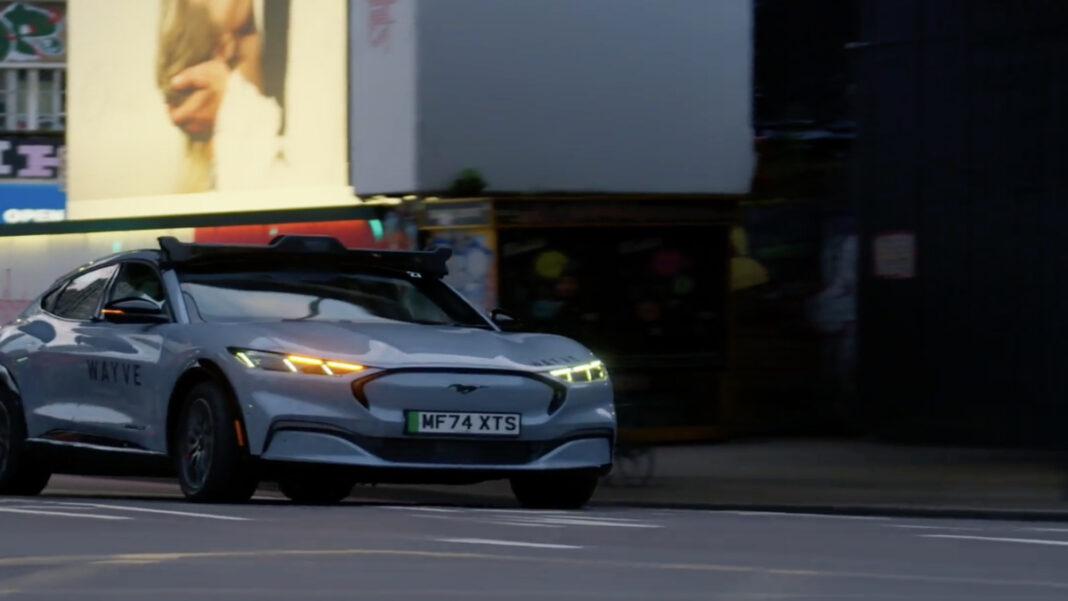

UK-based autonomous vehicle software startup Wayve has raised US$1.5 billion (S$1.9 billion) in fresh funding, valuing the startup at US$8.6 billion, which includes a US$1.2 billion backing from major investors Microsoft, Nvidia and Uber, as well as automakers Mercedes-Benz, Nissan and Stellantis.
Notably, this includes additional capital from Uber. Uber and Wayve have agreed to deploy Wayve-powered robotaxis worldwide, starting with London this year, as part of launching self-driving vehicles on Uber’s app across more than 10 markets.
The latest funding round is key to Wayve’s plan to license its AI driver software to automakers and robotaxi platforms like Uber, Wayve CEO Alex Kendall told Business Insider.
While tagged as Tesla’s Robotaxi or Waymo’s rival, Mr Kendall did clarify that Wayve is not building its own fleet of self-driving vehicles but solely in the business of developing software for companies looking to deploy autonomous cars.
He noted that owning a fleet is expensive and building your own car, like what Tesla’s doing, limits a company to one vehicle platform.
“Everyone wants autonomy, but not everyone wants to buy a Tesla,” he said, noting their approach allows Wayve to generate high-margin software revenues.
Wayve’s AI driver, which Mr Kendall said was designed to be “generalisable”— adapting much like humans learn to drive different cars in different cities —allows their technology to adapt and learn new road rules without the need for high-definition mapping and sensors like their rivals. At the same time, it allows automakers with different sensor configurations on their cars to easily adapt their technology.
Over the past year, Wayve has tested its AI driver in over 500 cities across Europe, North America and Japan without city-specific training. The company is planning to license the tech as an advanced driver-assistance system, handling most driving tasks without the need for human supervision.
The startup, which has been testing its tech in London since 2017, has a deal with Nissan to power its ProPilot driver assistance system from 2027. /TISG
Read also: Singapore car buyers planning to buy EVs drop amid charging-related concerns
 Follow Google News
 Join us on WhatsApp
 Follow us on Telegram