

Singapore—The country’s proposed anti-fake news bill, the Protection from Online Falsehoods and Manipulation Act (POFMA), has not only made the headlines in the country, but has sounded alarm bells around the globe, with many wondering if it would turn out to be a harshly repressive measure that would serve to curb freedom of speech in the nation.
The proposed POFMA bill has been written about in various noted publications around the world, including the New York Times, Bloomberg, Time and the Financial Times.
Back home, the bill has had its defenders among Singaporean leaders. No less than Prime Minister Lee Hsien Loong said last week, at the end of a leaders’ summit with Malaysian Prime Minister Dr Tun Mahathir Mohamad, that the bill “works for Singapore.”
POFMA has also been defended by Law and Home Affairs Minister K Shanmugam, Senior Minister of State for Law and Health Edwin Tong, and other officials.
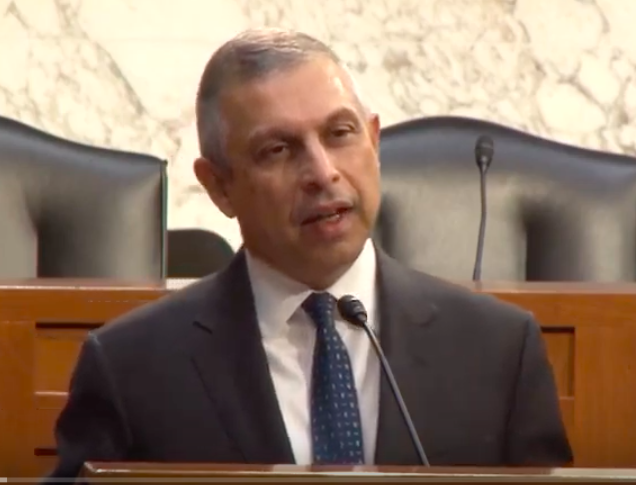
The latest voice lifted up in defense of the proposed anti-fake news bill is that of Singapore’s ambassador to the United States, Ashok Kumar Mirpuri. Mr Mirpuri wrote a letter to the Washington Post, which was published on April 14, Sunday.
Like Prime Minister Lee and others, Mr Mirpuri defended the bill by citing other countries that have either adopted or are considering laws that would fight online falsehoods, such as Germany and France. The Ambassador also highlights how vulnerable Singapore is since it is an “open, English-speaking, multiracial and multi-religious city-state in a rapidly changing region.”
Mr Mirpuri counters the argument that the POFMA would fight against free speech itself and not only online falsehoods. He wrote, “Our proposed legislation was drafted after long examination and public debate. It would target deliberate online falsehoods that threaten public order, but it would not restrict expression of opinion. Thus, media companies could be compelled to correct or remove falsehoods that cause religious strife. But opinion columns would not be affected, no matter how critical of my government.”
Furthermore, Singapore’s ambassador to the United States makes the following salient point:
“If the Singapore government is as authoritarian as the editorial alleged, why have so many leading media and technology companies made Singapore their hub for Asian operations? Every major publication in the world, including The Post, is available to Singaporeans.”
Finally, he echoes what Prime Minister Lee said in Malaysia last week. “Singapore’s approach may not conform to liberal preferences, but our laws are for us to make, and they work for us.”
The article that Mr Mirpuri was referring to was published by the Washington Post’s Editorial Board on April 5 and is entitled, “Is Singapore fighting fake news or free speech?” In it, the author/s write that there is a thin line between the two and that endeavouring to combat online falsehoods comes with certain risks.
“Misinformation may well be dangerous in Singapore, just as it is proving dangerous worldwide. Singaporean officials have been using this ostensible danger as a pretext to quell dissent for more than half a century. The country claims the mantle of a multiparty democracy on the grounds that the government holds elections, yet it sues opposing politicians into bankruptcy, jails peaceful protesters and muzzles journalists. In this context, it is not surprising that Singapore has seized on the real problem of viral misinformation to push legislation that would allow government ministers to demand action against any false content that jeopardizes ‘friendly relations’ with other countries, diminishes confidence in the government or puts ‘public tranquillity’ at risk — all without defining what ‘false’ is supposed to mean.”/TISG
Read related: POFMA: Real reason fake news has become so attractive
https://theindependent.sg.sg/pofma-real-reason-fake-news-has-become-so-attractive/
 Follow Google News
 Join us on WhatsApp
 Follow us on Telegram