
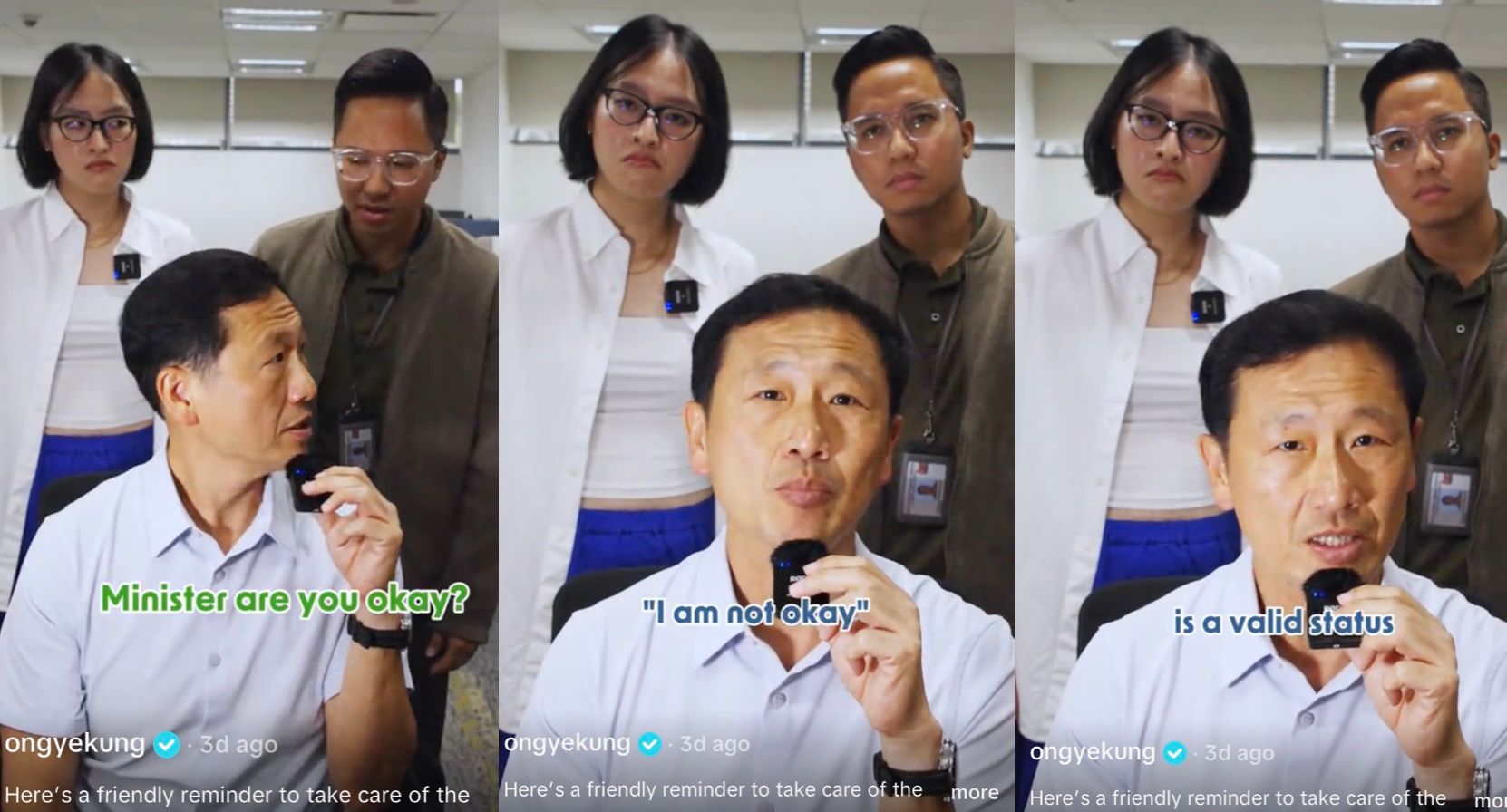

SINGAPORE: On Friday, Health Minister Ong Ye Kung posted a video on his social media accounts reminding everyone to watch out for the mental health of their co-workers, as well as their own.
In the video, he is shown in an office, and he said that the people behind him are examples of “the modern employee: the office worker” who is always working in front of a computer.
He described them as “rather stressful, rather anxious,” but added that they reply to every email “with a smiley face or the words ‘no worries.’”
And then two people who had been behind Mr Ong came up. One of them asks, “Minister, are you okay?” followed by a question from the other one, who asks him, “Do you need any help?”
He answers them with “No worries, no worries,” but then immediately switches to “A friendly reminder: ‘I am not okay is a valid status. Do watch out for your coworkers.
What Singaporeans are saying
In response to his video, commenters had a lot of suggestions as to what they believe would help improve their mental health.
“Sir, if the government encourages 100% WFH, it would help with our mental health,” one wrote.
“If only society were more forgiving, more tolerant, with fewer complaints, it would help to reduce all these hidden issues more effectively. It is the mindset of becoming more human that will be a good start in tackling these issues,” another added.
A Facebook user opined that perhaps answering honestly could endanger one’s job. “There is a difference between what’s ideal and realistic. Not many companies would employ people who are not ok.”
Another had some advice for bosses, including “keeping jobs/work short and simple. Don’t stress your staff to attend many meetings a day.”
For “small, small issues,” sometimes meetings are called that drag on for hours, until it feels like workers are attending meeting after meeting.
“And then (bosses) expect them to reply to so many emails and finish up their normal routine work,” they added.
“The harsh reality of working in SG is lots of OT, after-office-hours calls from bosses, and even during days when employees are on leave. It’s not uncommon for employees to work more than 12 hours on a daily basis. Some companies are not giving out bonuses and increments, either, even though they had an excellent financial year. Companies are not replacing employees who have left; instead, the workload is being transferred to remaining employees,” another wrote. /TISG
Read also: Ong Ye Kung announces 7% pay bump for community care workers
 Follow Google News
 Join us on WhatsApp
 Follow us on Telegram