
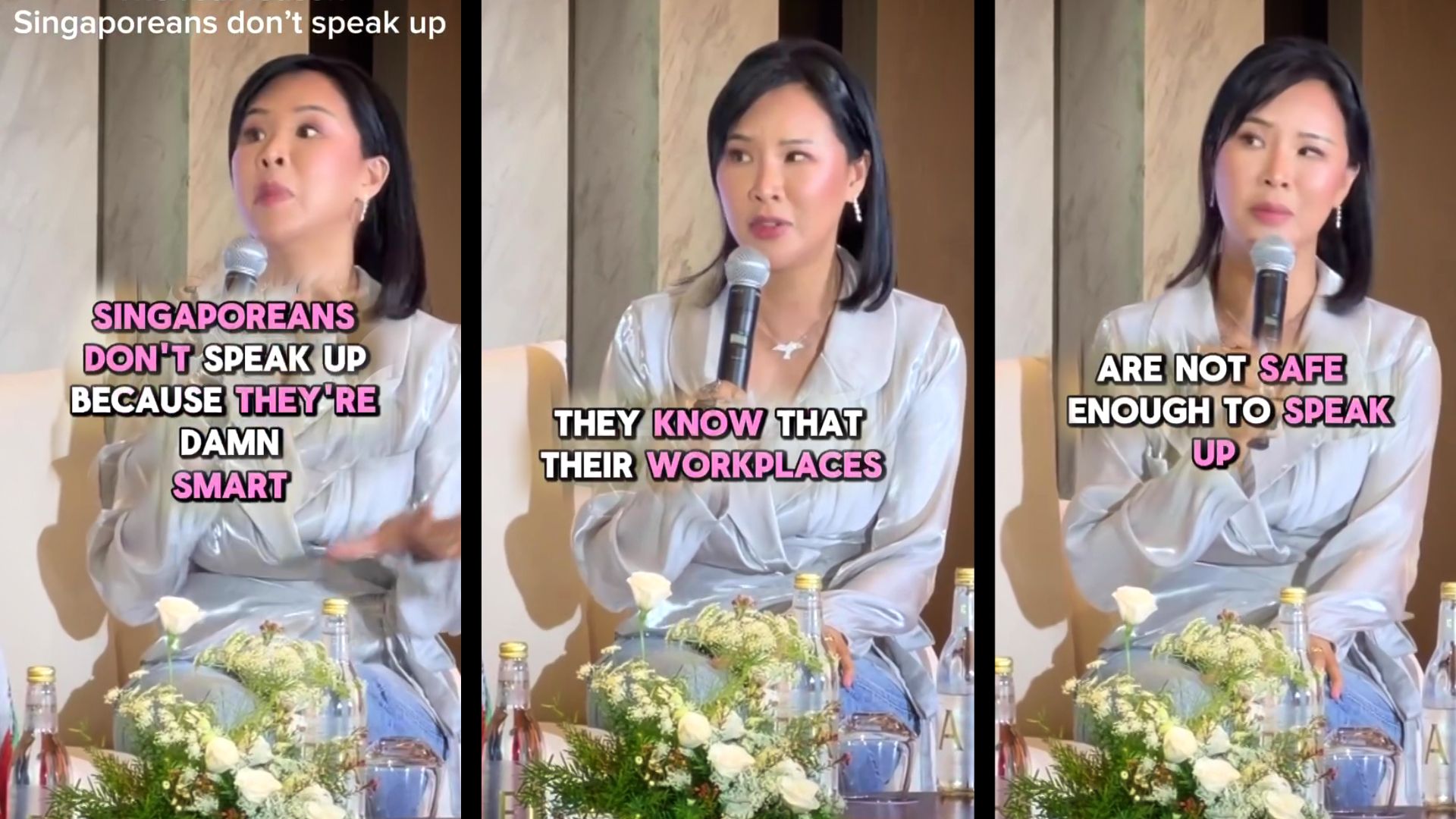

SINGAPORE: Speaking at Vogue Singapore’s inaugural Wellness Day on June 6, leadership consultant Crystal Lim-Lange explained that Singaporeans aren’t silent for lack of ideas. They stay silent because they are paying close attention.
“Singaporeans don’t speak up because they’re damn smart,” she said in a TikTok and Instagram video posted after the event, adding, “They know that their workplaces are not safe enough to speak up.”
The leadership expert’s direct take on why many Singaporeans stay silent at work has resonated with Singaporeans online, exposing toxic workplace culture, underscoring the importance of psychological safety, and raising questions about whether employees are truly free to voice their concerns when they arise.
The video has since attracted strong reactions from local employees who said her remarks mirrored exactly what they experience in many workplaces. Workers are usually encouraged to speak up if they have a problem, but many these days first watch how others are treated before deciding whether it is even worth the risk.
“Will I be rewarded or will I be punished?”
Ms Lim-Lange, founder and chief executive officer (CEO) of Forest Wolf, said employees weigh in a question to themselves, “Will I be rewarded or will I be punished?” before sharing an opinion, asking a difficult question, or even challenging a superior.
According to Ms Lim-Lange, many workers believe they already know the answer to that question. She explained that speaking up involves taking what she described as an interpersonal risk, which could mean admitting a mistake, saying “I don’t know”, or simply offering a different viewpoint that has nothing to do with a lack of communication skills.
In the video, she said organisations frequently ask her to conduct workshops that encourage employees to speak up. Her response is that such programmes are unlikely to work if deeper workplace problems remain unresolved.
She explained that employers need to improve “psychological safety, inclusion, learner safety, contributor safety and challenger safety” within the organisation before expecting employees to be more vocal.
When silence feels like the only safer option
The clip gained traction fast, with many workers in Singapore saying it captured a reality they had experienced firsthand.
Several commenters shared stories of employees being labelled difficult, sidelined or ignored after raising their concerns. Others said companies promote openness in theory but react negatively when staff challenge decisions or point out problems.
Online comments also indicated that some workers felt organisations valued obedience over thoughtful disagreement.
These reactions point to similar tensions in many workplaces. Businesses seek innovation and fresh ideas, yet employees may hesitate if past examples suggest that speaking up carries career and emotional abuse risks. For workers in such unfortunate situations, silence feels like the only safer option.
Artificial harmony: The hidden cost of keeping silent
Ms Lim-Lange believes that silence also comes at a price. Speaking to Mothership, she warned against what she calls “artificial harmony,” in which workplaces appear polite and conflict-free on the surface while important problems remain unspoken and unsolved.
Problems left unaddressed can later lead to bigger disputes, poor decisions, duplicated work, and inefficiency. Her argument is that healthy organisations should encourage respectful disagreement to progress rather than suppress it.
Leaders, she said, should reward thoughtful dissent and create space for quieter voices to contribute. Employees who challenge ideas may only want to improve outcomes rather than create problems.
As artificial intelligence continues to reshape industries, organisations may find that honest feedback and diverse viewpoints become even more valuable.
Silence that goes beyond just office life
The discussion, which has resonated with many, especially local workers, on both social media platforms, also goes beyond workplace meetings and performance reviews.
Many Singaporeans recognise the instinct to avoid rocking the boat, whether at work, in school or in social discussions. Respect for authority and social harmony have long been valued traits, but they can sometimes make difficult conversations harder to have. The challenge is finding a balance.
People should be able to raise concerns respectfully, and leaders should be willing to hear them without treating disagreement as disloyalty and/or disrespect. When that happens, speaking up becomes less of a gamble and more of a contribution.
A workplace doesn’t become innovative because employees are told to be brave. It becomes innovative when people see that honesty is welcomed, thoughtful criticism is respected, and raising concerns will not come back to haunt them with unpleasant repercussions.
 Follow Google News
 Join us on WhatsApp
 Follow us on Telegram