
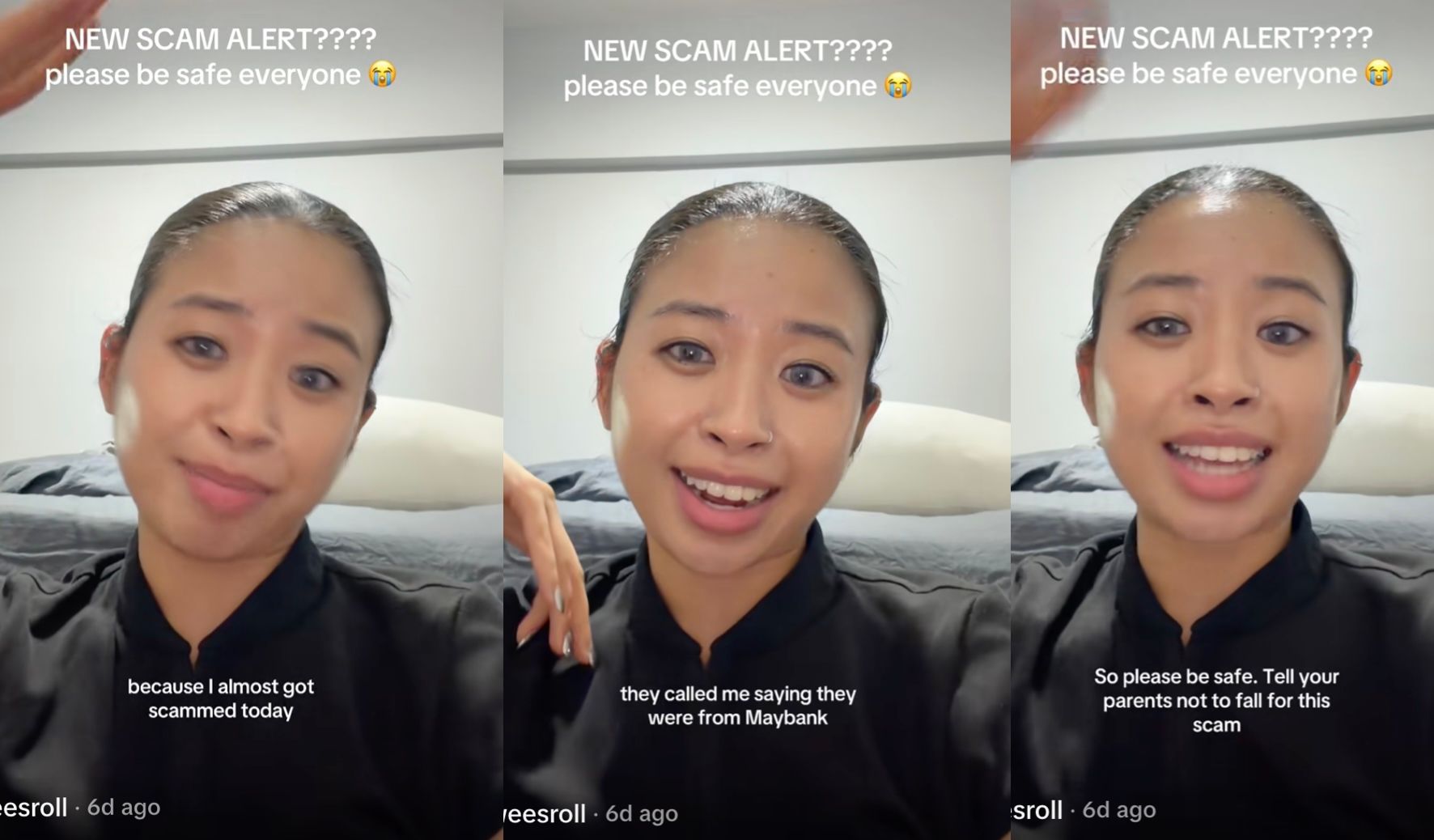

SINGAPORE: A local content creator took to social media to warn other Singaporeans after she almost got scammed over a transaction for more than S$4,000 that she never made.
Sarah Swee, who goes by @sweesroll on TikTok, said in a June 4 video, “This is a PSA for all Singaporeans because I almost got scammed today.”
The caller said they were from Maybank and had her name, the last four digits of her NRIC card, and her phone number. They told her that she had applied for a credit card with the bank through the finance comparison platform SingSaver. Moreover, since she had a pending transaction for over S$4,000, they wanted to verify it with her.
“I did not apply for any credit card via SingSaver or any cards at all, and I was trying to cancel the card because obviously, it’s not me,” she said.
Ms Swee was then transferred to a “manager,” who gave her his name, which made her suspicious, together with some sort of “representative number” that she could check on.
Of course, she did not have time to do this, since she was on the phone.
The “manager” then told her she could make a report with the Ministry of Home Affairs (MHA), and if it cleared, then she would not be liable for anything and offered to transfer her call again.
Ms Swee answered that she was not liable for anything in the first place and refused to have the call transferred.
Instead, she asked for a case number and the “manager’s” email address, adding she would make the call to MHA herself to make a report.
The caller hung up on her immediately.
She then called Maybank and found that there was no such card in her name.
“So please be safe. Tell your parents… (and) people our age not to fall for the scam,” Ms Swee added.
In her caption, she tagged the Singapore Police Force, also writing, “24/7 scamshield hotline is 1799!!!!!!”
Ms Swee did everything right, which ensured that she did not lose money to the scammers. One of the most common methods these fraudsters use is through unsolicited phone calls wherein government officials are impersonated, and victims end up transferring money or handing over valuables during personal meetups, only to discover they’ve been scammed.
“Scammers may cite your personal information (e.g., name or NRIC number) to appear legitimate. Do not automatically trust someone just because he/she has your personal information,” the ScamShield website says.
It also warns that victims might be instructed to show their identity cards, work permit or their bank cards in some cases when allegedly speaking to “officers” during a video call, and then later discover that unauthorised transactions had been made from their bank accounts. /TISG
Read also: BTS ticket scams leave victims out of pocket by more than S$68,000
 Follow Google News
 Join us on WhatsApp
 Follow us on Telegram