
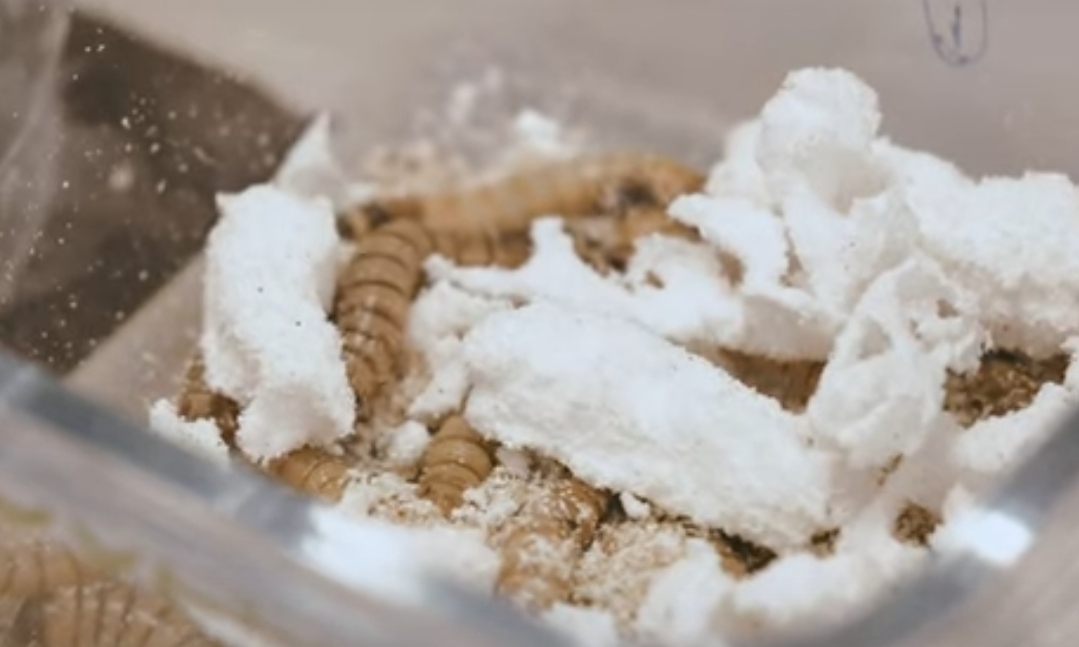

SINGAPORE: A team of scientists from Nanyang Technological University, Singapore (NTU Singapore), have developed an artificial ‘worm gut’ that shows promise in addressing the global plastic pollution crisis. The innovative method involves leveraging the capabilities of Zophobas atratus worms, commonly known as ‘superworms,’ to break down plastics efficiently.
Researchers from NTU’s School of Civil and Environmental Engineering (CEE) and Singapore Centre for Environmental Life Sciences Engineering (SCELSE) successfully cultivated microbes from the worms’ guts by feeding them plastic.
This process aims to accelerate plastic biodegradation, offering a nature-inspired solution to the escalating plastic pollution problem.
While previous studies revealed that superworms could survive on a plastic diet due to bacteria in their guts breaking down plastic, implementing these worms on a large scale was deemed impractical due to slow feeding rates and challenges in maintaining the worms.
NTU scientists, however, have overcome these obstacles by isolating the essential gut bacteria and utilizing them to efficiently break down plastics without the need for extensive worm breeding.
This breakthrough holds significant promise for mitigating plastic pollution, as the artificial ‘worm gut’ method offers a sustainable and scalable approach to tackle plastic waste. The research aligns with global efforts to find eco-friendly solutions, providing hope for a cleaner and more sustainable future.
 Follow Google News
 Join us on WhatsApp
 Follow us on Telegram