
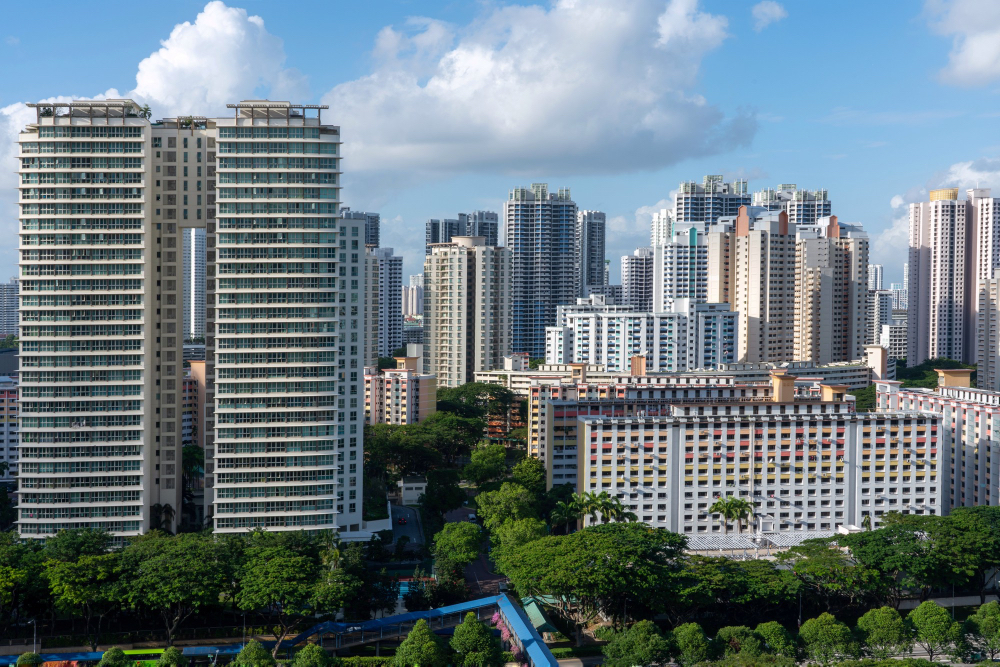
Photo: Freepik/wirestock
Property shrinkflation: Singapore condo sizes shrink by up to 20.6% as developers try to keep prices affordable

SINGAPORE: Many Singaporeans have noticed shrinking food portions as prices rise, and now a similar trend of "shrinkflation" is being seen with property sizes.
New condominiums in Singapore have been shrinking since 2010; a trend analysts link to developers adjusting to loan restrictions, property cooling measures, and shifts in demographic demands, Malay Mail reported.
The median size of Singapore’s new non-landed private homes reportedly dropped by 10.6 per cent from 1,012 square feet (sq ft) in 2010 to 904 sq ft in 2024, according to global real estate firm Cushman & Wakefield, as cited by The Straits Times.
While property shrinking has been felt across the city-state, it's particularly pronounced in prime areas, where the average unit size fell by 20.6 per cent, from 1,044 sq ft in 2010 to 829 sq ft in 2024.
Suburban condos experienced a 13.4 per cent drop, shrinking to 904 sq ft, while units on the city fringe saw a 4.5 per cent decline to 904 sq ft.
In 2012 and 2019, the Urban Redevelopment Authority (URA) introduced measures to limit the number of small units in residential projects to curb excessive downsizing. New rules in 2023 also required developers to ensure that at least 20 per cent of new central area units have a minimum net internal area of 70 square metres (sq m) (around 753.5 sq ft).
Marcus Chu, CEO of ERA Singapore, explained that although some condos now feature smaller kitchens or living and dining areas, the layouts are designed to be “flexible and interchangeable” for use.
"For instance, the kitchen space can be converted into dining space, should they require more space for hosting," he said.
Newsletter
Get updates straight to your inbox
Sales of new shoebox units fell to 254 in 2024, a 90.6 per cent drop from the 2012 peak of 2,709 units, according to real estate agency OrangeTee.
Meanwhile, Edwin Loo, associate director at real estate consultancy Cistri, said the regulations, which harmonise floor-area definitions, help ensure that private homes remain liveable and discourage developers from maximising saleable space at the expense of functionality. /TISG
Read also: Shrinkflation: “I know GST rose by 1%, but the (food) amount decreased by 40%!” — Customer complains