
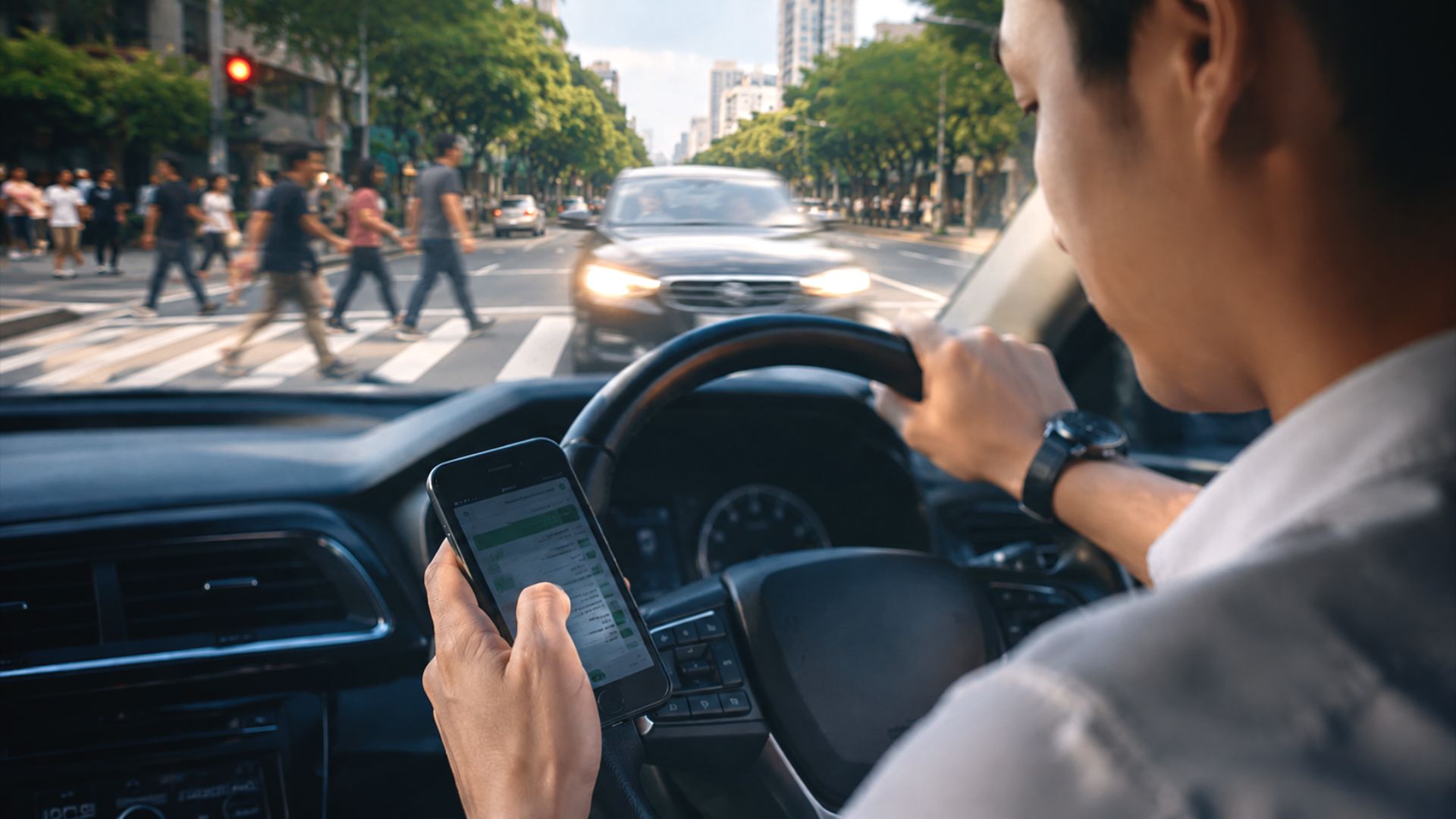
Distracted driver in urban intersection looks at phone as pedestrians cross and traffic danger approaches
Singapore neurologist: Even a quick glance at your mobile phone while driving can delay brain reactions, causing dangerous accidents

SINGAPORE: A Singapore neurologist has warned that even a brief glance at a mobile phone screen can slow reaction times when every second counts.
As mobile phone-related driving offences jumped sharply, with 4,193 cases recorded in 2025, up from 3,014 in 2024, according to Traffic Police figures, it shows drivers are taking unnecessary risks that can delay reactions in critical moments, The Malay Mail reported (June 28), citing The Straits Times.
Your brain cannot fully multitask behind the wheel
Dr Andrew Lee Hong Kuan, an Associate Consultant Neurologist at the National Neuroscience Institute, said that driving already demands constant attention from multiple brain regions. Those areas handle awareness, movement, and rapid decision-making simultaneously.
Adding a phone or another screen forces the brain to divide its attention. Looking away for even a moment can be enough to miss a pedestrian, changing traffic or a sudden stop ahead.
The doctor’s advice is to use voice navigation where possible and pull over safely before checking messages or handling other phone tasks.
More drivers are being caught using phones
Under Singapore law, drivers commit an offence if they hold and operate a mobile phone while the vehicle is moving. This includes typing, swiping, scrolling or watching videos.
First-time offenders face fines of up to S$1,000, up to six months' jail, or both. They also receive 12 demerit points. Repeat offenders face tougher penalties.
Banning mounted devices, however, can’t solve the problem if drivers instead hold their phones. The real issue is how the devices are used, not where they are placed.
Safety concerns extend beyond private cars
The problem has also drawn attention in the ride-hailing sector. Some drivers use multiple mounted screens to monitor different apps, while others switch between multiple platforms on a single device.
Newsletter
Get updates straight to your inbox
Dennis Tan Lip Fong, Member of Parliament for Hougang, said the steady flow of alerts and notifications can distract drivers even if the phone stays mounted.
Ride-hailing firms Grab and Tada said they investigate reports of unsafe driving and may issue warnings or take disciplinary action, depending on the seriousness of each case.
Phones have become part of daily life, but driving leaves little room for divided attention. The rising number of offences suggests a challenge in making safer choices behind the wheel.