
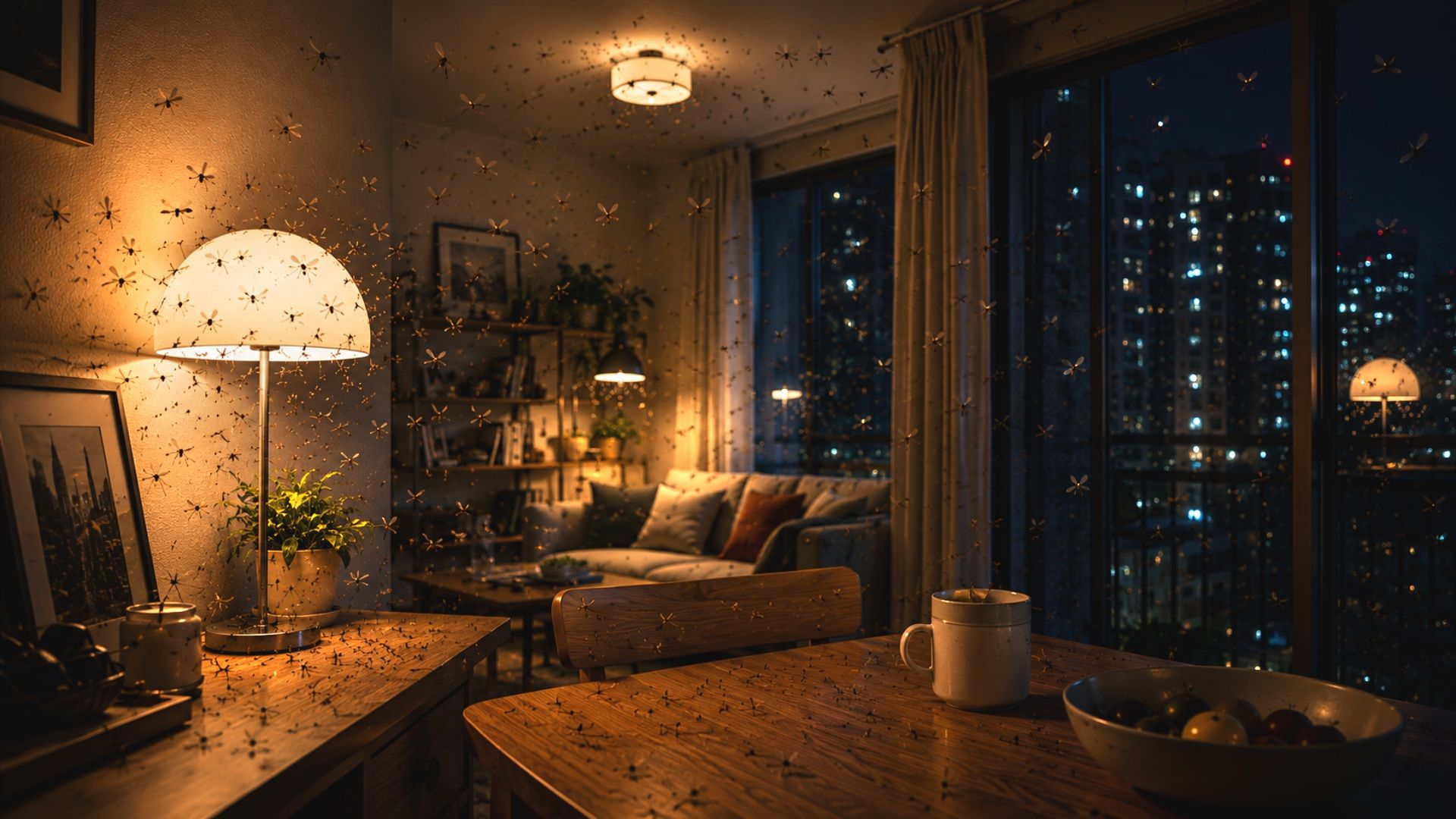

SINGAPORE: Singapore residents who have found their homes suddenly filled with flying ants, bees, or beetles can take some comfort in knowing the insects are usually not trying to move in.
Experts in insect behaviour say most insects enter homes either by accident or because they are drawn to food, shelter, nesting spots, or artificial lights.
The sight of dozens of flying ants circling a ceiling light or a bee buzzing around the living room can feel alarming for many homeowners, yet experts say these encounters are usually a side effect of living close to nature in a green city.
Food, shelter and artificial lights attract insects into people’s homes
Dr Hwang Wei Song, curator of entomology at the Lee Kong Chian Natural History Museum and a senior lecturer at the National University of Singapore (NUS), told Channel NewsAsia (CNA) in a June 12 report that insects are attracted by food, shelter and nesting opportunities.
However, he noted that many are passing through and become trapped after flying into windows or indoor spaces.
Homes near parks, gardens or other green spaces may see more bee visitors, especially if there are flowering plants nearby. Sugary drinks and food remnants can also attract bees indoors.
Insect behaviour experts from the Science Centre Singapore explained that bees and wasps may occasionally enter homes while searching for places to establish new colonies. Features that people value, such as warmth, protection and shelter, can be attractive to insects too.
Artificial lights and changing weather conditions trigger flying ant swarms
Anyone who has experienced a flying ant invasion knows it happens all at once.
According to Dr Hwang, flying ants use natural light sources such as the moon to navigate during mating flights. Artificial lighting can confuse them, causing them to gather around homes at night.
The Science Centre described this as a natural behaviour known as the dorsal light response. Insects try to keep their backs oriented towards light sources above them. Bright indoor lighting can disrupt that process, leading to erratic flight patterns.
The weather also plays a role. Dr Hwang said large swarms of flying ants appear after long, hot temperatures followed by heavy rain that cools the air. Such conditions can trigger mass mating flights over several evenings.
Higher building floors usually mean fewer bugs
Residents on upper floors of a building generally experience fewer insect visitors.
Dr Hwang explained that while some insects can fly remarkably high, most prefer to remain closer to the ground, where food and suitable habitats are easier to find. Lower-floor units also tend to attract more light-seeking insects before they can reach higher floors.
That said, living on the 20th floor isn’t a guaranteed bug-free strategy.
How to remove insects without harming them
For homeowners who would rather not reach for insect spray, experts recommend an easier, yet humane approach.
During the day, opening windows and doors allows trapped insects to find their own way out using natural sunlight as a guide. At night, switching off indoor lights and opening windows can encourage light-attracted insects to leave.
For tired or injured insects, experts suggest gently trapping them in a container and releasing them outdoors.
The Science Centre also said people can use a phone screen or another light source to guide flying ants away from living spaces. Installing window meshes can help prevent future visits.
For those seeking non-lethal deterrents, scents such as peppermint oil, vinegar and cinnamon may help discourage insects from entering by overwhelming their senses rather than killing them or causing unnecessary pain and suffering.
Living with nature in a garden city
As Singapore continues to balance urban development with extensive greenery, creating habitats for people and wildlife, the occasional bee, beetle or flying ant may be less a pest problem than a reminder of nature’s presence in the city.
While insect encounters can be inconvenient, entomologists say they are a sign of a healthy urban ecosystem rather than a pest outbreak.
Dr Hwang said that instead of viewing every insect visitor as a problem or an invasion, residents may find it useful to consider whether such encounters are just part of living near nature.
A practical approach is to keep homes clean, reduce attractants and help lost insects find their way back outside. Most of them were never planning to stay anyway.
 Follow Google News
 Join us on WhatsApp
 Follow us on Telegram