
Photo: Facebook screengrab / RTS Link JB-SG
RTS Link project hits key milestones, remains on track for end-2026 opening

SINGAPORE/JOHOR BAHRU: For the thousands of people who make the daily or weekly journey across the Causeway, help is finally in sight. The long-awaited Rapid Transit System (RTS) Link connecting Johor Bahru and Singapore is steadily taking shape, with several key milestones reached and the project still on track to open by December 31, 2026.
The update, which was shared on the RTS Link JB–SG Facebook page, announced a welcome bit of good news for commuters who know all too well the frustration of sitting in bumper-to-bumper traffic just to get across the border. When completed, the RTS Link promises to make cross-border travel not only faster but also far more convenient.
Step by step, the connection grows stronger
According to the latest project update, engineers have made major strides. Track installation on the Malaysian side of the project has been completed, checking off a critical step toward linking the two countries by rail.
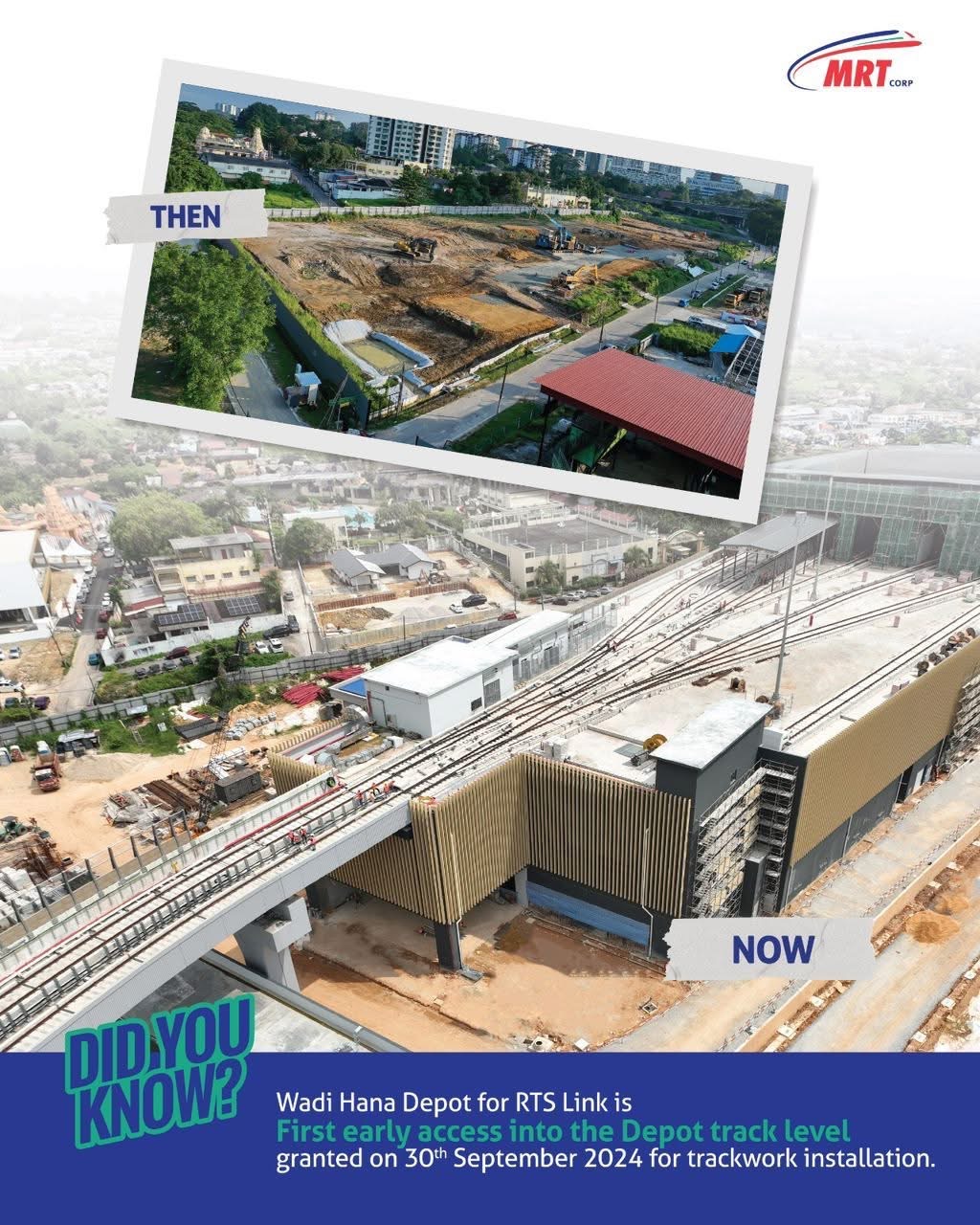
On September 30, 2024, the project team reported that they had gained early access to the depot’s track level, allowing installation work to begin. Then, on June 29, 2025, the High Voltage Power supply (33kV and 22kV) was successfully commissioned two months ahead of schedule, which is definitely considered a big achievement in a project of this scale.
Construction crews are now working on architectural finishes, electrical and mechanical systems, as well as road, drainage, and sewer works. Bit by bit, the structure is coming together, moving closer to the day when commuters can step onto a train and glide smoothly across the border.
Why this matters for Singapore
For Singaporeans who have family, work or business in Johor Bahru, the RTS Link could be life-changing. What is now an unpredictable journey, often stretching from minutes to hours, may soon become a 5-minute train ride between Woodlands North and Bukit Chagar in JB.
Many who cross the Causeway daily for work or weekly for family visits know the drill: long lines of cars, exhaust fumes, and hours lost in traffic. The RTS promises a new and better experience for the layman: a calm, predictable commute that cuts out the stress and guesswork.
Finally, the project also signals a closer cooperation between Singapore and Malaysia, as both sides work hand in hand to build a system that benefits communities on both ends.
A future commuters can look forward to
Every milestone brings the RTS one step closer to reality, and for many regular travellers, that future cannot come soon enough. The promise of skipping traffic jams, saving time, and travelling comfortably between the two cities is something commuters have long hoped for.
Newsletter
Get updates straight to your inbox
When the RTS Link opens in 2026, it will not just connect Johor Bahru and Singapore. It will also reconnect families, simplify work commutes, and give everyone who crosses the border regularly a little more time back in their day.