
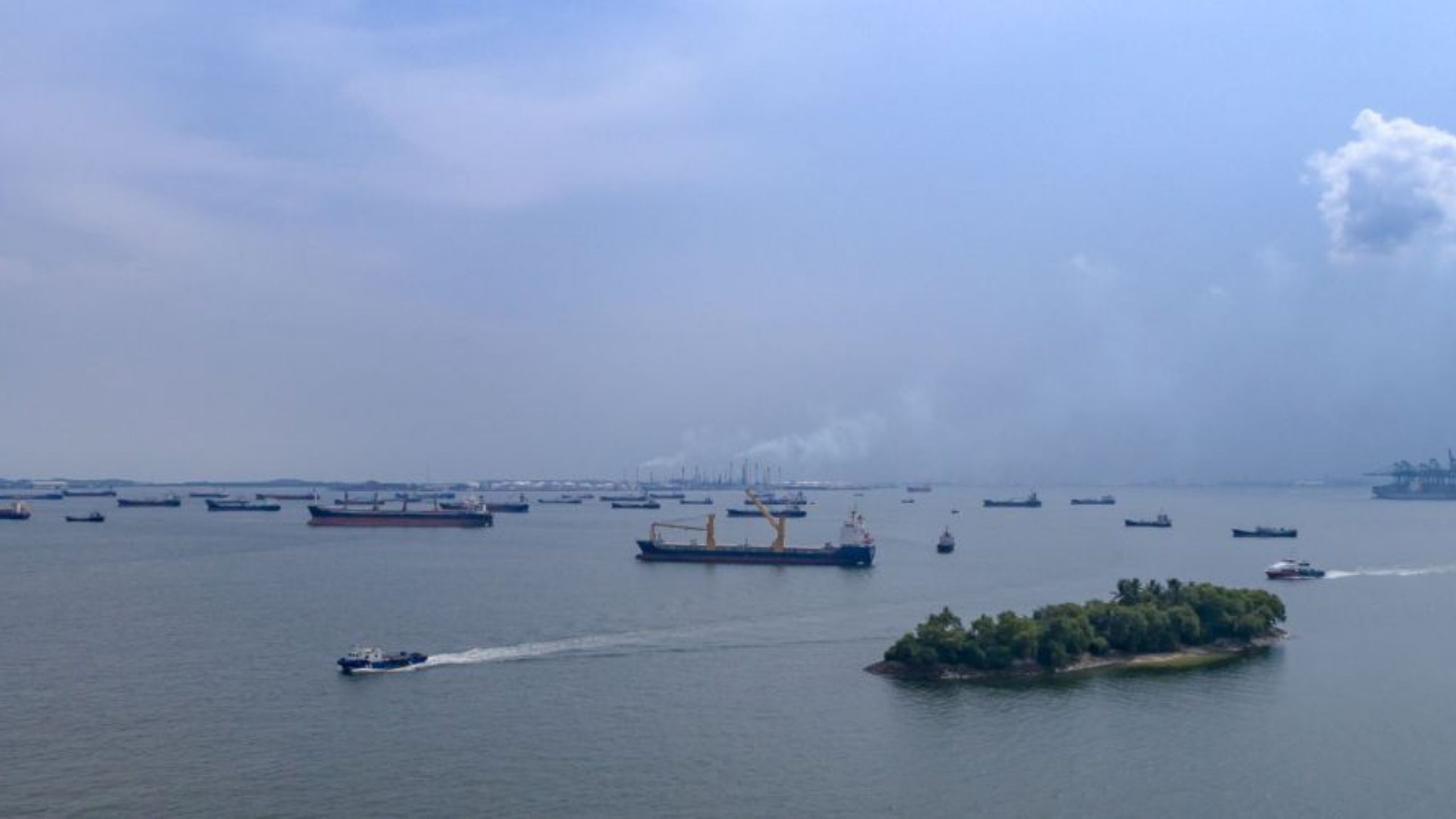
Photo: Strait of Malacca
RM777 billion and climbing: Malaysia's ASEAN trade hits all-time high as ports break global rankings

MALAYSIA: Malaysia’s total trade with ASEAN reached a record RM777.61 billion (S$246 billion) in 2025, accounting for 25.4% of the nation’s total trade, underscoring the regional bloc’s status as Malaysia’s most important trading partner, Transport Minister Anthony Loke Siew Fook said on Tuesday.
Invest Johor reported on Facebook that exports to ASEAN also hit an all-time high of RM457.62 billion during the same period. Loke made the remarks at the opening ceremony of the ASEAN Ports and Logistics Exhibition and Conference 2026, where he outlined Malaysia’s maritime trade performance and its vision for a more digitally integrated port ecosystem.
Ports as economic drivers
Loke noted that more than 90% of Malaysia’s international trade is transported by sea, making the country’s ports critical drivers of economic growth and regional connectivity. Malaysian ports collectively handled approximately 33.07 million twenty-foot equivalent units (TEUs) in 2025.
Port Klang led the way, handling 15.14 million TEUs and securing its position among the top 10 busiest container ports in the world for the second consecutive year, having first broken into Lloyd’s List’s top 10 in 2025, when it moved from 11th to 10th place globally.
The Port of Tanjung Pelepas (PTP) also made history, handling 14.03 million TEUs and becoming the first single container terminal in Malaysia to surpass the 14 million TEU mark.
Growth has continued into 2026. As of May, Port Klang recorded volume growth of 5% against the same period in 2025, while PTP grew 8%, maintaining the momentum that drove last year’s record-breaking performance.
Loke attributed the achievements to long-term investments in infrastructure, progressive transport policies, and strong collaboration between the government, port authorities, terminal operators, shipping lines, and logistics stakeholders.
Keeping the Strait of Malacca open
Loke also reaffirmed Malaysia's commitment to maintaining the safety and openness of the Strait of Malacca — one of the world's busiest and most strategically critical shipping lanes — through which a significant portion of global seaborne trade passes.
“Malaysia remains committed to ensuring that the Strait of Malacca continues to be safe, secure and open for global navigation,” he said, as quoted by Invest Johor.
Digitalisation: Phase Two of the Maritime Single Window
On the technology front, Loke highlighted Malaysia’s progress on the Malaysia Maritime Single Window (MMSW), a unified digital platform that has transformed vessel clearance processes by enabling seamless information sharing among maritime stakeholders.
The country is now advancing towards Phase Two of the MMSW, which will expand digital integration across cargo-related processes, port services, regulatory approvals, and electronic payment capabilities. The long-term vision is a fully integrated Port Community System connecting ports, shipping lines, and the broader logistics industry through a single trusted digital platform.
Why this matters for Singapore
Malaysia’s port performance, and particularly the rise of Port Klang and PTP, sits in direct proximity to Singapore’s own position as one of the world’s leading maritime hubs. The Port of Singapore consistently ranks among the busiest in the world, and the growth of PTP, located at the southern tip of the Johor peninsula just across from Singapore, means the two countries’ port ecosystems are increasingly complementary rather than simply competitive.
Newsletter
Get updates straight to your inbox
For the JS-SEZ, robust port and logistics infrastructure on the Malaysian side is not a threat to Singapore but a prerequisite for the kind of integrated manufacturing and supply chain operations that the zone is designed to attract. A Malaysia with world-class port capacity and a digitally connected maritime ecosystem is a stronger partner for the cross-border economic corridor that both countries are building and the record trade figures with ASEAN suggest that the corridor is already delivering results in both directions.
Read also: Joint Singapore-Malaysia immigration system set to streamline border crossings in 2027