
Police uncover footage of AI-generated fake Zoom meeting scam impersonating PM Wong that tricked victim out of S$4.9M
Police uncover footage of AI-generated fake Zoom meeting scam impersonating PM Wong that tricked victim out of S$4.9M

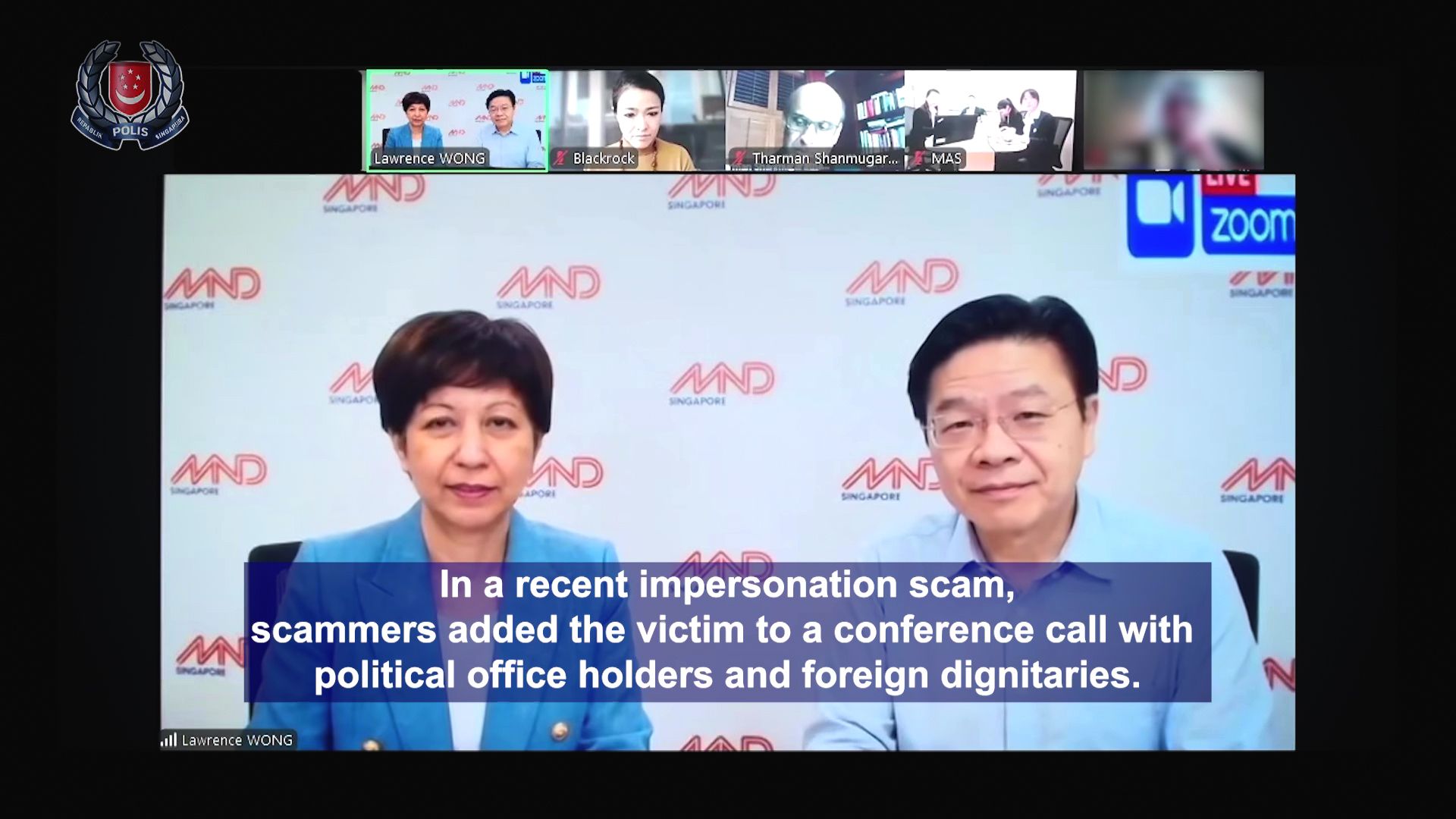
SINGAPORE: The Singapore Police Force (SPF) has released details and footage of a sophisticated scam that used deepfake technology to impersonate senior Singapore officials, including Prime Minister Lawrence Wong, in a fabricated Zoom meeting linked to a victim losing of S$4.9 million.
According to SPF’s May 16 report, the victim was first contacted on WhatsApp by someone pretending to be the Secretary to the Cabinet. The scammer then invited the victim to what appeared to be an official government video conference discussing tensions in the Straits of Hormuz.
The Zoom call looked serious and highly coordinated, with Deepfake versions of President Tharman Shanmugaratnam, Prime Minister Lawrence Wong, Minister Indranee Rajah, and representatives from the Monetary Authority of Singapore (MAS) allegedly shown discussing geopolitical developments alongside overseas officials and major financial organisations.
The victim was reportedly introduced as a private-sector participant before the fake meeting ended, with a deepfake video of PM Wong acknowledging the victim’s attendance. Soon after, another scammer posing as a lawyer allegedly convinced the victim to transfer money.
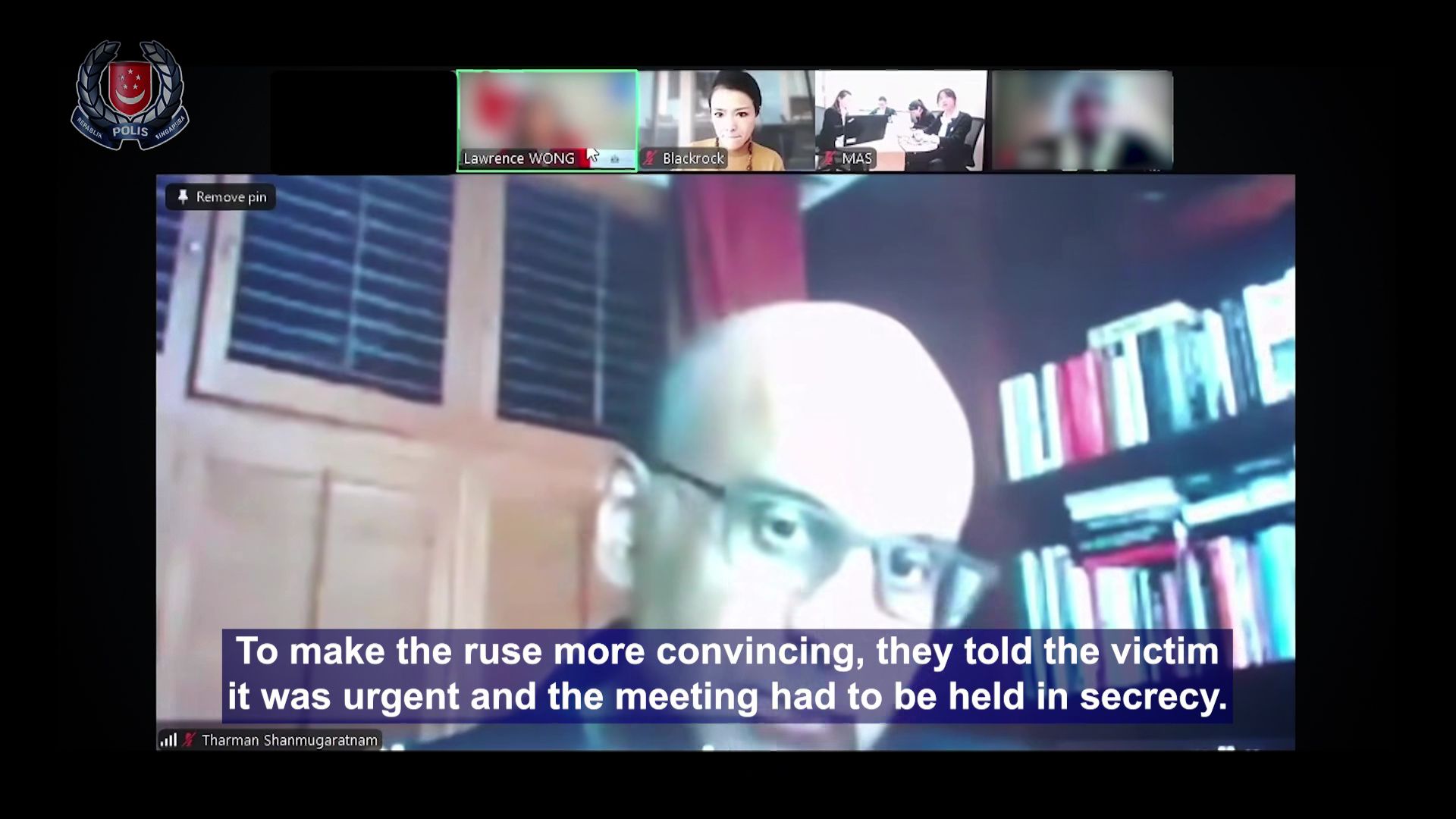
SPF said the fabricated meeting contained several technical signs of manipulation, such as the speech not matching lip movements, the audio coming from a single account rather than individual participants, and some backgrounds and Zoom interface elements appearing visually distorted.
The scam that didn’t look like a scam
What makes this case stand out is the amount of effort that went into building credibility. This was not the usual scam message claiming someone had won a lucky draw or owed unpaid taxes. Instead, the scammers created an atmosphere resembling a real international policy briefing, complete with government figures, corporate names, and geopolitical tension.
The scammers now appeared to target business professionals who had prior interactions with government officials. That detail shows how modern scams are becoming more personalised instead of random mass attacks.
The use of the Straits of Hormuz as the meeting topic also added realism, with global shipping disruptions and oil security concerns having been discussed internationally in recent years, making the fake briefing sound believable to someone caught off guard.
AI scams are getting more polished, personal and convincing
Deepfake scams are no longer limited to edited celebrity videos circulating online; this case shows how scammers are combining AI-generated visuals, cloned voices, and staged video calls to create situations that feel urgent and official.
The danger lies in how fast and easily people lower their guard when authority figures appear on screen. Even small visual flaws may not register during a live conversation, especially when victims feel pressured to respond professionally or urgently.
SPF warned that Singapore government officials will never ask members of the public to transfer money, reveal banking credentials, install unofficial apps, or transfer calls to other agencies through video calls or messaging platforms.
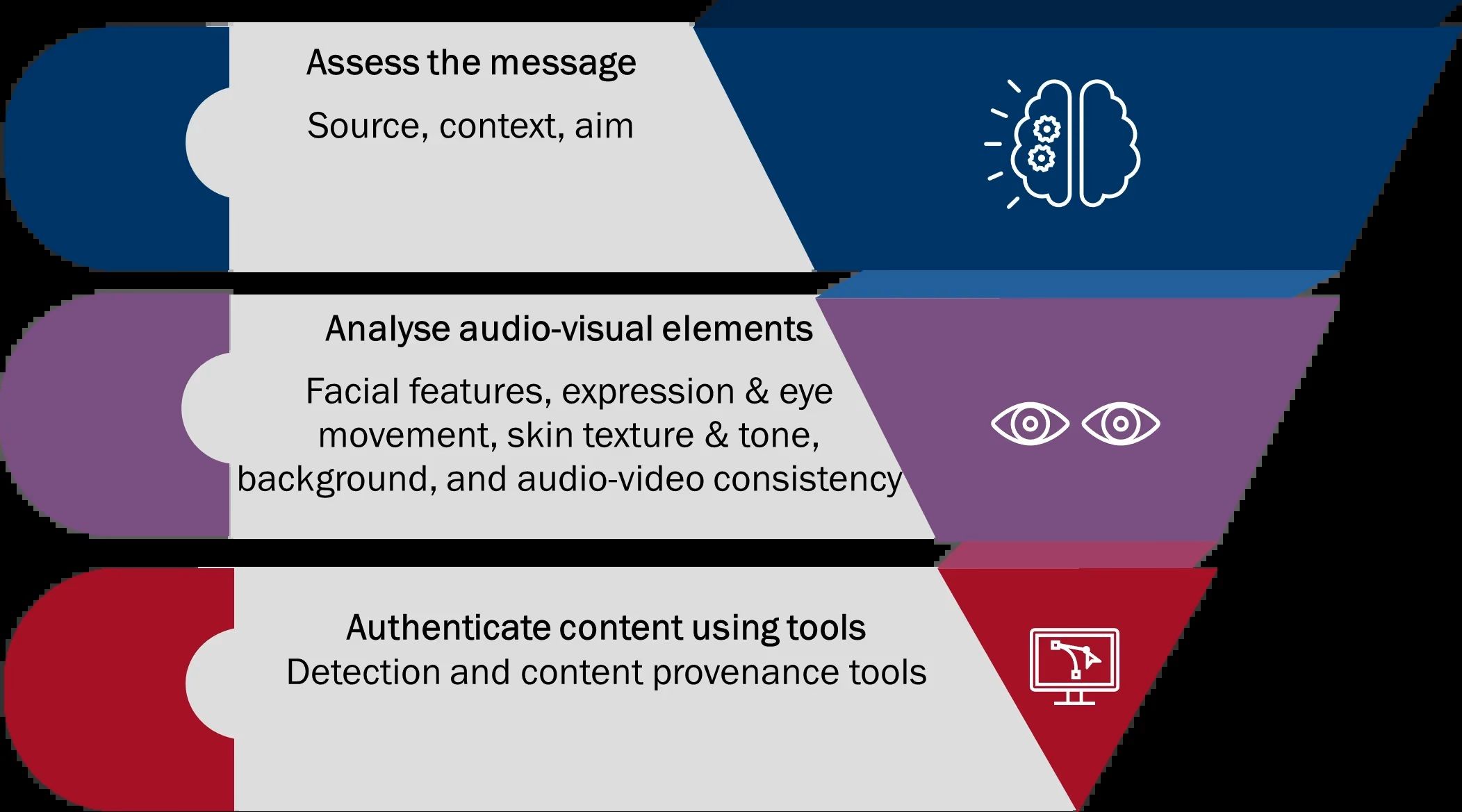
The police also encouraged the public to follow what they described as the “3A approach” when dealing with suspicious content: assess the message, analyse the audio and visuals, and authenticate information with official sources.
The following signs of deepfake technology were observed in this case by the SPF:
Speech didn’t synchronise with the speakers’ lips, indicating that inauthentic audio was layered on. This suggests that the speakers' videos were prerecorded and that the speech was inauthentic.
Speech was broadcast through a single account throughout the call, rather than through the call participants. This indicates that prerecorded, inauthentic speech was layered onto videos of impersonated officials and then broadcast through a single main account.
Newsletter
Get updates straight to your inbox
Distorted background and partially obscured Zoom logo that didn’t align with the foreground. This indicates that the videos were manipulated using AI technology.
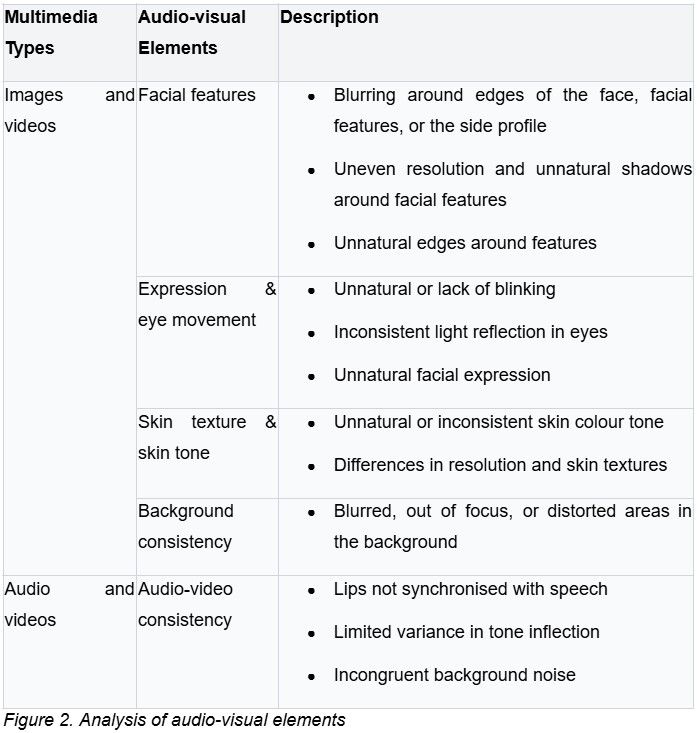
In addition, the SPF advised the public to analyse audio-visual elements, such as to look out for tell-tale signs that the audio or video has been manipulated, even if it appears to be a ‘live’ interaction. The table below lists elements to look for to determine whether it has been altered.
Scam problems are becoming harder to detect as AI tools improve
A few years ago, obvious spelling mistakes and poor graphics quickly exposed many scams, but that advantage is now fading fast.
Today, scammers can simulate meetings, voices and facial expressions with alarming accuracy using easily available software. This means digital scepticism is slowly becoming a survival skill, especially for professionals handling money, investments or confidential discussions online.
Technology companies are racing to build better detection tools, but public awareness remains the first line of defence. If something feels unusually urgent, overly secretive or financially risky, stopping to verify details with official channels may be the difference between an awkward phone call and a multimillion-dollar loss.
Read related: SPF: Man loses S$4.9 million in Strait of Hormuz funding assistance scam involving impersonation of PM Wong