
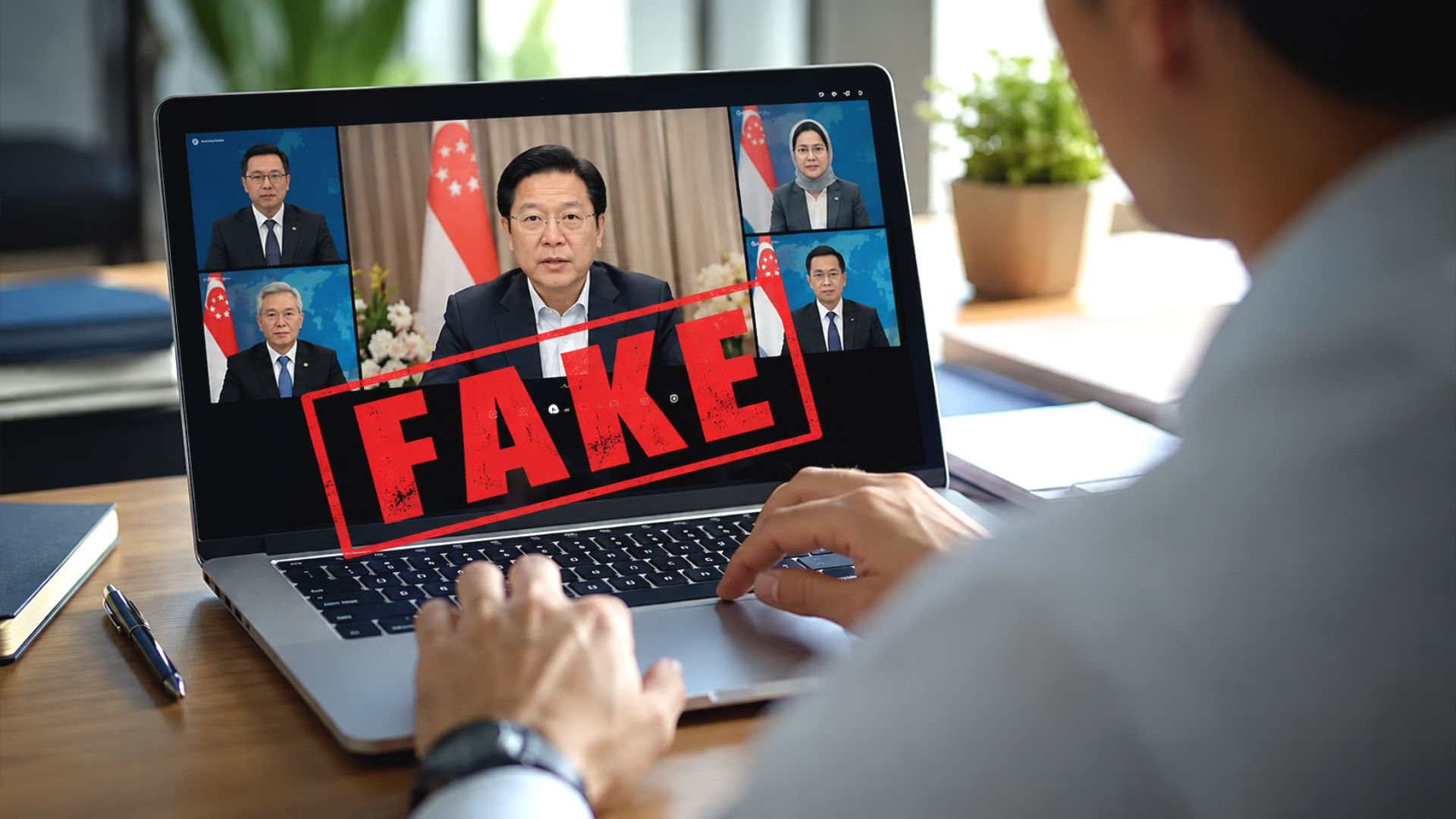
Singapore online fake meeting scam warning (for illustration purposes only)
SPF: Man loses S$4.9 million in Strait of Hormuz funding assistance scam involving impersonation of PM Wong

SINGAPORE: A Singapore businessman lost at least S$4.9 million after scammers allegedly impersonated senior government officials and used deepfake technology during a Zoom meeting that appeared to feature Prime Minister Lawrence Wong and other officials.
The case was revealed by the Singapore Police Force on May 14, as police warned that more scams involving impersonation of senior government figures have surfaced in recent weeks. According to the police, the syndicate appears to be targeting business professionals who previously interacted with government officials.
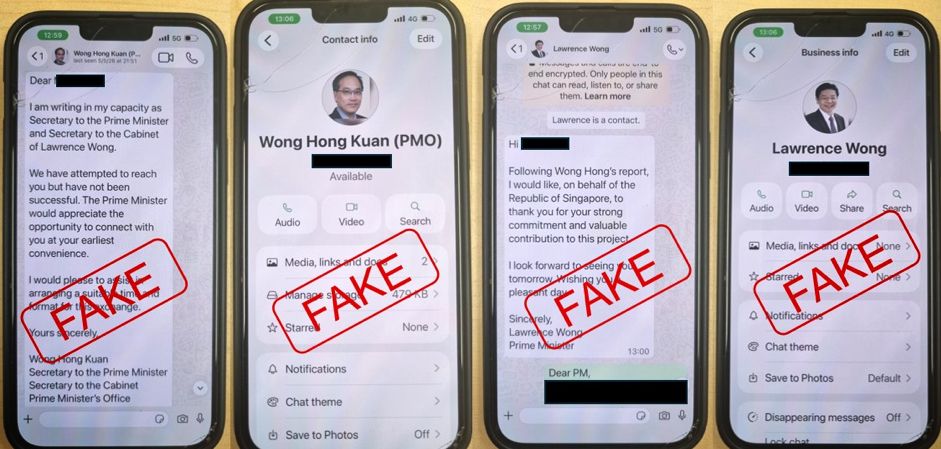
The victim was first contacted via WhatsApp by someone using Cabinet Secretary Wong Hong Kuan's profile photo. He was then invited to attend what looked like a high-level government meeting involving ministers and overseas officials.
Soon after, the victim received an email from a Proton Mail account ([email protected]) pretending to be from the Cabinet Secretary. The message requested urgent financial assistance amid tensions surrounding the Strait of Hormuz.
Police said the email included what appeared to be an official government guarantee letter carrying PM Wong’s signature, promising repayment within 15 business days.
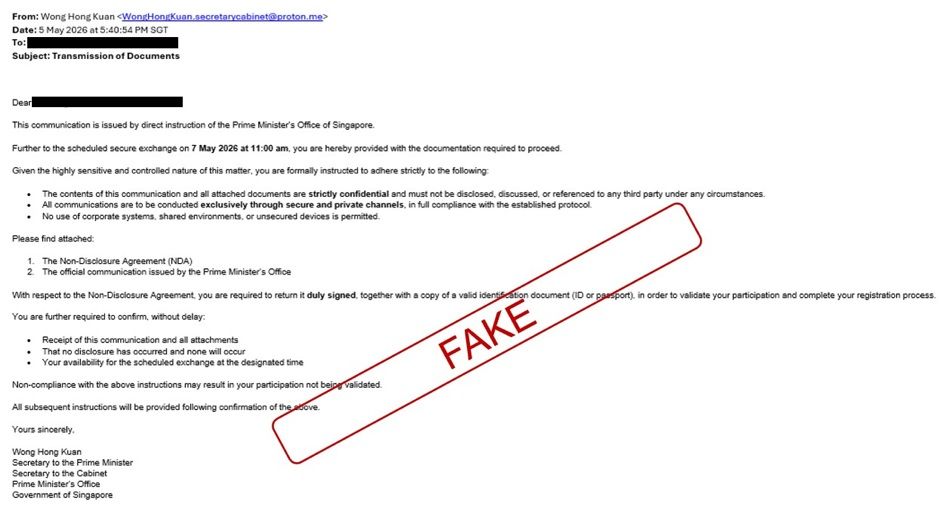
The victim was also told to sign a non-disclosure agreement (NDA) and provide identification details before joining the online meeting.
AI scams are now mixing forged documents, AI-generated faces, cloned voices and real-time video meetings
The turning point came during a Zoom conference call that appeared convincing enough to pass scrutiny. According to the police, the people seen during the call were actually generated using deepfake artificial intelligence technology.
After the meeting, the victim transferred at least S$4.9 million through multiple transactions into a corporate bank account controlled by the scammers.
Only later did he begin to suspect something was wrong. He contacted the Cabinet Secretary on May 14 and discovered the entire operation was fake.
The case shows how scam tactics are switching beyond fake SMS messages and phishing links. Criminals are now mixing forged documents, AI-generated faces, cloned voices and real-time video meetings to create scams that feel disturbingly believable.
That makes this case socially significant, as many people still assume scams rely on poor grammar or obvious red flags. This incident suggests that the assumption is becoming outdated.
Police say government officials will never ask for money
The Singapore Police Force reminded the public that government officials will never ask for money transfers, banking passwords, unofficial app downloads, or sensitive login details via calls, messages, or emails.
Police also said three people had already been arrested and charged on May 9 over suspected SIM card offences linked to earlier cases using the same method.
PM Wong has also warned the public about fake messages being circulated under the Cabinet Secretary’s name and urged Singaporeans to verify suspicious requests through official channels.
Scam prevention measures
Members of the public are encouraged to adopt the following ACT precautionary measures:
ADD: Install the ScamShield app to protect yourself from scam calls and SMSes. Set security features such as transaction limits for internet banking, Two-Factor Authentication (2FA) and Multifactor Authentication for bank accounts.
CHECK: Look out for scam signs and verify suspicious messages through official sources. Members of the public can check suspicious phone numbers, website links, and messages through the ScamShield app or by visiting ScamShield Singapore.
Newsletter
Get updates straight to your inbox
TELL: Inform authorities, family members and friends about scams. Report fraudulent transactions to your bank immediately.
Anyone unsure about suspicious messages or requests can call the 24-hour ScamShield Helpline at 1799 for assistance. The authorities reminded the public that fighting scams remains a shared community effort.
Even a realistic Zoom meeting must be verified through official government channels
The loss itself is massive, but the bigger concern may be how believable digital deception has become. A fake government letter used to be enough for older scams, but now scammers can simulate meetings, facial expressions, and authority figures in real time.
That changes the psychological pressure on victims, especially professionals used to attending confidential meetings and handling urgent requests.
Technology is making communication easier, but it is also making impersonation cheaper and faster. The safest response may sound old-fashioned, which is to slow down, verify independently and never transfer money based on pressure, secrecy or urgency alone.
And even a realistic Zoom meeting shouldn’t replace direct verification through official government channels.