
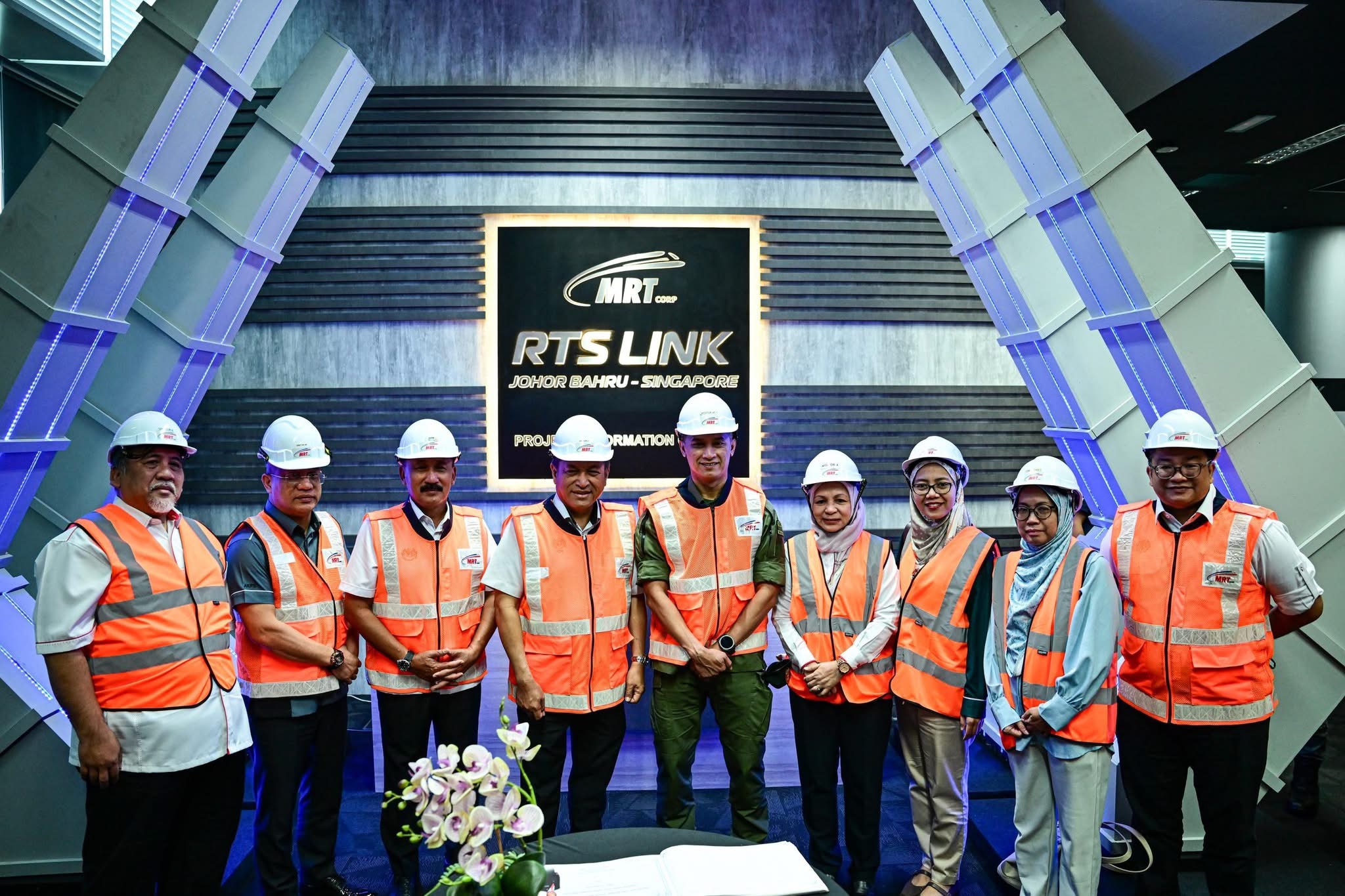
Photo: Facebook / Kementerian Dalam Negeri (KDN)
Malaysia's Interior Ministry chief inspects RTS Link sites ahead of 2027 opening

JOHOR BAHRU: The Secretary General of Malaysia’s Ministry of Interior (Kementerian Dalam Negeri, KDN), Datuk Awang Alik bin Jeman, conducted a working visit to the Johor Bahru–Singapore Rapid Transit System (RTS) Link project on Wednesday (Aug 13), touring key locations at the Bukit Chagar Customs, Immigration and Quarantine (CIQ) Complex and the Wadi Hana Depot.
The visit — announced in a Facebook post by the Ministry — was aimed at assessing progress on the cross-border rail link, set to begin operations on January 1, 2027, and evaluating the readiness of agencies under KDN, particularly the Border Control and Protection Agency (AKPS), to manage their roles once the service goes live.
According to Malaysia Rapid Transit System Sdn Bhd (MRTS), the RTS Link is expected to handle up to 10,000 passengers per hour in each direction, a key step in easing chronic congestion on the Johor–Singapore Causeway. Officials say the line will not only divert heavy traffic from the road link, but also provide a faster, more dependable commuting option between the two cities.
The inspection was attended by senior officials from multiple agencies, including the National Security Council, Ministry of Transport, Ministry of Health, Royal Customs Department, Immigration Department, and Royal Malaysia Police.
Read related: ‘Sometimes we have to wait for two to three buses’: Growing calls for second RTS link as Tuas commuters face daily crush
Why this matters for Singapore
While the RTS Link is being built on both sides of the Causeway, Singapore stands to benefit directly from Johor’s progress. For Singaporean commuters, the RTS Link promises shorter, more predictable travel times, which is definitely a welcome change compared to the hours-long jams that are currently happening.
With a capacity for thousands of passengers per hour, the RTS could also improve regional economic ties by making it easier for workers, shoppers, and tourists to move between Johor Bahru and Singapore.
Newsletter
Get updates straight to your inbox
For Singapore’s businesses, particularly those dependent on cross-border labour or customers, this could help build smoother connectivity, which could boost productivity and create more reliable operations. Finally, for leisure seekers, the establishment of the line might make spontaneous weekend getaways across the Causeway a reality again. This will enable these visitors to go to Johor Bahru without the dread of sitting in traffic for hours.