
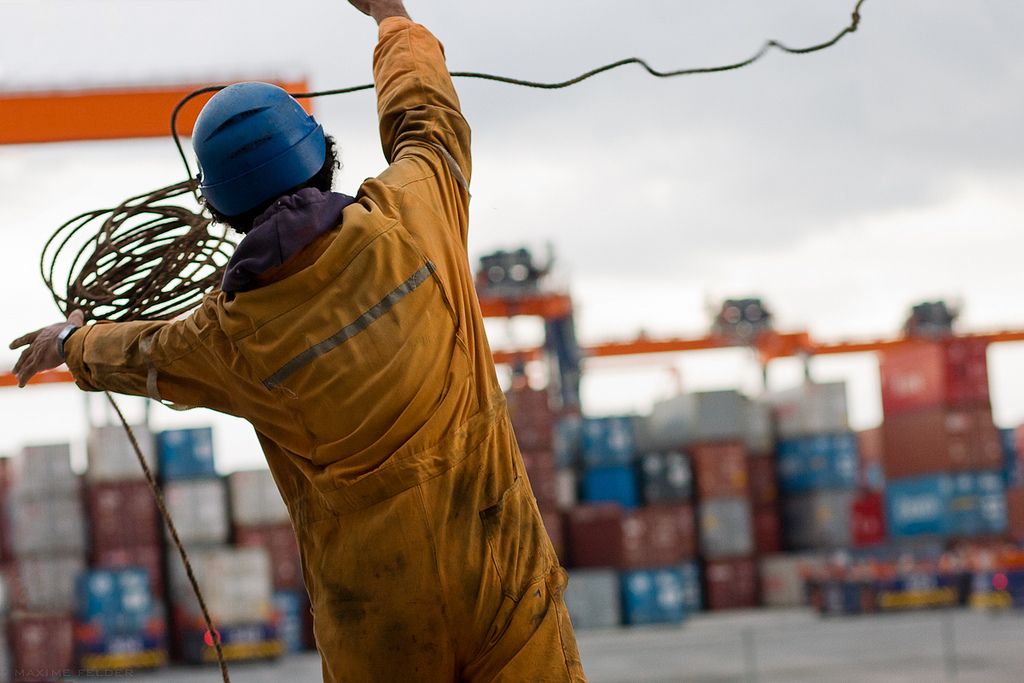
Filipino seafarer at work
Iran war is putting Asia's migrant workers at risk, but many can't go home
Dubai: The war in the Iran has made life harder for Asians, not just because of the disruption to the fuel supply due to the effective closure of the Strait of Hormuz, but on a more immediate level, because of the threats to the jobs of Asians working in the region.
Asia is the largest source of migrant workers across the globe. There are more than 115 million international migrants from Asia. About 69 million of them work across different parts of the region, and more than 50% of Asian labour deployment goes to Gulf Cooperation Council (GCC) countries. Some of the major sources of migrant workers are India, Bangladesh, Sri Lanka, Indonesia, and the Philippines.
And now, the war has put many lives and jobs in danger. However, many of Asia’s migrant workers can’t afford to, or simply can’t come home.
Migrant worker deaths
The first fatality in Israel was a Filipina caregiver living in Tel Aviv who was the victim of a missile attack on March 1. She and the woman she was caring for were rushed to the hospital after the apartment where they lived was struck, and while the woman survived, the 32-year-old Filipina passed away.
On March 31, India’s Ministry of External Affairs announced that eight Indian nationals had died and one person was missing in various incidents in the Gulf region.
According to a BBC report, at least 12 South Asian workers have been killed amid the conflict, including a man from Nepal who worked as a security guard in Abu Dhabi and another from Bangladesh who was killed in Dubai during Ramadan.
Can’t come home
Although there have been a number of repatriation flights from the Middle East, some Asian workers have chosen to stay on despite the danger in the region, as their families are dependent on their remittances.
With several Southeast Asian economies drastically affected by the conflict, shrinking job prospects and the likelihood of more hardships to come, workers are deciding to stay put.
Newsletter
Get updates straight to your inbox
Domestic workers from the Philippines, for example, are living with the reality of daily bombings in different Gulf states, but opt to stay to give their families chances of a better life.
Others, such as workers from Myanmar, are fleeing violence themselves.
Finally, there are seafarers who are stuck on ships on the Persian Gulf, with the vessels where they work marooned on the Strait of Hormuz. The International Maritime Organization says there are 20,000 such seafarers. According to the organisation, around 20 commercial vessels have come under attack since the conflict started, with 10 seafarers and one shipyard worker killed, and four remaining missing. /TISG
Read also: Analysts say Middle East war could result in food and social stability crisis in Southeast Asia