
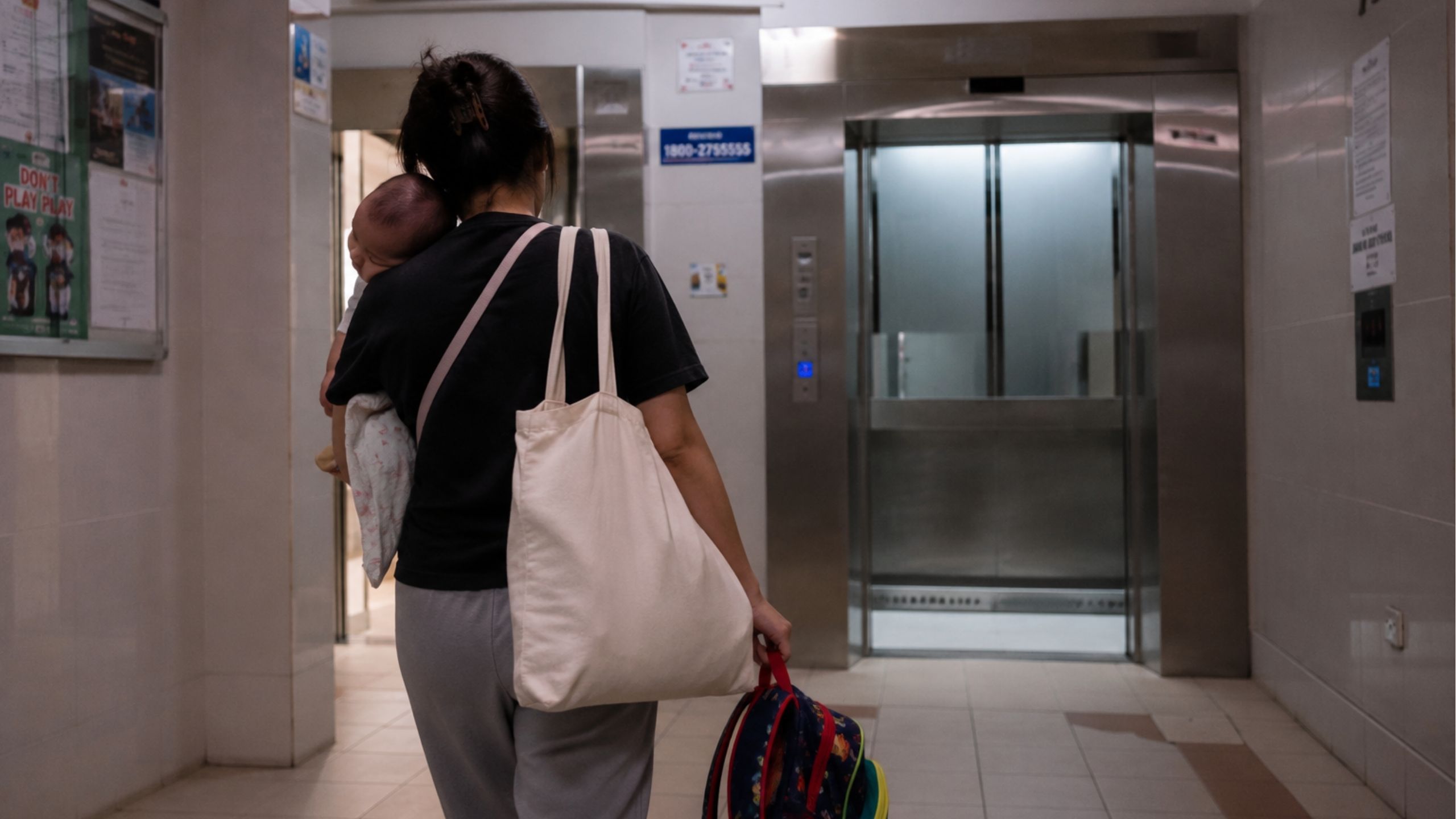

SINGAPORE: A heartfelt post by a working mother struggling to balance work and raising two young children has struck a chord with parents online, with some questioning whether the pressures of family life in Singapore and the challenges of balancing work and the demands of parenthood are contributing to the country’s plunging birth rate.
The mother shared her experience in the Childcare in Singapore Facebook group, saying she had become “too overwhelmed” just one month after returning to work.
She explained that her workday begins at 8 am and ends at 5 pm, leaving her rushing every morning to drop her children off at two different schools before heading to work.
“I feel so sad every day to carry my 6-month-old baby to school every day while she is still sleeping,” she wrote.
Although she acknowledged she could wake her children earlier, she said she felt guilty making them start their day so early. Instead, she spends money on Grab rides to get to work on time after the school runs.
The demands do not end after work. By the time she collects her children, it is nearly 6 pm. Too exhausted to cook, she buys takeaway meals daily, while household chores continue to pile up.
The mother wrote, “I grab food every day because too tired to cook. My house is a mess. I don’t have time for myself even.”
The emotional toll has led her to question whether she should leave her job altogether, despite the financial implications. She asked, “How do working mothers manage this. Please help this overwhelmed mother. How do I quit my job if my partner only earns 3000? I earn 4000, and I am still (breastfeeding) my child. Could we sustain?”
Her post quickly attracted an outpouring of support from fellow parents, many of whom said they had experienced similar struggles.
One commenter reassured her that her feelings were completely understandable. “I honestly think anyone would feel overwhelmed in your situation,” the commenter wrote.
They added, “You’re working full time, breastfeeding a 6-month-old, doing school drop-offs, rushing to work, picking everyone up after work, grabbing dinner because you’re exhausted, then coming home to a house that still needs attention. That’s a lot.”
The commenter urged her not to make any major decisions while exhausted, pointing out that returning to work after maternity leave often involves a difficult adjustment period.
Instead, the commenter encouraged her to have an honest discussion with her partner about whether they could realistically survive on a single income and whether household responsibilities could be shared more evenly.
Suggestions included dividing morning and evening duties, preparing meals in advance over weekends and accepting that “it’s okay if the house isn’t perfect.”
“If it’s within your budget, even having a cleaner come once every couple of weeks can take a huge weight off your shoulders,” the commenter wrote, reminding her not to feel guilty about relying on takeaway meals.
“Right now, you’re keeping two kids and yourselves afloat. That’s enough,” they added.
Others questioned why the mother appeared to be carrying most of the family’s responsibilities despite earning the higher salary.
“What I’m reading is wife earns more but still carry more load than the husband,” one person observed.
Another added, “It is not gonna work out if you carry all the load. I don’t see your husband being mentioned. It’s a team effort here. You can’t do everything on your own.”
Several practical suggestions were offered, including ordering tingkat meals instead of buying takeaway every day, hiring a part-time cleaner and having her husband take on responsibilities such as school drop-offs, pickups or preparing dinner.
One commenter asked, “Can your husband be the one settling dinner? Or be the one sending the kids to sch or pickup? Daily grab food and to work is very expensive.”
Some mothers shared deeply personal accounts of facing similar challenges.
One woman said she had also been rushing her six-month-old to childcare each morning because she needed to report for work before 8 am, writing, “I used to have anxiety when my house is in a mess, but I learn to close 1 eye now.”
She explained that she had lowered her expectations, keeping only the kitchen and master bedroom tidy while accepting that toys and clutter could wait.
She also cooked simple meals in bulk for her children and admitted that she often ate the same food they did.
Reflecting on her marriage, she said her husband gradually became less involved with household responsibilities as the children grew older: “Sometimes I need to tell him what to do for things like clean the toilet, the windows, etc. If I didn’t asked him to, he simply didn’t.”
Although she said life had become more manageable over time, she acknowledged the exhaustion never truly disappeared. She wrote, “Tired? Yes. Overwhelm? Yes. But my kids are thriving, and that makes my heart full.”
Another parent said she could relate despite having only one child. “Mad rush when I work in office,” she wrote, adding that watching working parents struggle every day may discourage younger Singaporeans from starting families.
She contrasted her current life with her younger years, when she could work overtime until midnight and survive on little sleep, “Daily grinding like hamster while my DINK or single colleagues /those with helpers or grandparents help rolling eyes at me.”
She also pointed to the often overlooked “invisible mental load” of arranging medical appointments, planning parent-child activities and managing countless responsibilities beyond paid work.
Beyond offering advice, many commenters widened the discussion to Singapore’s broader demographic challenges.
Some argued that the emotional and financial strain of balancing demanding careers with raising children could be one reason why more Singaporeans are delaying parenthood or deciding against having children altogether.
Others questioned how young couples are expected to pursue increasingly competitive careers while simultaneously being encouraged to start families, highlighting ongoing concerns over work-life balance, burnout and the rising cost of raising children.
The discussion comes as Singapore continues grappling with its record-low birth rate.
While the Government has introduced measures including baby bonuses, expanded parental leave, housing support and childcare subsidies to encourage marriage and parenthood, some critics argue that financial incentives alone cannot address deeper concerns surrounding long working hours, caregiving pressures and economic insecurity.
Singapore’s total fertility rate fell to a new record low of 0.87 last year, down from 0.97 in 2024.
In response, Prime Minister Lawrence Wong has appointed Minister Indranee Rajah to chair the new Marriage & Parenthood Reset Workgroup.
The workgroup will study the factors influencing marriage and parenthood in Singapore, including financial pressures, housing, caregiving responsibilities, healthcare, preschool and education costs, as well as work-life support.
It will also engage employers, businesses, community organisations and Singaporeans in an effort to foster workplace practices and social norms that are more supportive of family life.
For many Singaporeans, however, the mother’s emotional post serves to show how the daily realities of juggling work, childcare and household responsibilities remain one of the biggest challenges facing young families today.
 Follow Google News
 Join us on WhatsApp
 Follow us on Telegram