
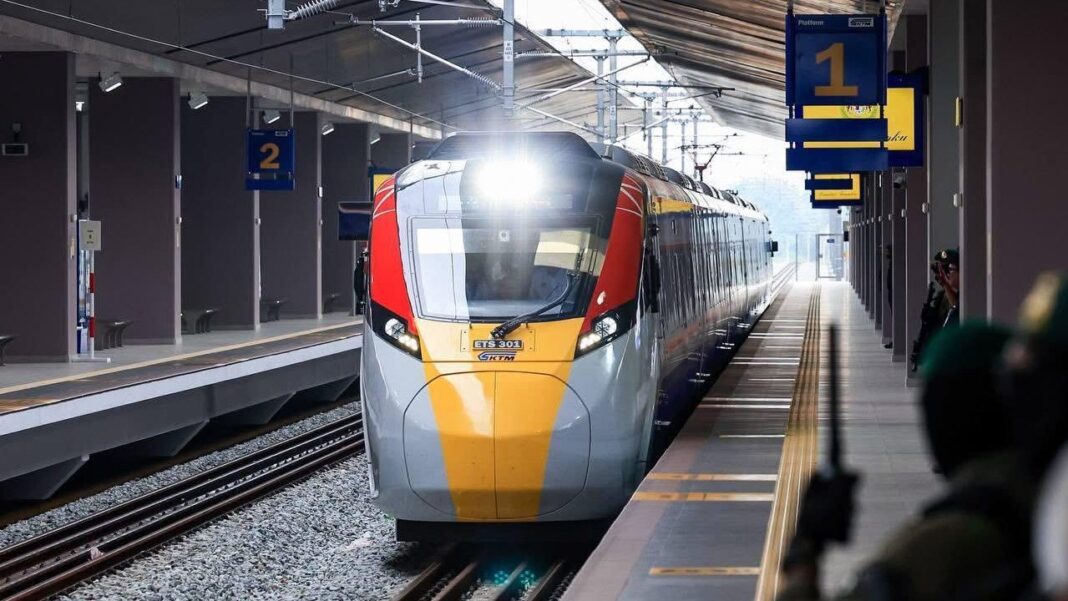

JOHOR BAHRU: For years, commuters in Johor have dreamed of faster, more reliable train journeys that could rival the convenience of driving. Now, that dream looks closer than ever. Transport Minister Anthony Loke has confirmed that the final phase of the Electric Train Service 3 (ETS 3) to Johor Bahru Sentral is expected to be operational by December this year. This is a milestone that, if met, could reshape how people travel in and out of the southern state.
At a press conference, Loke emphasised that most of the heavy lifting had already been done. “Although the ETS 3 service has already been extended to Kluang and will commence on Aug 30, we remain committed to ensuring the line reaches Johor Bahru Sentral before the end of the year,” he said, as quoted by New Straits Times (NST). He added that while the tracks and physical infrastructure were complete, signalling works were still pending, the last hurdle before operations could begin.
The ETS 3 project has been rolled out in stages: the first phase linking Gemas to Segamat is already running, while the second phase will connect Segamat to Kluang by the end of this month. The Johor Bahru extension demonstrates that the project is in its final stretch, and for many residents, the most eagerly anticipated one.
Loke himself underscored this importance, noting: “The ETS extension to Johor Bahru is one of the key milestones we aim to achieve this year.”
Why it matters to Singapore
Across the Causeway, the impact could be just as significant. Singaporeans who frequently travel to Johor may soon find themselves with a faster, more dependable option than battling border jams by car or bus. Once completed and integrated with Johor Bahru Sentral, the ETS would also complement cross-border policies such as Malaysia’s Vehicle Entry Permit (VEP), which will hopefully ease the burden on road traffic because it incentivises passengers to use rail travel instead.
More broadly, the line could strengthen regional mobility, linking Singapore more seamlessly with Malaysia’s wider rail network — a move that supports both tourism and business exchanges between the two neighbours.
Netizen scepticism
Despite the upbeat announcement, many Malaysians responded with a fair dose of scepticism, reflecting a sense of déjà vu when it comes to infrastructure timelines. Some online users on Facebook openly questioned whether December was realistic, asking pointedly whether the launch would happen this year or only later. Others expressed frustration at repeated delays, suggesting the project had become symbolic of over-promised deadlines.
Another social media user noted the technical challenges ahead, asking if “four months to complete signal system and testing” was truly attainable.
Ultimately, these reactions, while pessimistic, raise valid concerns because they show how trust in major projects has been dented by past experiences. For many commuters, hope for the ETS is tempered by the worry that the finish line might once again shift further into the future. However, even with doubts, the anticipation remains; when the trains do finally arrive in Johor Bahru, the impact will be felt far beyond the platforms.
Read also: Singaporeans may soon have easier weekend trips to Kluang as KL-Kluang ETS starts operation
 Follow Google News
 Join us on WhatsApp
 Follow us on Telegram