
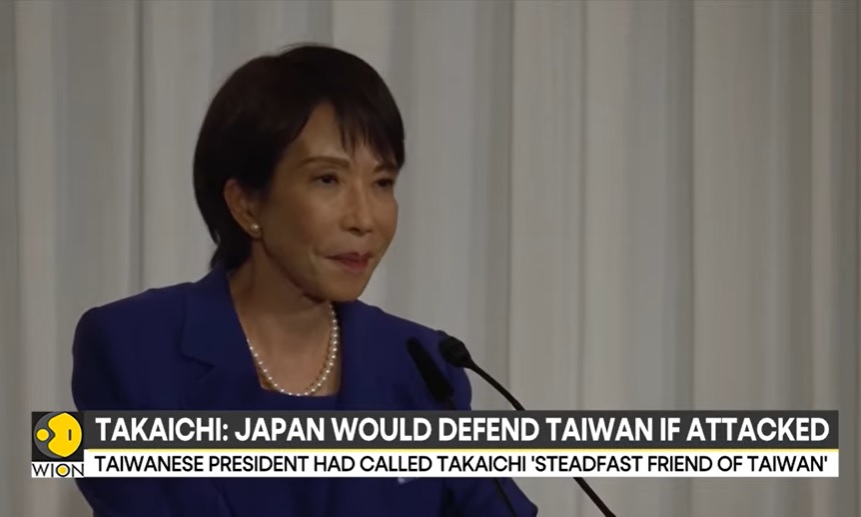
PM Sanae Takaichi
Diplomatic war of words: Japan and China clash online after Takaichi’s Taiwan warning

TOKYO/BEIJING: Japan has sharply rebuked a Chinese diplomat for what it called “extremely inappropriate” online remarks apparently aimed at Prime Minister Sanae Takaichi, after she suggested Tokyo could consider a military response if China attacked Taiwan—a statement that has reignited long-simmering tensions between the two countries.
The controversy erupted when Xue Jian, China’s consul general in Osaka, shared a news article about Takaichi’s comments and added: “The dirty neck that sticks itself in must be cut off.” The post, widely viewed as a violent threat, was quickly deleted—but not before sparking a diplomatic storm.
Japan’s Chief Cabinet Secretary Minoru Kihara condemned the remark as “inappropriate,” confirming that Tokyo had filed multiple protests and urged Beijing to respond. “Regardless of intent, such comments are unacceptable,” Kihara said during a press briefing.
Beyond a diplomatic war
Beijing, however, defended the envoy. Foreign Ministry spokesperson Lin Jian said Xue’s post was a “personal response” to what he called Takaichi’s “wrongful and dangerous statements” on Taiwan, and urged Japan to “take a hard look at its historical responsibilities.”
The United States quickly weighed in as well. U.S. Ambassador George Glass accused Xue of threatening Japan’s leader, writing on X (formerly Twitter): “The mask slips—again.” Washington’s response highlights the growing unease among allies as rhetoric around Taiwan—the self-governing island China claims as its own—continues to escalate.
In Taipei, presidential office spokesperson Karen Kuo called Xue’s post “clearly exceeds diplomatic etiquette,” adding that Taiwan “takes seriously the threatening remarks made by Chinese officials toward Japan.”
The spat comes just weeks after Takaichi—Japan’s first female prime minister and a well-known security hawk—took office. Her government has already moved to ramp up defence spending and strengthen deterrence amid what Tokyo views as Beijing’s increasing assertiveness in the region.
Last week, Takaichi told parliament that a Chinese attack on Taiwan, just over 100 kilometres from Japan’s southwestern islands, could amount to “a situation threatening Japan’s survival.” The phrase, introduced in 2015, gives Japan’s Self-Defense Forces legal grounds to act in response to regional crises.
Her comments marked a sharp break from the cautious tone of previous Japanese leaders, who generally avoided tying Taiwan’s security so directly to Japan’s defence commitments. The shift hasn’t gone unnoticed in Beijing—especially after Takaichi was photographed with a Taiwanese representative at a recent regional summit in Seoul, just days before her meeting with Chinese President Xi Jinping.
Newsletter
Get updates straight to your inbox
Constructive and stable ties
Although both leaders pledged in Seoul to maintain “constructive and stable ties,” the latest exchange suggests relations are once again deteriorating.
Facing lawmakers on Monday, Takaichi described her earlier comments as “hypothetical” and said she would avoid similar remarks going forward, but her attempt at damage control has done little to cool tensions—or ease the growing unease within Tokyo’s diplomatic circles.
Meanwhile, across the Pacific, U.S. President Donald Trump claimed that Xi personally assured him China would not invade Taiwan during his presidency. Still, with no new American arms sales to Taipei approved yet and tensions rising across the East China Sea, many are watching closely to see whether the next moves come in words—or actions.