
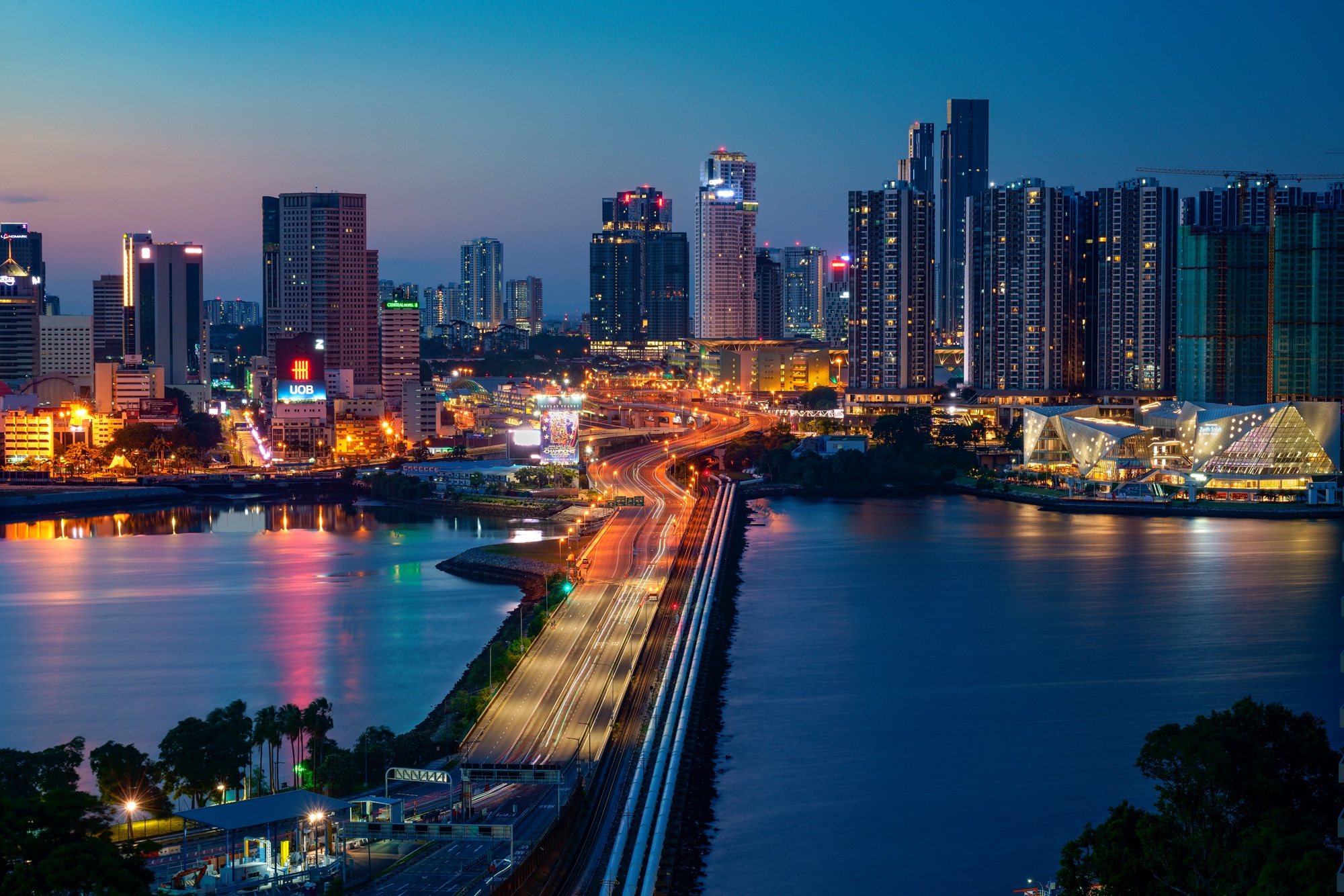
Wikipedia/Johor–Singapore Causeway
Despite US tariff hike, Johor-Singapore economic zone remains strong magnet for high-value investments
JOHOR BAHRU: Even as the United States imposes a revised 19% tariff rate on Malaysian goods, Johor remains confident that the Johor-Singapore Special Economic Zone (JS-SEZ) will continue attracting high-value foreign direct investment, particularly in sectors strategically aligned with Singapore’s own economic strengths.
According to Lee Ting Han, chairman of Johor’s Investment, Trade, Consumer Affairs and Human Resources Committee, the updated tariff regime puts Malaysia on par with its regional peers. “Generally, the 19% revised tariff rate is not that bad for our country, as most neighbouring countries have similar tariff rates, with some even higher than ours. The JS-SEZ is still in a good position to get more investors, especially foreign direct investments,” he told The Star.
While some industries, including furniture and rubber, may face short-term challenges due to increased costs in the US market, Johor’s state leadership is focused on sectors that remain unaffected by the new tariffs.
Singapore-Johor synergy in high-growth sectors
Lee emphasised that semiconductors, electrical and electronic goods, and data centres, all exempt from the US tariff hike, continue to grow rapidly in Johor. These sectors are not only resilient but also well-aligned with Singapore’s advanced technology ecosystem, creating a natural synergy across the Causeway.
“The other good news for the JS-SEZ is that Singapore has a much lower US tariff rate for its sectors, such as pharmaceutical products. We are looking at how we can complement each other and drive the JS-SEZ as the region’s engine of growth,” said Lee, as reported by The Star.
This cross-border complementarity is especially important for Singaporean investors looking to expand regionally, tap into lower operating costs, and gain access to Malaysia’s growing high-tech manufacturing base without compromising on supply chain efficiency.
Experts suggest smart policy cushioning
To strengthen investor confidence amid global trade uncertainty, experts are calling for targeted tax incentives. According to Associate Professor Dr L. Nanthakumar from Universiti Teknologi Malaysia’s Faculty of Management, the government should act swiftly to mitigate potential downsides.
“What the government can do is to help investors within the JS-SEZ by introducing tax incentives to help them cushion the impact of the new tariff rate. A tax incentive can help lower our production cost to the American market while maintaining its quality and make it more affordable to consumers there,” he told The Star. “This will help ensure that our products are still in demand.”
For Singaporean companies, particularly in tech, data infrastructure, logistics, and high-value manufacturing, this is a signal that Malaysia is actively working to keep the JS-SEZ attractive, not just in terms of location and cost, but in policy responsiveness and regional integration.
A resilient platform for cross-border growth
While the US tariff development introduces new complexity for some export-facing industries, it has not dampened Johor’s forward-looking outlook. This sustained federal and state collaboration, and a shared vision with Singapore, the JS-SEZ continues to be seen as a key pillar of economic transformation on both sides of the border.
Newsletter
Get updates straight to your inbox
The zone’s attractiveness to investors is influenced by both its proximity to Singapore and its infrastructure, government support, and strategic sectoral focus. Singaporean firms with regional ambitions may find this a timely opportunity to improve their influence in Johor while navigating an evolving trade landscape.
For now, as The Star reports, Johor is keeping its eye on the long game, with the JS-SEZ positioned to weather global shifts and deliver returns through resilience, collaboration, and economic foresight.
Read also: Johor rep calls for regulated cross-border ride-hailing framework amid LTA crackdown