
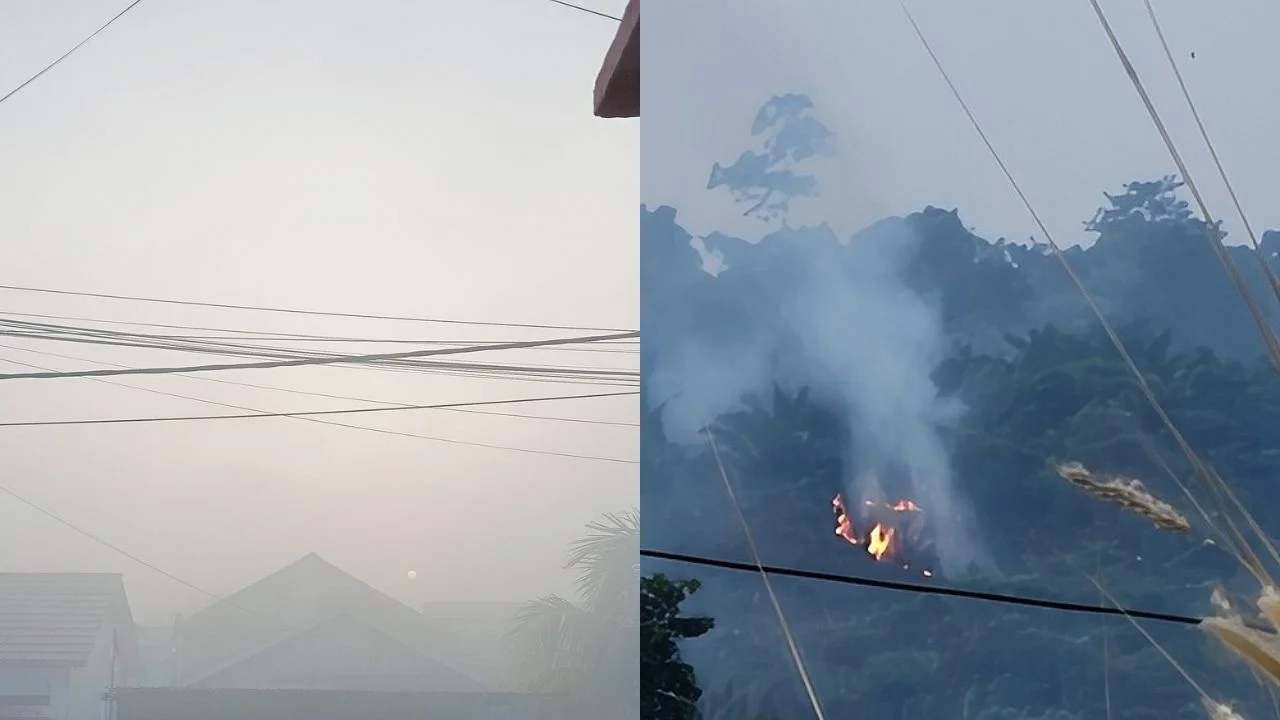

ASIA: A regional air quality emergency is unfolding across Southeast Asia as wildfires burning in Indonesia’s Kalimantan provinces push pollution levels to hazardous extremes, with the haze spreading across borders to choke cities as far away as Metro Manila, according to reports from Channel NewsAsia (CNA) and Inquirer.
Indonesia: The epicentre
The crisis originates in the forests of Borneo, where fires in Central and West Kalimantan have generated air quality readings that dwarf international danger thresholds. According to CNA, citing data from Swiss air quality monitoring platform IQAir, Palangkaraya in Central Kalimantan recorded an AQI of 780 as of noon on Monday, making it the most polluted city in the Indonesian archipelago that day. Pontianak in West Kalimantan followed with an AQI of 593. Any reading above 300 is classified as hazardous.
Indonesia’s Deputy Health Minister Dante Saksono Harbuwono said last week that more than five million people on Borneo and Sumatra are directly exposed to the risks of the haze, CNA reported, with approximately 13,500 people already treated for respiratory infections in July and August alone.
In response, the Indonesian military and government agencies have begun reforestation and ecosystem restoration efforts in East and North Kalimantan. VI/Mulawarman Regional Military Commander Krido Pramono said tree planting is being carried out along riverbanks in burned and degraded areas, alongside water infrastructure improvements to support fire prevention and firefighting, CNA reported, citing national news agency Antara.
Japan has also stepped in. A Japan Self-Defense Force transport ship departed from Hiroshima prefecture on Sunday and is expected to reach Indonesia within one to two weeks, CNA reported. Approximately 600 personnel and three CH-47 helicopters will participate in what is described as the Self-Defense Forces’ first overseas firefighting mission, carried out under a cooperation agreement signed by both countries’ defence ministries in May. Japan’s Defence Minister Shinjiro Koizumi said Tokyo “will do everything possible to help prevent further expansion of the damage.”
The Philippines: Acutely unhealthy air across Metro Manila
The haze has crossed borders, reaching the Philippines with alarming intensity. Inquirer reported that as of 6 a.m. on Tuesday, the Department of Environment and Natural Resources – Environmental Management Bureau recorded acutely unhealthy AQI levels, defined as 201 to 300, where everyone may be noticeably affected, and outdoor activities must be restricted, across 11 cities in Metro Manila.
Parañaque recorded the worst reading at 296 AQI, followed by Quezon City’s Ateneo monitoring station at 241, Las Piñas at 237, Manila at 231, Malabon City at 229, Taguig and Valenzuela at 224 each, Marikina (Parang) at 217, Muntinlupa (Filinvest) at 216, San Juan City at 213, and Mandaluyong at 207, according to the Inquirer.
Navotas and Pateros reached very unhealthy levels at 153 and 172, respectively, while Makati logged 111, classified as unhealthy for sensitive groups. Only one monitoring station, Quezon City’s SMPH Commonwealth site, recorded a fair AQI reading of 98.
Classes in some areas in Quezon City were suspended due to the poor air quality.
The DENR-EMB attributed the elevated PM2.5 levels, which refer to fine particulate matter measuring 2.5 micrometres or less, to haze possibly linked to the ongoing fires in Kalimantan. The bureau advised the public to wear N95 masks when going outside and to limit outdoor activities, particularly for those sensitive to air pollution.
 Follow Google News
 Join us on WhatsApp
 Follow us on Telegram