
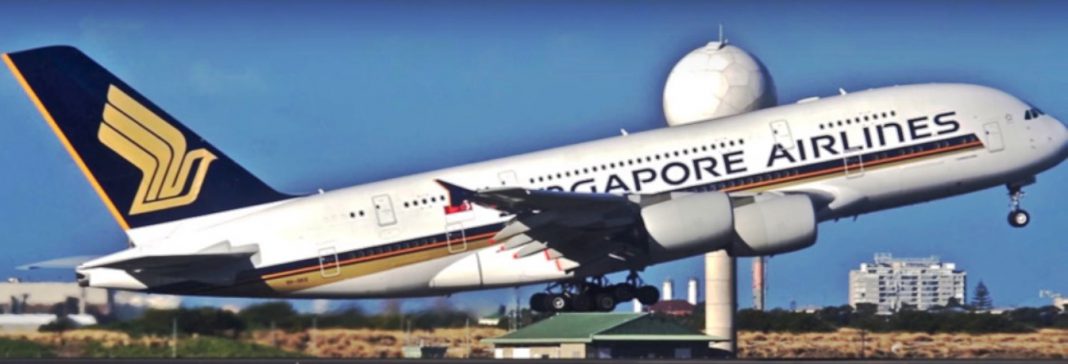

In recent weeks, reported cases of hidden cameras’ installed in several airlines’ in-flight entertainment (IFE) systems have irked many passengers of American Airlines and Singapore Airlines (SIA).
IFE systems have become popular these days when travelling by air or taking transoceanic flights. They serve as your best companions to keep you busy and have a comfortable onboard experience.
In general, these are harmless equipment installed on the back of each seat to entertain passengers before they reach their destination.
However recently several passengers onboard both Singapore Airlines and American Airlines were surprised about the new feature in the IFEs, cameras just beneath the screens.
Air travelers were wary that someone might be watching them but airline officials for both airlines were quick to respond saying there was no such thing.
American Airlines noted in a statement that the built-in cameras are standard features of many IFE systems in most airlines.
It said that manufacturers of those devices purposely installed the cameras for future use such as seat-to-seat video conferencing while travelling.
The airline added that these cameras were available on some American Airlines IFE systems when sent to them by the manufacturer. These have not been activated and the airline has no plans for using them anytime soon.
SIA said the same thing. One airline spokesman noted several of the newer IFE systems have a camera provision and it is embedded in the hardware.
He added these cameras have been designed by the manufacturers for improved functionality in the future.
He stressed that the cameras were permanently disabled and would not be activated while onboard. The aircraft management had no plan to use them or create any added features with the cameras.
Sourced from suppliers
Reports claimed that airlines don’t have the capacity to create their own IFE systems. They can only modify the content and change the systems’ presentation.
The hardware is sourced directly from the suppliers. American Airlines is supplied with IFE systems by Panasonic while SIA systems are taken from Panasonic and Thales.
No one from Panasonic was available to provide a comment. Meanwhile, a Thales spokesman explained the systems’ cameras are completely disabled and will never be activated in flight.
The advanced camera IFE systems are not seen in the premium economy cabins of several American Airlines, Boeing 777-200, 777-300ER, and Airbus A330-200s.
However, the cameras are easily detected among Singapore’s aircraft. They are installed in the different aircrafts such as business, premium economy, and economy cabins of Airbus A350-900s, Airbus A380s, Boeing 777-300ERs, and Boeing 787-10s.
Thales and Panasonic Aero are known for being original equipment manufacturers in the industry. This means the systems are available in other planes aside from SIA and American Airlines.
 Follow Google News
 Join us on WhatsApp
 Follow us on Telegram