
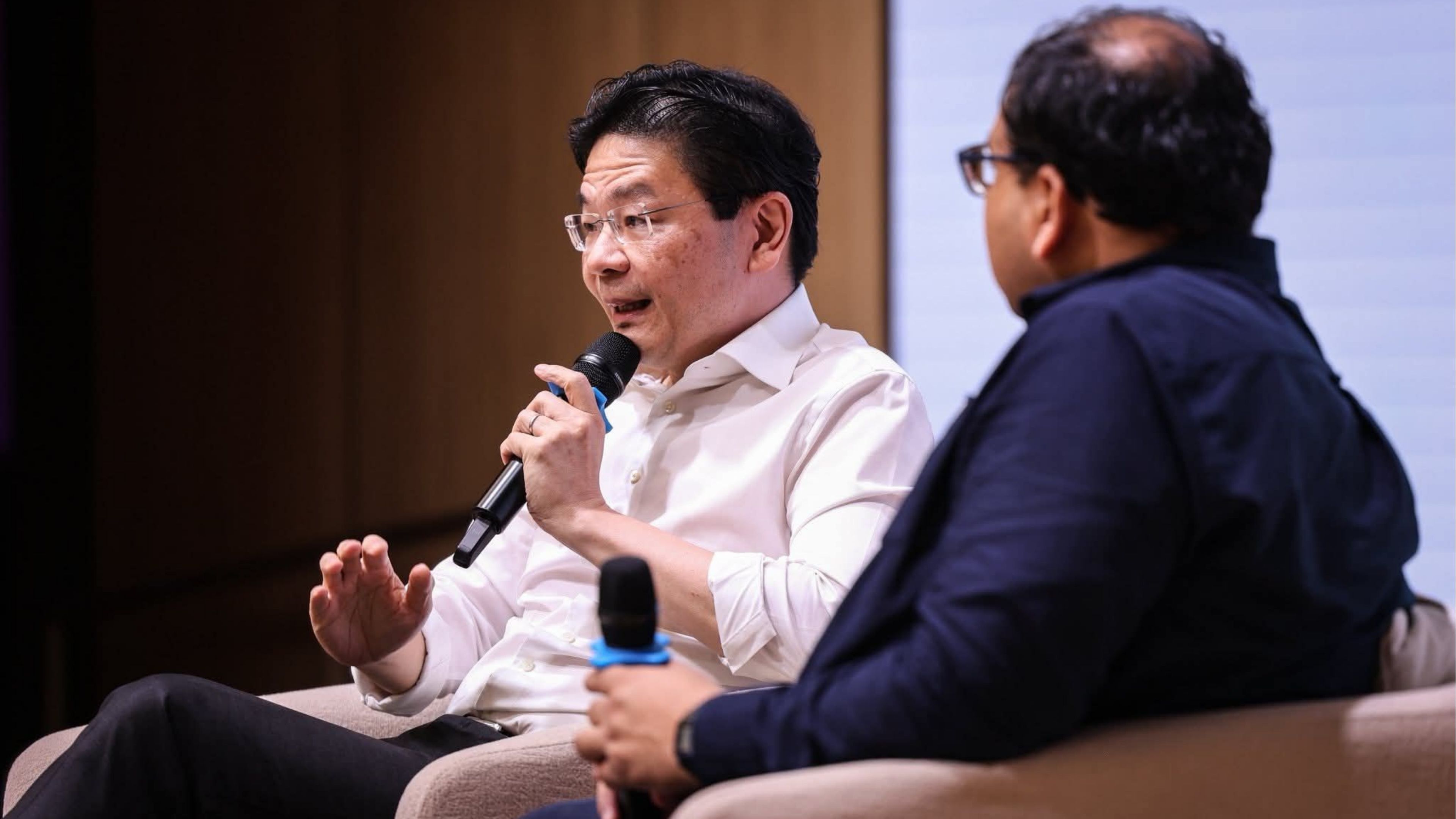

SINGAPORE: Prominent Singapore activist and former political detainee Tan Tee Seng has appealed to Prime Minister Lawrence Wong to listen to his critics, as well as his supporters, if he truly welcomes diverse perspectives.
Mr Tan’s appeal was made in response to a speech Mr Wong delivered on July 4 at the Young PAP (YP) 40 Festival. The PM had said that the People’s Action Party (PAP) can only continue to govern Singapore well “if every generation renews our party with good people who are willing to serve.”
Adding that each generation must bring “fresh ideas, new energy, and a renewed sense of responsibility to take our country forward,” the PM called on those who cared about the country’s future to join the ruling party.
He also said that members do not need to agree on every issue. Asserting the party needs people with different backgrounds, experiences, perspectives and ideas in order to continue evolving and responding effectively to new challenges, he said, “We do not want everyone in the PAP to think the same way.”
The PM also cautioned that Singapore is entering a “changed” and divided world where politicians in many places “amplify outrage” to win support and engage in “performative politics and points scoring over solving serious problems”.
While Singapore has not been entirely immune to such trends, Mr Wong said the PAP’s answer was not to “stoke anger, to deepen divides, or to give in to cynicism”, but to “roll up our sleeves, bridge our divides, and solve problems through our actions”.
The premier ended his address with an appeal to younger Singaporeans, urging them not to give in to the disillusionment or thinking that little would change and that politics was not worth participating in. He said, “When that happens, remember: Singapore was built by young men and women who refused to give in to cynicism.”
Responding to the PM’s call for greater diversity of views within his party, Mr Tan has argued that the Government must back its message of openness with tangible action if it wants to earn public trust.
In a Facebook post published on Tuesday (7 July), Mr Tan said Mr Wong’s remark that Singaporeans “do not need to agree with us on every issue” was encouraging in principle and said that a government that is confident in its leadership should welcome differing opinions rather than view them as something to be feared.
However, he argued that the real measure of political leadership lies not in public speeches, but in whether such commitments are reflected in the exercise of power.
Mr Tan said Singaporeans had heard similar messages from previous prime ministers, with each speaking about openness, fresh thinking and a willingness to listen. Despite those assurances, he contended that “the governing playbook has changed little.”
He pointed to the continued use of the Protection from Online Falsehoods and Manipulation Act (POFMA) against critics, the withdrawal of public funding from dissenting voices, and the periodic use of the Internal Security Act (ISA). While acknowledging that the ISA is a security law, Mr Tan argued that it also serves as a reminder of the Executive’s powers to detain individuals without trial.
Mr Tan also pointed out that opposition parties that have secured electoral support are still too often treated as political opponents to be relentlessly “hantam” rather than as legitimate participants whose ideas deserve serious consideration.
Asserting that a healthy democracy develops by testing policies against competing viewpoints instead of seeking to defeat opposing voices, Mr Tan questioned the Government’s repeated claim that there are “no sacred cows”.
If that is true, then policies themselves must also be open to scrutiny,” he said, adding that “without a willingness to revisit long-held assumptions, claims of openness risk becoming little more than political rhetoric.”
Using education as an example, Mr Tan argued that public discussion frequently centres on artificial intelligence, digital transformation and future-ready skills while avoiding more fundamental questions.
He asked why teachers continue to shoulder excessive administrative work, whether class sizes are conducive to meaningful learning, and whether teaching is valued in a way that reflects the expectations placed upon educators.
“These are not peripheral issues. They go to the heart of educational quality,” he wrote. However, he argued that public consultations often become “carefully managed conversations about emerging trends while avoiding the structural questions that demand political choices.”
Mr Tan also cited sociologist Teo You Yenn’s latest book, Unease, quoting a passage that highlights tensions many Singaporeans face between work and family, academic achievement and holistic development, meritocracy and unequal outcomes, as well as the value placed on caregiving.
Referring to those examples, Mr Tan argued: “These are not simply personal dilemmas. They are the consequences of policy choices.” He added that they “cannot be resolved through better messaging or more consultations” but instead “require political courage to question assumptions that have long been treated as settled.”
Calling on the Government to demonstrate its commitment to openness, Mr Tan said it should “listen not only to supporters, but also to critics”, engage opposition parties on “the substance of its proposals instead of its politics”, allow “difficult questions to be debated without resorting to legal instruments that narrow public discourse”, and review policies that may no longer reflect the realities faced by Singaporeans.
“Words can set the tone, but only action builds trust,” he wrote.
Mr Tan concluded that the challenge facing Mr Wong “is therefore not to convince Singaporeans that they are free to disagree. It is to show that disagreement can lead to better policies.”
“Leadership is measured not by the promise of openness, but by the willingness to act on it,” he said, adding that until then, calls for “diverse perspectives” would remain “inspiring words waiting to become meaningful change.”
Read his post in full HERE.
 Follow Google News
 Join us on WhatsApp
 Follow us on Telegram