
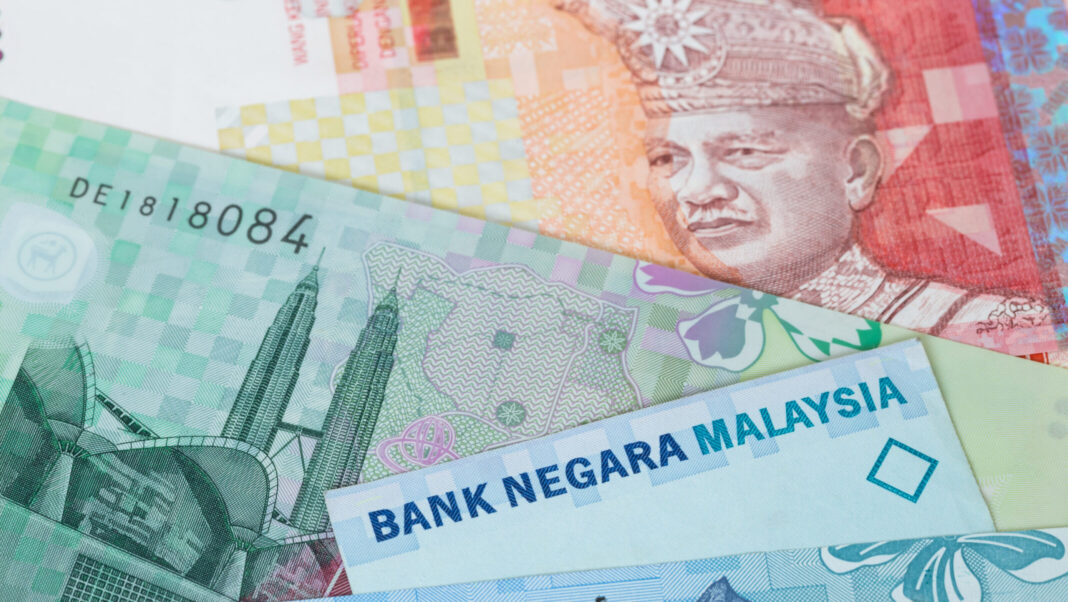

MALAYSIA: The ringgit closed stronger against the US dollar, major currencies, and all ASEAN peers on Friday, brushing aside the headline impact of better-than-expected US economic growth data after analysts pointed to significant weakness beneath the surface numbers.
According to Free Malaysia Today (FMT) at 6 p.m. on June 26, the ringgit appreciated to 4.0860/4.0910 against the greenback, up from 4.1160/4.1200 at Thursday’s close, a meaningful single-day gain that reflected a shift in investor sentiment around US Federal Reserve rate expectations.
What the US data actually showed
The apparent contradiction, a stronger ringgit despite better-than-expected US GDP figures, comes down to what’s driving the growth. SPI Asset Management managing partner Stephen Innes told Bernama that while the US recorded Q1 2026 GDP growth of 2.1%, beating the consensus forecast of 1.6%, the underlying composition told a different story. Growth was driven primarily by capital expenditure and government spending, while consumer spending, the engine of the US economy, was sharply lower.
“This has encouraged investors to trim aggressive US Federal Reserve interest rate hike expectations, pulling US yields lower and taking pressure off Asian currencies, including the ringgit,” Innes said.
Bank Muamalat Malaysia Bhd chief economist Afzanizam Abdul Rashid reinforced this reading, noting that consumer spending rose by only 0.5% in the quarter, which may be a sign of underlying weakness rather than sustainable momentum. He also pointed to US personal consumption expenditures (PCE) inflation coming in at 4.1% in May, in line with expectations, but argued that the inflation was largely driven by higher fuel costs rather than broad demand-side pressure.
“Therefore, raising the interest rate will not bring down the inflation,” Afzanizam said, which is a view that, if shared by the Fed, would reduce the likelihood of aggressive rate hikes and keep the pressure off Asian currencies.
Gains across major and regional currencies
Against major currencies, it appreciated against the British pound to 5.4013/5.4079 from 5.4261/5.4314, rose against the euro to 4.6605/4.6662 from 4.6762/4.6807, and firmed against the Japanese yen to 2.5283/2.5316 from 2.5437/2.5464.
Regional peers told the same story. The ringgit gained against the Thai baht, strengthened versus the Indonesian rupiah to 227.9/228.3 from 229.4/229.7, and advanced against the Philippine peso to 6.66/6.67 from 6.71/6.72.
What this means for Singaporeans
For Singaporeans heading to JB this weekend, Friday’s movement is actually a mild dampener. The ringgit’s strengthening against the Singapore dollar, moving to 3.1581/3.1625 from 3.1742/3.1775, means each Singdollar now converts to slightly fewer ringgit than it did on Thursday.
For regular Causeway crossers who budget around the exchange rate, a strengthening ringgit gradually erodes the purchasing power advantage that makes JB such an attractive destination for shopping, dining, and petrol. The gap remains favourable overall for now, but the direction of travel this week is one worth watching.
Read more: Johor eyes green manufacturing hub status as JS-SEZ drives cross-border sustainability push
 Follow Google News
 Join us on WhatsApp
 Follow us on Telegram