
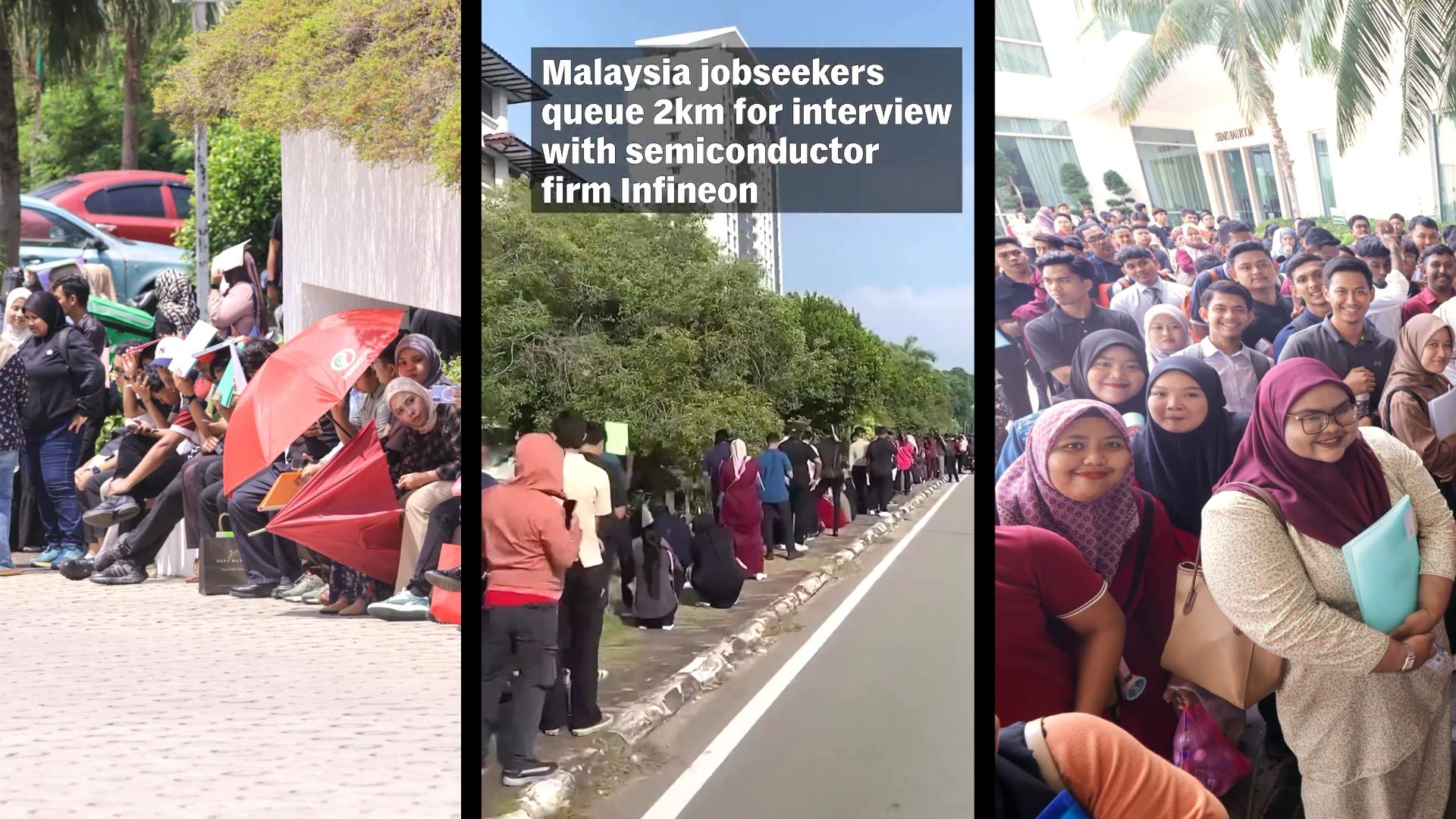

MALAYSIA: What was meant to be a routine recruitment exercise turned into a striking picture of Malaysia’s changing job market.
Over 1,000 job seekers queued in the heat of the midday sun for a chance to secure one of between 300 and 500 operator and technician positions with German semiconductor firm Infineon Technologies in Melaka.
The turnout was far beyond expectations. Infineon had reportedly prepared for about 100 applicants. Instead, the line stretched roughly two kilometres, with some hopefuls arriving as early as 6 am.
Photos and videos of the crowd spread online, drawing attention to the scale of the job seeker and to what they seem to say about workers’ priorities.
A queue longer than expected
The jobs on offer came with starting salaries of RM3,500 (S$1,100) a month, making them attractive by local manufacturing standards.
According to a report by The Rakyat Post (TRP), the crowd grew so large that food and bottled water were distributed to people still waiting under the scorching sun.
Melaka Chief Minister Ab Rauf Yusoh later confirmed on Facebook that the queue had stretched to around two kilometres.
The scale of the turnout surprised many observers. For some, it raised questions about why so many people were competing for the positions if Melaka’s economy is doing well.
Officials point to a strong economy
Melaka executive councillor Ngwe Hee Sem pushed back against suggestions that the crowd mirrored economic hardship.
Mr Ngwe pointed to Melaka’s unemployment rate of about 2%, among the lowest in Malaysia, and said large turnouts are common when companies offer competitive salaries and stable career opportunities.
The councillor also noted that some applicants were believed to have travelled from outside Melaka, suggesting the event attracted interest beyond the local workforce.
From that perspective, the crowd could be seen as a sign of the state’s ability to attract talent rather than evidence of a weak labour market.
Workers appear willing to chase better opportunities
Still, the images tell a story about what workers value. Standing in a queue for hours under the hot sun is not a small commitment.
Many applicants likely already had jobs but were willing to spend their day pursuing something they believed would offer better pay, stronger prospects, or greater security.
That view was echoed by Singapore-based communications and marketing professional Gregory Athanasius, who described the scene as a reminder of how competitive the job market has become.
In a LinkedIn post, he said that the response reflected strong demand for secure employment with established multinational firms. He also noted that many applicants travelled long distances and made personal sacrifices just to attend a brief interview.
“When people are willing to wake up at 4:00 am, travel across state lines, and stand on a hot pavement for hours, it shows a level of sheer grit born out of a genuinely tough economic landscape,” the marketing professional wrote.
Mr Athanasius’ point was that workers are still eager to work. What they are looking for are jobs that provide decent wages, stability and a pathway for growth.
The crowd represents workers wanting better job opportunities
The queue may not be a sign of economic distress. It may instead reveal something more common across many labour markets today: workers constantly searching for better opportunities.
The scene may feel familiar to Singaporeans as well. Whether in manufacturing, technology, or services, reputable employers attract far more applicants than openings, especially when salaries and career prospects exceed the market average.
A two-kilometre queue is unusual. The desire behind it is not. When hundreds of people are willing to wake before dawn, travel long distances, and wait for hours in high temperatures, it suggests that workers aren’t just looking for jobs. They are looking for better jobs.
Policymakers focus on unemployment rates, but workers judge the economy differently. They compare salary, stability, and future prospects. The lesson from Melaka is: people will go the extra mile when they see a genuine opportunity to improve their lives.
 Follow Google News
 Join us on WhatsApp
 Follow us on Telegram