
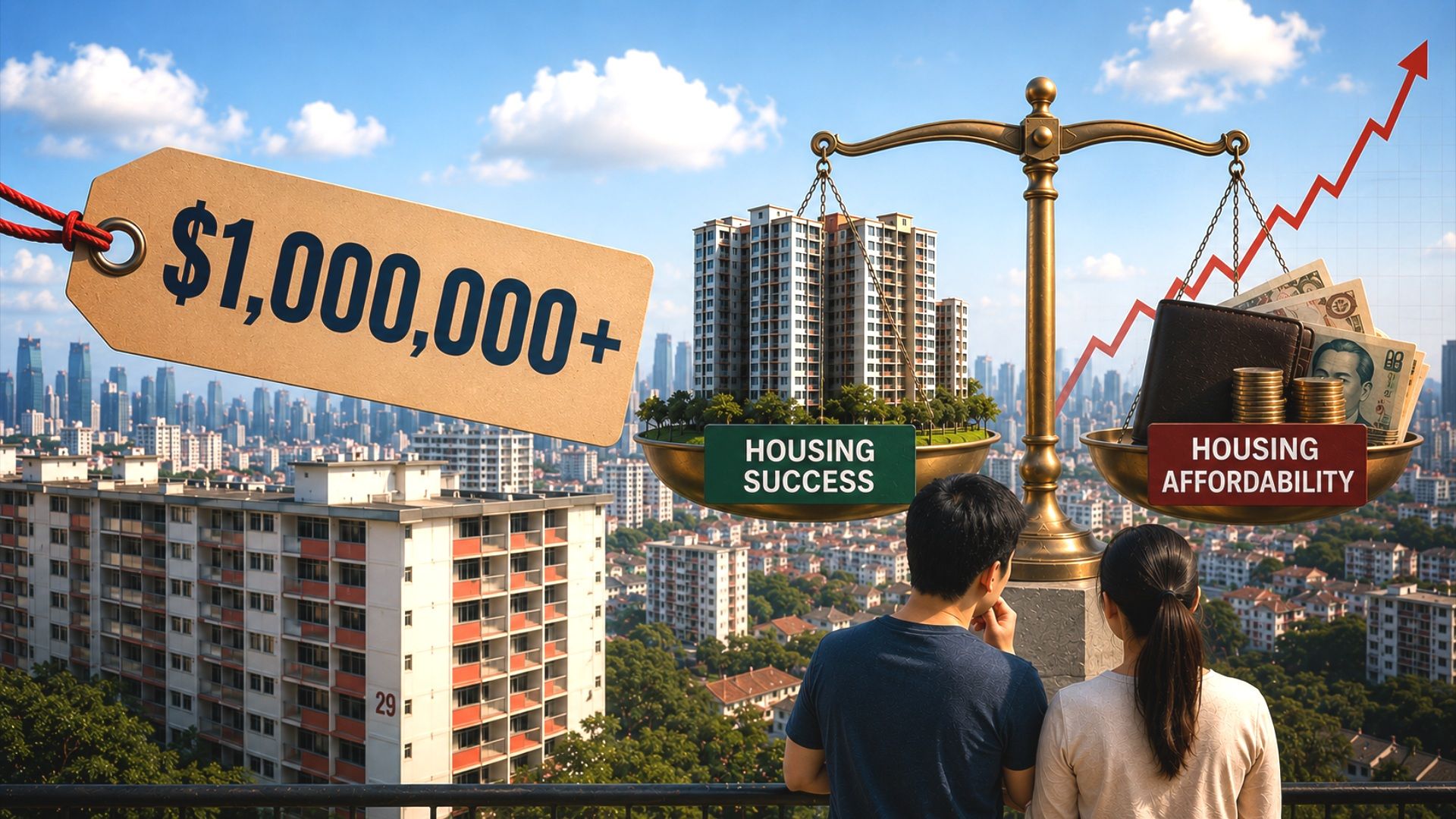

SINGAPORE: The number of million-dollar HDB flats changing hands is climbing, even as Singapore’s resale market shows signs of cooling.
The HDB Resale Price Index slipped by 0.1% in early 2026, offering some relief to buyers after years of rising prices. Yet during the same period, million-dollar resale transactions jumped by more than 17% from the previous quarter, a feature of Singapore’s housing model rather than a failure of it.
Public housing was designed to grow in value
For many Singaporeans, HDB flats are more than just homes. They are also a retirement asset.
Since the early days of public housing, policymakers have promoted homeownership as a way to provide affordable housing and to help households build wealth over time.
Families buy bigger flats while raising children. Later in life, when their children move out, some owners choose to downsize. If their flat has appreciated in value, the proceeds from selling and moving into a smaller home can help fund retirement. This means rising resale prices have long been part of the system’s intended outcome.
As a result, million-dollar flats may feel shocking, but they are a predictable consequence of decades of price growth. The trend is especially visible in mature estates, where larger flats and desirable locations continue to attract strong demand.
Prices have risen faster than incomes
Housing affordability has become a concern, particularly for buyers entering the resale market. Between 2015 and 2025, the HDB Resale Price Index increased by about 50.7%, according to figures cited by Vulcan Post.
Over the same period, median household income rose by 42.7%, while cumulative inflation was around 19%, meaning housing prices outpaced income growth, but by a smaller margin than many may assume.
For existing homeowners, rising prices can be beneficial because the value of their current home typically rises alongside the homes they may later buy or sell.
The challenge falls most heavily on those who cannot access subsidised Build-To-Order (BTO) flats and must enter the resale market directly.
Some experts see rising prices as necessary
The debate over HDB prices focuses on affordability. Yet there is another side to the discussion. If resale flat prices merely kept pace with inflation or worse, stayed stagnant, older Singaporeans could see the real value of their housing assets shrink over time, undermining one of the pillars of retirement that many households rely on.
Vulcan Post’s Michael Petraeus noted that the ideal situation is for resale prices to rise faster than inflation but slower than wage growth. In that scenario, working Singaporeans would continue to afford better housing, while retirees would still benefit from home appreciation.
Over the past decade, however, resale prices have grown somewhat faster than that ideal range. Still, even if price growth had been more moderate, million-dollar HDB transactions would likely continue increasing as Singapore’s housing stock ages and values accumulate.
Balancing today’s affordability with tomorrow’s security
The rise of million-dollar HDB flats expresses a tension at the heart of Singapore’s housing model. Homeowners generally want their properties to retain or increase their value. Buyers, especially younger households, want homes to remain affordable.
Both goals matter. The challenge for policymakers is keeping that balance intact.
As more HDB flats cross the million-dollar mark, public debate will continue. But the growing number of seven-figure transactions may say less about a housing crisis and more about a system working largely as intended, even as it faces pressure to remain accessible to the next generation.
Housing policy is ultimately about balancing today’s affordability with tomorrow’s security. The harder task is ensuring neither side is left behind.
 Follow Google News
 Join us on WhatsApp
 Follow us on Telegram