
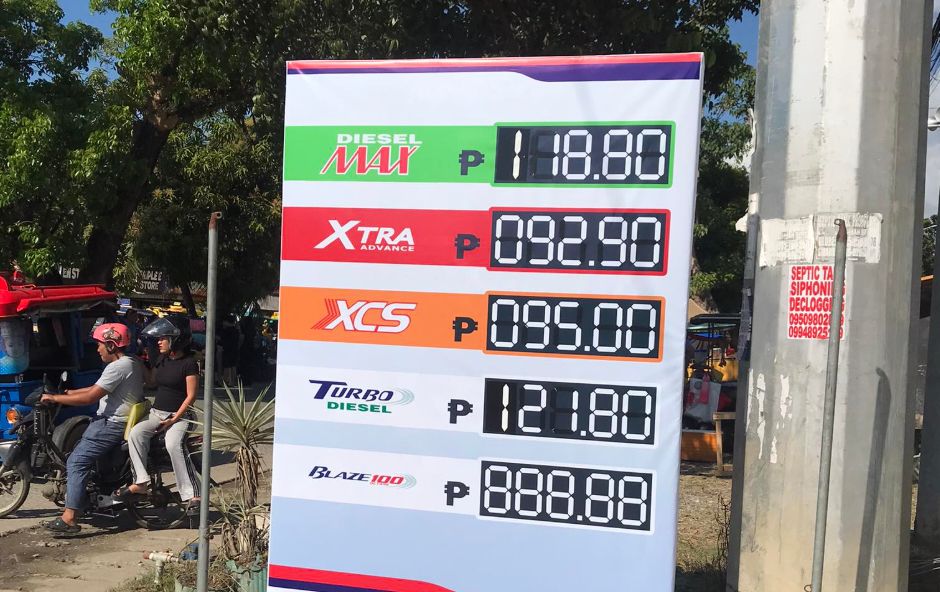

A recent analysis in The Diplomat says that the current oil shock could escalate into a broader economic and social crisis in Southeast Asia and that it could follow a four-stage trajectory.
The authors explained that this is nothing new for governments in the region, which have had to contend with the oil shock of 1973, the Asian financial crisis from 1997 to 1998, the food-price crisis from 2007 to 2008, and the crisis brought about by the Covid-19 pandemic.
“The present Iran war shock should be read in much the same way: not simply as a rise in oil prices, but as the signs of the dominoes falling to an even bigger crisis,” the authors wrote.
They said that in the region, governments are largely reacting with strategies that have worked in the past, mentioning work reduction measures, subsidies, and price caps, although these interventions may not be enough to address structural weaknesses.
The authors of the piece outlined the trajectory of the potential widespread crisis as happening in four stages. The first is the surge in oil prices, which have surged above S$100 per barrel in the wake of the war.
This is followed by inflation, which already began to set in and spread shortly after the war broke out. The third stage is marked by the fiscal strain governments will feel, as more subsidies are needed for people to cope with higher prices. All these may lead to the fourth step, which is a food and social stability crisis.
The authors note that Southeast Asia has faced similar shocks before, including the 1973 oil crisis, the 1997–98 Asian financial crisis, the 2007–08 food-price crisis, and the Covid-19 pandemic. Governments are responding with familiar measures like subsidies and price caps, but these may not be enough to address deeper structural weaknesses.
Indonesia, Malaysia, the Philippines, Cambodia, Vietnam, and Singapore have already announced such measures, and the authors ask if their governments can “break the cycle of emergency cushioning before the next stage begins.” However, they expressed doubts about this happening.
Other publications have agreed that Southeast Asia is one of the most exposed regions due to the Middle East conflict, but stop short, however, of predicting social unrest and political instability.
The Asian Development Bank has warned that the war would bring about inflation and fiscal pressure, as well as a growth slowdown in the region, and has mentioned different nations’ structural vulnerabilities.
The International Monetary Fund, meanwhile, has emphasised that inflation may be persistent and that governments are exposed to debt risks that may end up being long-term. Think-tanks such as the Centre for Strategic and International Studies have also warned that the crisis could spill over beyond fuel supply.
Nevertheless, whether the outcome The Diplomat suggests will come to pass depends on factors such as how long the conflict lasts, as well as each government’s policy choices. /TISG
 Follow Google News
 Join us on WhatsApp
 Follow us on Telegram