

UNITED STATES: US Interior Secretary Doug Burgum on Monday said Asian countries want to buy more U.S. energy to reduce their dependence on oil and gas exports from the Middle East.
Mr Burgum told CNBC that Japan, South Korea, and Taiwan have expressed the desire to buy more energy from the US. These countries reply heavily on exports through the Strait of Hormuz where oil tanker traffic has plunged in recent weeks.
“They want to buy more energy from the U.S.,” Burgum said in an interview. He also linked surge in US oil demand as part of President Donald Trump’s energy dominance agenda, which is designed to provide U.S. allies with a stable, alternative supply of energy.
“Our allies and our friends can buy from us as opposed to having to buy from countries that either wage war or fund terrorism,” said Burgum.
The US’ frontline territories in the Pacific, as well as Hawaii, one of its states, are just as dependent on foreign oil as Japan, Taiwan, the Philippines, and other allies, the secretary said. “Having enough energy, as we do, can bring peace to the world,” he added.
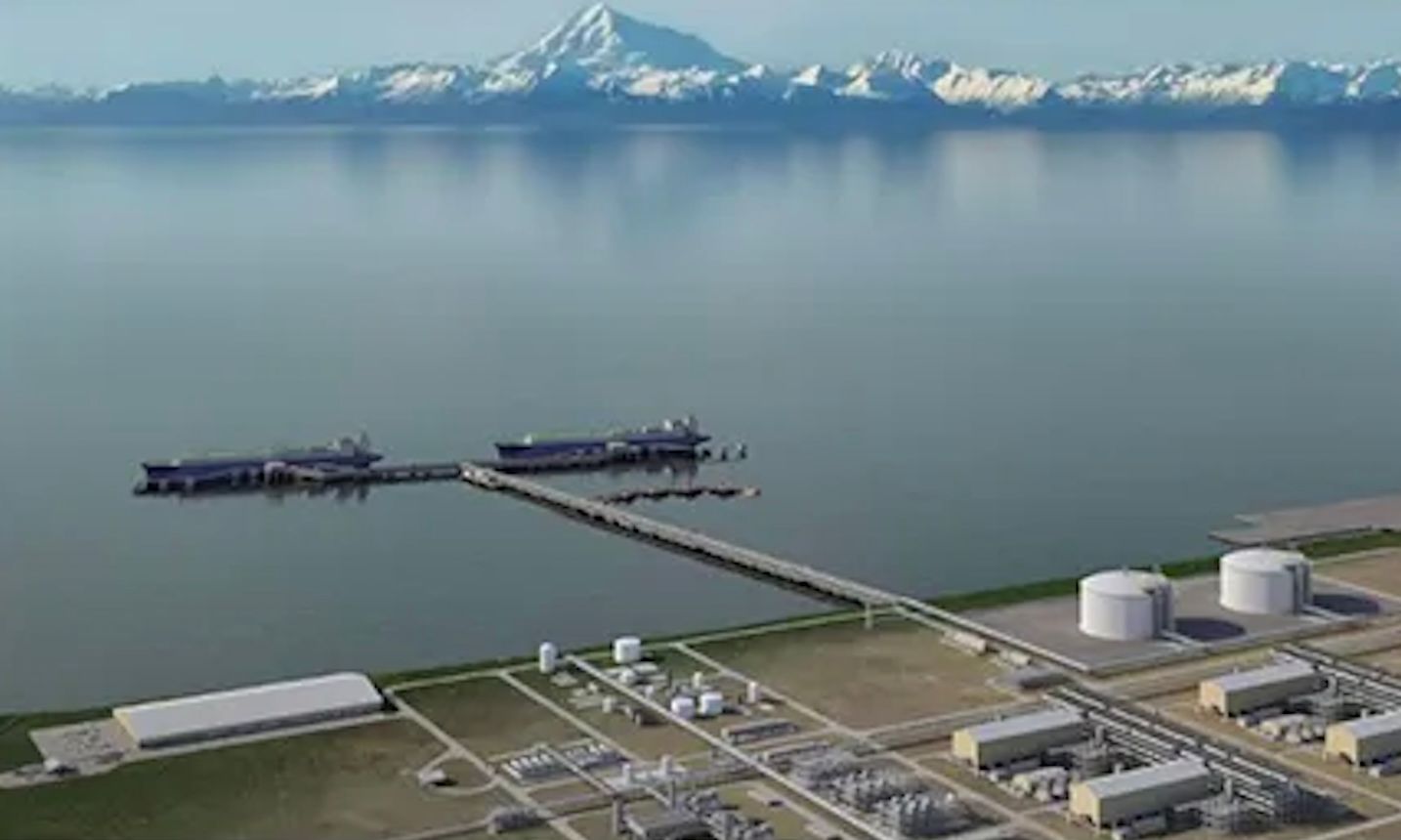
A key to providing energy to Asia will be Alaska, where the Trump administration is prioritizing a huge project involving LNG production.
It only takes eight days to ship LNG from Alaska to Japan, said Mr. Burgum, adding that five of those days are in US territorial waters along the Aleutian Islands, which means there is virtually no threat of disruption.
In comparison, it normally takes at least 20 days for a tanker to get from the Strait of Hormuz to Japan.
The conflict, which began on Feb 28 when the US and Israel started bombing Iran, has all but closed down the Strait of Hormuz, a chokepoint for around 20% of the global supply of oil and liquefied natural gas (LNG).
His CNBC interview may be viewed in full here.
In 2024, 84% of the crude oil shipments passing through the strait were headed toward markets in Asia, according to an estimate from the United States’ Energy Information Administration (EIA). As for liquefied natural gas (LNG), 83% of the volume passing through the Strait of Hormuz was similarly bound for Asia.
Since Asian economies are heavily reliant on the Middle East for oil, Singapore’s Foreign Affairs Minister Vivian Balakrishnan told Reuters in an interview earlier this week, “Right now, the closure of the Strait of Hormuz is, in a sense, an Asian crisis.” /TISG
Read related: Vivian Balakrishnan calls closure of Strait of Hormuz an ‘Asian crisis’
 Follow Google News
 Join us on WhatsApp
 Follow us on Telegram