

Can a Russian girl’s experience growing up in Singapore inform the Singaporean sense of belonging? Anatomy of Belonging, the debut book by author and creative consultant Maria Isaeva, dives into this and more.
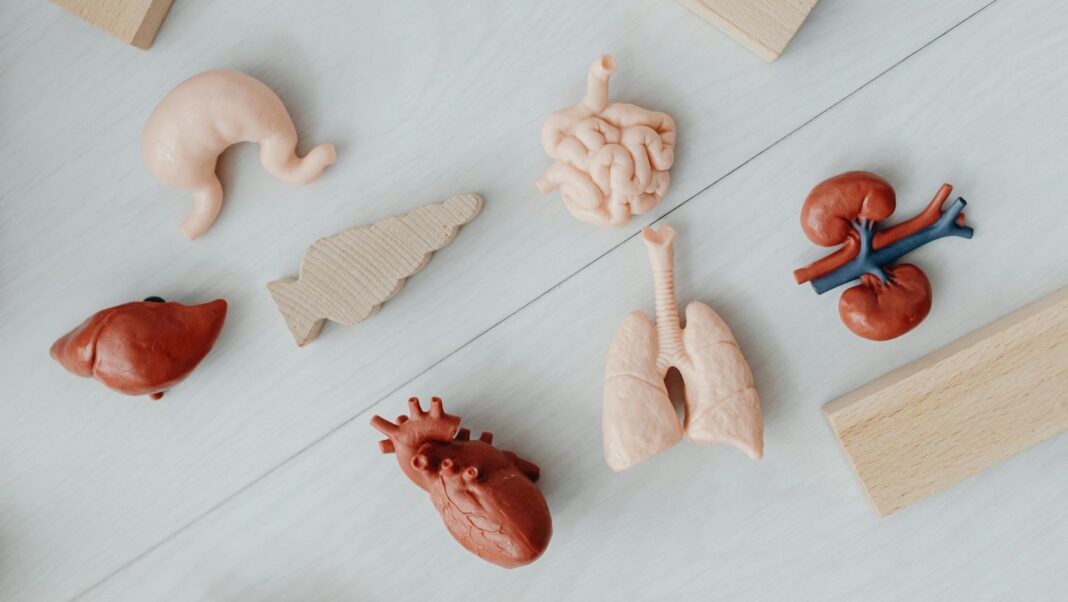
Meant as a deeply personal and poetic exploration of migration, identity, and what home means — whether it was Singapore, Bali, or Russia — Maria tells her tale through the metaphor of the human body.
It unpacks Maria’s two decades in Southeast Asia, traversing Singapore, Bali, Bangkok, Japan, and beyond. Each chapter uses an organ as a narrative lens — the gut, the lungs, the skin — to examine survival, displacement, and transformation.
In an exclusive interview with The Independent SG, Maria shares, “It’s both clinical and emotional. Your body learns before your mind does when you migrate. The way you breathe, eat, even speak — it all shifts to survive new environments.”
Leaving Singapore: A quiet grief
The year 2021 saw Maria leave Singapore after nearly 18 years. Her departure wasn’t simply a relocation but a sorrowful departure. Reflecting, Maria shares: “Belonging isn’t a visa stamp.
“It’s the feeling that you matter where you live, but policies have the power to define who gets to stay and who must leave, no matter how much of yourself you’ve given to a place,” she adds.
Despite building friendships, a career, and a life in Singapore, Maria was denied permanent residency. This is the wound that sits at the heart of her book. It’s an invisible but deeply felt fracture between personal identity and national belonging.
Unfolding like an atlas of an immigrant’s body, Anatomy of Belonging flows in a narrative sequence, organ by organ. The lungs symbolise freedom and suffocation. The gut? The cruel realities of human trafficking. As for skin, the largest organ of the human body? It’s linked to the chameleon-like adaptations migrants learn to survive.
“I didn’t want to write a polished, sterile narrative,” Maria explains. “I wanted it to feel exposed, honest, and raw because that’s the reality of living between cultures and places”.
Structuring the book around the body was instinctive. “Our bodies carry memory,” she says. “Every place I’ve lived has left an imprint. I wanted readers to feel that migration isn’t just an intellectual concept — it’s physical, cellular.”
Becoming a “cultural chameleon”
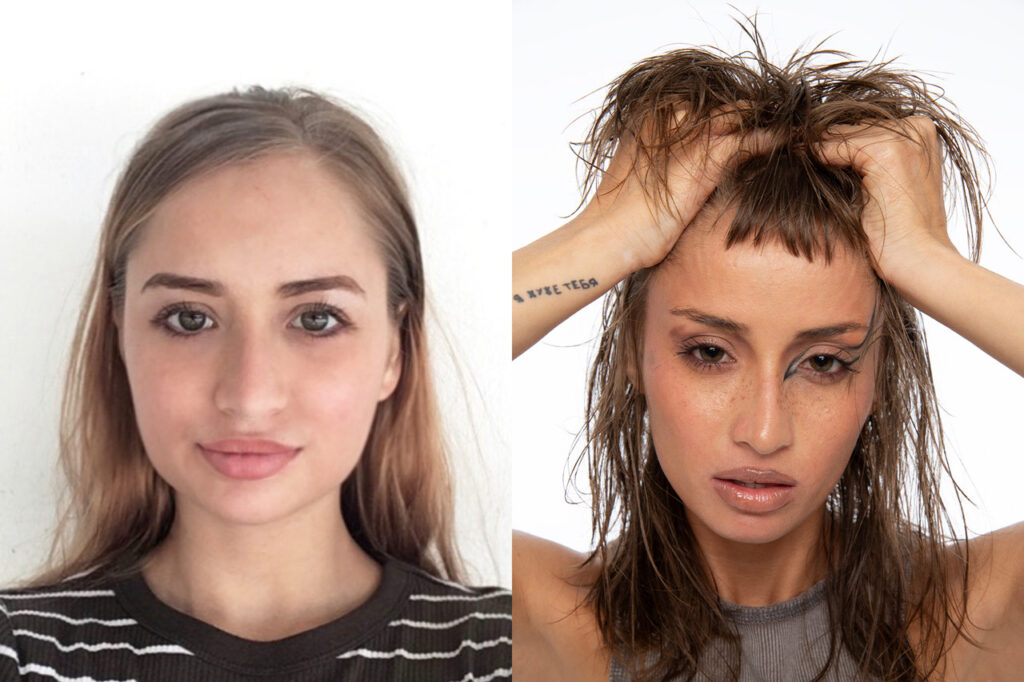
Born in Russia, raised by a Japanese stepfather and now splitting her time between Bali and Singapore, Maria learned early how to “read the room” in any setting.
She observes: “As an immigrant or third-culture individual, you develop this instinctive sensitivity. You almost become a cultural chameleon, but beyond surface-level adaptation, the deepest truths about a place and its people reveal themselves in the small, everyday interactions.”
She recalls her favourite metaphor: “Trying to get a parcel delivered from point A to point B is often the fastest way to glimpse the hidden operating systems of a culture. How someone responds when they don’t have anything in it speaks volumes about social trust, collective values, and how problem-solving happens on a personal and societal level”.
In Singapore, she noticed how the state carefully engineered communal harmony in the national psyche. The forms it came in? Racial harmony campaigns, MRT courtesy reminders, and school streaming systems. “There’s unity, but it’s engineered,” she observes.
Bali, by contrast, sees life orbit organically around the collective. The difference? “A neighbour’s funeral is your responsibility. A temple nearby is everyone’s obligation. You can’t chase your dream in Ubud without being asked whether it’s good for the village, or for the gods. You are always seen.”
The question that started it all

The seed of Anatomy of Belonging came from a single, seemingly harmless question Maria has been asked her entire life: “Where are you from?”
“It’s one of the most jarring questions,” she admits. “Not because people mean harm, but because it often feels too small to contain the truth of who many of us are today.”
She prefers a different question: “Where are you local?” Why? Maria argues: “Because it invites someone to talk about the places, communities, and experiences that have shaped them, rather than reducing identity to skin colour, a passport, or a mother tongue.”
Going deeper, Maria explains: “Growing up most of my years in Singapore and short fragments in Russia and Bali, I witnessed firsthand how migration, political instability, and economic shifts force families to uproot and start over, often wrapping up their entire lives like a burrito and carrying it into a new country.”
For Maria, identity is layered, fluid, and a beautifully messy affair. “Someone today might look Mexican, have Brazilian-Indian parents, and grow up in Canada. How do you explain where you’re ‘from’ when pieces of yourself are scattered across continents and languages?”
Memory, loss, and the rawness of writing
Another difficulty Maria encountered as she wrote Anatomy of Belonging was revisiting memories long sealed away.
“The most difficult part was going down memory lane,” she says quietly. “There were days I’d be crying as I wrote. You never forget how certain things made you feel, and the book reflects that. It’s a very raw, unfiltered read”
A defining moment that lingers: standing outside a hospital ward in Japan, unable to enter to say goodbye to her father because her Russian passport barred her. “People assume they know you by your nationality,” she says. “But belonging is so much deeper than paperwork.”
Survival: An act of creativity
Even before her new role as a book author, Maria spent years as a creative consultant, working with clients like COMO Hotels & Resorts and Balicopter, but she’s quickly learnt that for migrants, survival itself is creativity.
She highlights, “In my professional life as a creative, I used to have a fancy title working in Singapore, but my lifestyle was nothing close to being creative. I think that survival is creativity. Many beautiful art projects, films and books were created from problem-solving and the lack of resources.”
Besides the organs of the human body, food and family also emerge as key motifs in the book. Over the course of her life, Maria shares: “I’ve often been approached by mothers seeking advice on how to help their children navigate language barriers, social isolation, or cultural adaptation.”
“Food, for instance, becomes a battleground between longing and belonging where nostalgia and depression were often evident during their travels,” she adds.
The world in layers
Living between cultures also taught Maria to see the nuances that others often miss. “You learn that people experience time differently across borders,” she says.
“Historical wounds like colonialism shape attitudes in quiet ways. Even airports tell stories — whether they provide drinking water or not says everything about which systems value people differently”.
Privilege also takes different shapes, depending on where you stand. One example she offers is the food habits. In New York, someone braves a freezing winter to deliver coffee for a few dollars. Somewhere in the tropics? A food order might be cancelled just because it’s raining.
To illustrate her point — her book has a chapter themed around feet — Maria shares, “How we move through space shapes how we value time. Someone raised in a car culture, where the body rarely walks, will tell you that a 15-minute drive is ‘too far,’ yet someone who has lived through four seasons, enduring icy bus stops or trudging kilometres in the snow, will think nothing of an 8-hour drive to visit a friend.”
“The social value system shifts with the pace of your feet, and so does your sense of belonging and the way you approach companionships from a ‘distance’. Someone who gets offended [when] a meeting is cancelled because of rain will simply not understand someone who stood freezing in winter at the bus stop for 45 minutes to go see a friend. It’s important to understand [that] the difference in this mindset is not personal”, she adds.
Language becomes another survival tool. “If you’re an immigrant and get into a road accident in parts of Southeast Asia, you’ll often be blamed by default, even if it wasn’t your fault,” she says.
“But the moment you open your mouth and speak the local language, everything changes”.
Visual storytelling, cinematic potential, a voice for the “in-between”
Maria’s background in art direction shaped the book’s vivid, cinematic quality. She shares: “I’m a very visual person, and I’ve realised that languages actually fuel how I see the world.”
“I’m fascinated by how things get lost in translation, how a word in one culture might sound like an insult but mean something entirely serious or respectful in another. That tension between meanings is not just linguistic for me; it’s visually stimulating. Sometimes I listen to music in Turkish and I use Google to translate its meaning to understand what matters most to the people there that they want to sing about.”
This visual sensibility has translated into interest in adapting the book for the small screen, exploring identity and migration through Maria’s lens.
Fundamentally, the book is written for those who never fully belonged anywhere — third culture kids, immigrants, expatriates, families rebuilding their lives across geographies — and others that fall into the gaps of belonging.
However, Maria believes the book resonates more broadly, even beyond the “third culture,” which she sees is becoming a “new kind of cultural race, a quiet, global community.”
“I want people who feel unseen to know they’re not alone,” she says. “Belonging isn’t about fitting perfectly into one place. It’s about finding fragments of yourself in unexpected ones.”
Her hope for the book? That readers come away asking deeper questions about identity. “I’d love for readers to start asking each other not just “Where are you from?” but “Where are you local?” and to realise how complex and layered those answers can be,” she insists.
For Maria herself? The book is both a personal reckoning and a gift to others navigating in-betweenness.
“If there’s one central message I hope readers take away, it’s that identity today is not linear or confined to a single place,” she says. “Instead, it’s layered, often messy, and beautifully complex.”
 Follow Google News
 Join us on WhatsApp
 Follow us on Telegram