
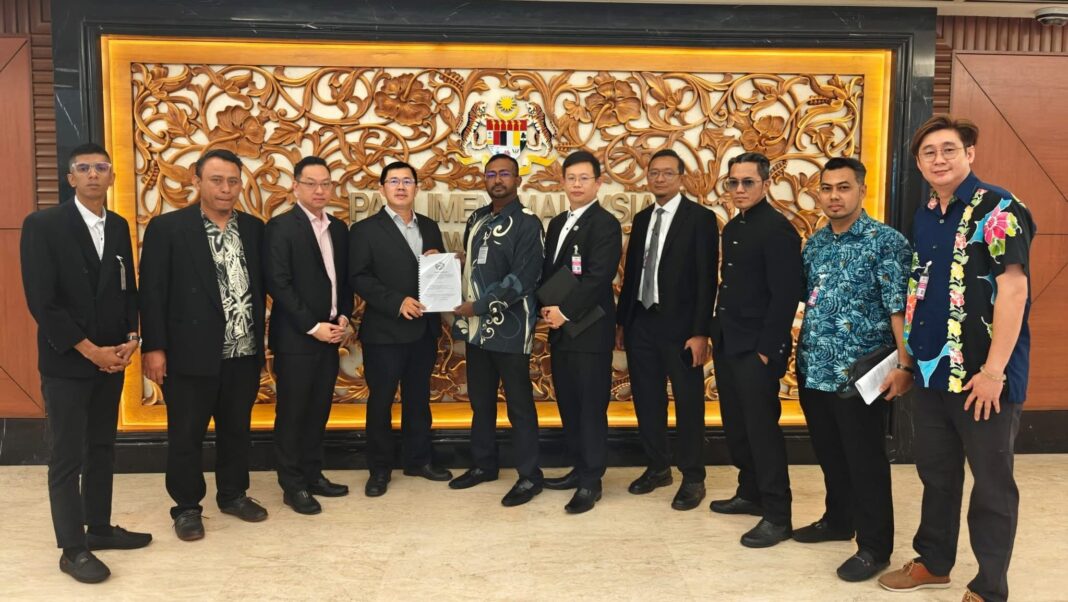

MALAYSIA: The long-running debate over cross-border private vehicle hire services has taken a fresh turn after the Southern Private Hire Vehicle Association (SPHVA) announced on Facebook yesterday that it had formally submitted a Memorandum of Understanding (MoU) to Parliament.
The MoU, addressed to Transport Minister Anthony Loke and Tebrau MP Jimmy Puah, seeks to push the industry into the spotlight by demanding clearer rules, better protections, and official recognition for private vehicle hire operators who ply the busy Johor–Singapore route.
A milestone moment for the industry
In its Facebook post, SPHVA described the submission as a “historic day”, framing the MoU as a major stride forward in its mission to advocate for the legalisation and standardisation of cross-border services.
The association said its proposals are guided by four key pillars:
- Establish clear regulations for cross-border operations
- Ensure passenger rights and driver safety are safeguarded
- Push for harmonised enforcement between agencies
- Provide greater economic stability for operators in the sector
SPHVA expressed optimism that, with government backing, the industry could evolve into a safe, reliable, and modern service that benefits not just drivers but also the passengers who depend on them.
Read related: Johor reps, operators propose roadmap to regulate cross-border chartered car service
Netizen scepticism expressed
However, while SPHVA was celebrating a milestone, online reactions were far from unanimous. In true Causeway fashion, netizens injected a mix of wit, sarcasm, and blunt scepticism into the conversation.
One cheeky comment quipped, “Can you ask the association members to queue up properly?” — suggesting that ironing out road discipline might be more urgent than ironing out regulations. Another user kept it short and sweet, simply declaring the announcement “the best [news],” although the optimism was quickly drowned out by more cynical takes.
Concerns over competition surfaced as well, with one remarking: “Don’t drive into each other’s countries and steal point-to-point riders.” The tone hinted at fears of turf wars between local and foreign operators.
For others, the move was a non-starter. “What a waste of time,” one frustrated commenter wrote, while another confidently predicted, “Singapore’s side will decline, for sure.”
Together, these comments painted a picture of weary commuters and industry-watchers who, while amused, clearly harbour doubts about whether the lofty ambitions in the MoU can be matched with action.
Why this matters
For many drivers and passengers, the conversation goes beyond scepticism. Cross-border rides remain stuck in a regulatory grey zone as rules remain unclear, leaving operators exposed and passengers unsure of their rights. SPHVA’s move for formal recognition is an attempt to end the uncertainty and place the industry on firmer ground.
The association created its MoU as a step towards a win-win solution: greater safety and accountability for passengers, improved protections and stability for drivers, and clearer oversight for authorities.
The future remains to be seen
Whether the MoU gains traction in Parliament remains to be seen. For now, SPHVA has succeeded in drawing attention to the issue, sparking debate both in official corridors and in the lively, often sharp-tongued court of public opinion online.
As one netizen’s tongue-in-cheek remark about queuing hinted, fixing cross-border private hire may take more than paperwork; it may require changing habits, expectations and trust on both sides of the Causeway.
Historic or not, the association has certainly ignited fresh conversation. And in an industry that thrives on movement, keeping the dialogue rolling may be half the battle.
Read also: Causeway crawl: Severe traffic congestion seen as checks for smuggled goods tightened
 Follow Google News
 Join us on WhatsApp
 Follow us on Telegram