


SINGAPORE: A new study from health technology company Royal Philips has shone a spotlight on the challenges that healthcare systems in the Asia Pacific region face these days, including staff shortages and high healthcare costs.
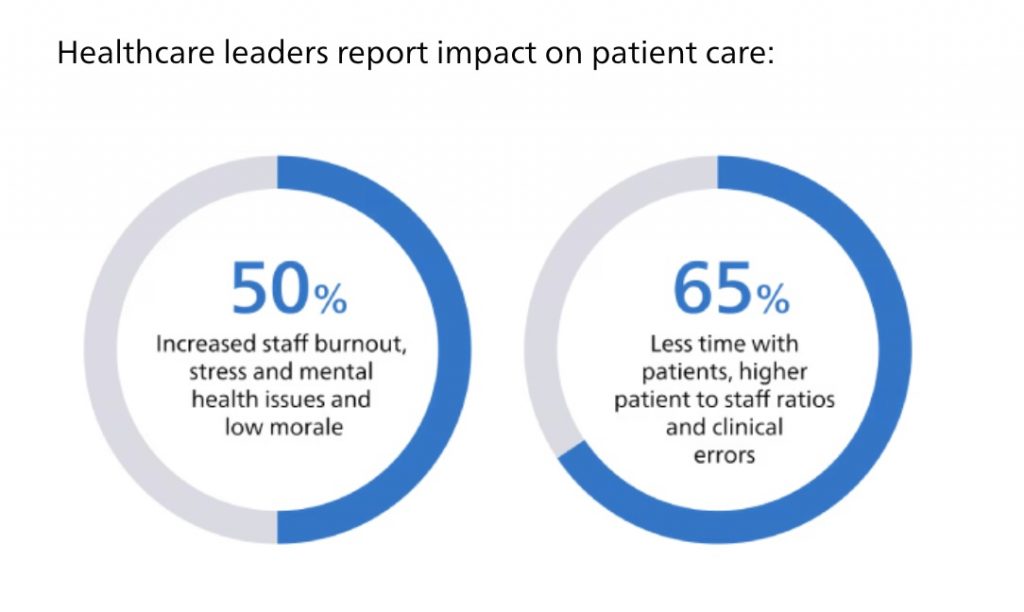
In Singapore, half of healthcare leaders are reporting higher levels of burnout among staff, specifically stress and mental health issues, deteriorating work-life balance, and low morale.
While this is a high number, it is lower than the global average of 66 per cent. For comparison’s sake, in the United States, it is 92 per cent.
According to Royal Philips’ Future Health Index (FHI) 2024 report: Better care for more people, this suggests that Singapore’s healthcare system could be coping better than other countries.
Almost two-thirds, or 65 per cent, of Singapore healthcare leaders say that staff spend less time with patients because of workforce shortages, while 60 per cent report delays in care as an issue due to the following reasons: increased waiting lists for appointments (41 per cent), longer waiting times for treatments or procedures (35 per cent), or delayed or limited access to screening, diagnosis, and preventive care (32 per cent).
Again, however, Singapore’s numbers are lower than the global average.
More than seven in 10 (71 per cent) healthcare leaders in APAC voiced concerns about workforce shortages that have resulted in delays in care for patients. Moreover, over nine in 10 (92 per cent) emphasized the financial challenges that affect their ability to provide timely, high-quality care. At present, 59 per cent say that it is part of their financial strategy to improve operational efficiency.
Dr Mark Burby, the Vice President of Health Systems for Philips APAC said, “While long wait times and staff shortages are making it difficult for people to get the care they need, when they need, we are also observing our healthcare leaders taking bold and thoughtful changes to deliver better patient care for more people.
“They are determined to overcome data integration challenges to fully uncover its utmost potential and are excited to embrace the next level of AI implementation for critical decision making and improved efficiencies.”
Nearly all of the healthcare professionals surveyed said that automation will be helpful in solving some of the present problems, with 96 per cent saying they believe it will allow healthcare professionals to perform at their highest skill levels, and 94 per cent saying they think automation will save healthcare professionals time by reducing day-to-day administrative tasks.
The study also said that healthcare leaders are showing strong interest in Artificial Intelligence (AI) when it comes to patient monitoring, medication management, and treatment planning. /TISG
Read related: Long hospital wait time triggers questions on whether this is a norm
 Follow Google News
 Join us on WhatsApp
 Follow us on Telegram